
Vinyl Plank Flooring Separating? Why It Happens and How to Fix It

Floor names link to their product pages in a new tab.
Quick answer: Vinyl plank flooring separating on a floating floor usually means the locking joints between the planks have broken. In the field, we see rolling chairs with small wheels do it a lot, along with too little expansion space at the walls, a subfloor that isn't flat enough, and big temperature swings or direct sun. On a glue-down floor, the usual cause is moisture under the floor. On a floating floor, a gap can sometimes be tapped closed from the far wall; a broken joint needs glue to hold, and may need touching up now and then if you don't want to replace the planks. A glue-down floor needs the moisture fixed before anything is re-adhered. To prevent it, follow the manufacturer's installation instructions to a T, document everything, test concrete for moisture, acclimate, leave the expansion gap on a floating floor, hire a great installer and register your warranty.
Gaps between vinyl planks are a common complaint once a floor has been down a few months. A thin dark line shows up at the end of a plank, then another, often near a sliding door or under the desk chair.
Not every gap has the same cause. A floating floor and a glue-down floor fail for different reasons, so the first question is always which one you have. From there, this guide walks through what we see cause separation in the field, what COREtec's and Shaw's own installation guides and warranties say where they address it, how to close the gaps, and the habits that keep them from coming back.
Why is my vinyl plank flooring separating?
Start with how the floor went down, because the cause usually follows from it.
A floating floor clicks together plank to plank and sits on top of the subfloor without being fastened to it. The installation guides are explicit: apart from the area under cabinets and islands (more on that below), no plank should be secured in any way to the subfloor, and wall moldings and transition strips are never fastened to the planks.Source 1Source 2 The whole floor holds together through its locking joints. On a floating floor, the number one cause of separation we see in the field is a broken locking system.
A glue-down floor is bonded to the subfloor with adhesive. Its planks are held by the adhesive, not the joints. In our experience, when a glue-down floor separates, the cause is usually moisture: the bond between the adhesive and the subfloor has let go.
| What you're seeing | Floating floor | Glue-down floor |
|---|---|---|
| Most likely cause | A broken or strained locking joint | Moisture breaking down the adhesive bond |
| Where it tends to show | Under rolling chairs, near sun-facing glass, over low spots, and across rooms with too little expansion space | Over a slab or a damp area, often with planks loosening or edges lifting |
| First thing to check | The expansion gap at the walls, the chair wheels and the flatness of the subfloor | A moisture test of the subfloor |
What breaks the locks on a floating floor
Rolling chairs with small wheels
Rolling chairs do this a lot. The small wheels on many office chairs concentrate the chair's weight, and yours, on a tiny contact patch. That is a lot of pressure per square inch on the same few planks every time the chair rolls, and over time those small wheels are likely to break the locking joints.
Manufacturers spell out what they want instead. Shaw's hard-surface care guide asks for swivel-type office chairs and other rolling furniture to have broad-surface, non-staining casters at least 2 inches in diameter.Source 3 Shaw's and COREtec's residential resilient warranties list damage from castor chairs and rolling loads as not covered, with the instruction to use chair pads under rolling desk chairs.Source 4Source 5 So the fix is two parts: larger, broad-surface casters and a chair mat under the desk. Look for a mat without a latex or rubber backing, since Shaw's care guidance warns that rubber compounds can permanently stain vinyl.Source 3 Our guide to heavy furniture on LVP covers protectors for everything that doesn't roll.
Not enough expansion space
Vinyl plank moves, and a floating floor needs room at every wall to do it. COREtec's SPC and WPC installation guides require a 1/4-inch perimeter expansion gap in areas under 2,500 square feet and a 1/2-inch gap in larger areas.Source 1Source 2 When the floor runs tight to a wall, a door jamb or a fixed transition, there's nowhere for it to go. The pressure ends up in the joints. Sometimes the floor peaks first; once that pressure has broken the locks, the gaps show when the floor shrinks back. And once joints start gapping, the guides warn in capital letters that the lock itself can be compromised: any gapping can compromise the locking system.Source 1Source 2
Check the edges first. Pull back a piece of base or quarter round in the room where the gaps are and look for the space between the floor and the wall.
A subfloor that isn't flat enough
A floating floor bridges whatever is under it. Over a dip or a hump, the planks flex every time someone walks across, and that flexing works the joints loose. COREtec's and Shaw's guides set the tolerance: the subfloor must be flat within 3/16 inch over 10 feet, or 1/8 inch over 6 feet.Source 1Source 6 For concrete, COREtec's guides say new and existing slabs should meet the latest edition of ACI 302 and ASTM F710,Source 1Source 2 the ASTM standard practice for preparing concrete floors to receive resilient flooring.Source 7
Flat is not the same as level. A room can slope gently and still be flat. What breaks joints is a dip or hump the planks have to bridge, which is why flatness is checked with a 6- or 10-foot straightedge, not a level. Our LVP installation guide walks through what subfloor prep should look like.
Temperature swings and direct sun
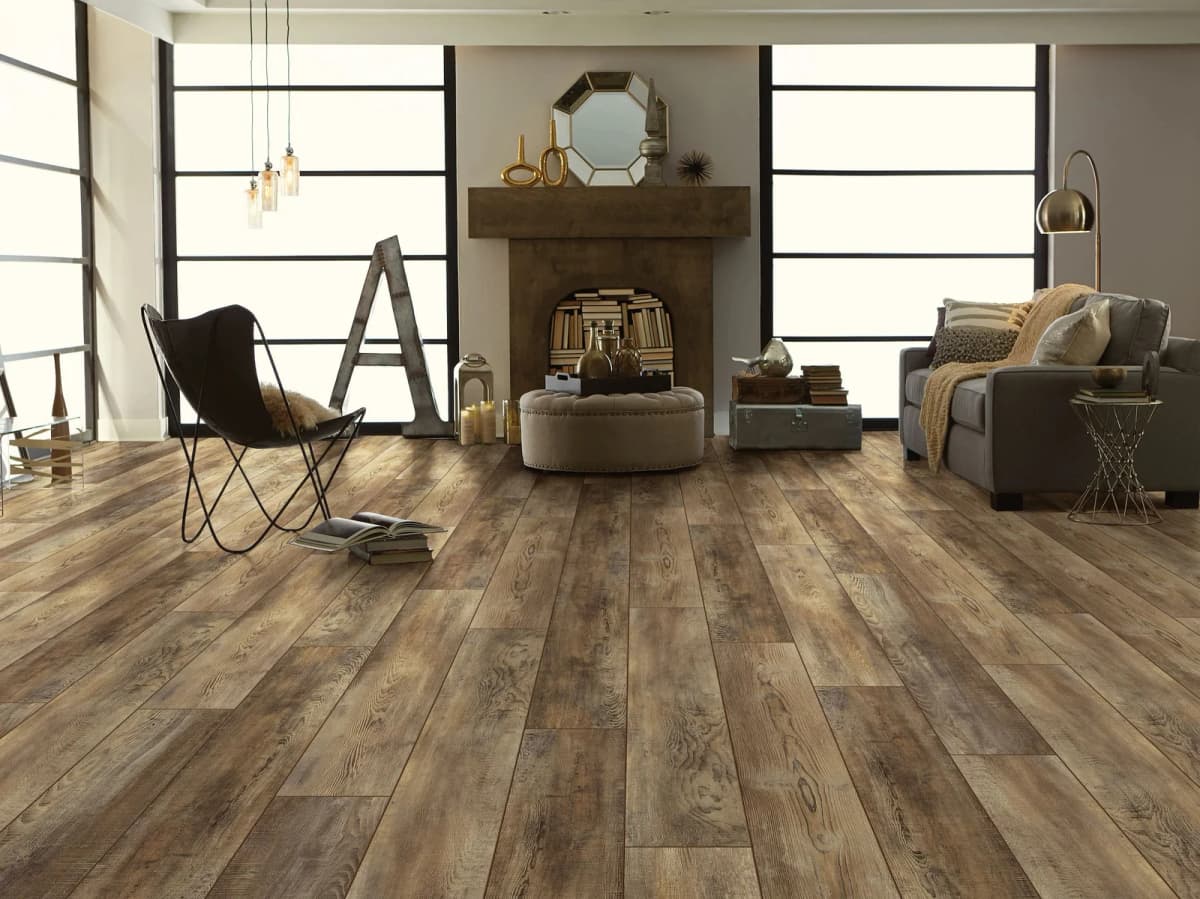
Temperature swings and direct sun play a big role. Vinyl plank grows in the heat and shrinks as it cools, and in a sunny room that happens every day. The planks right in front of a sliding glass door can heat up far more than the rest of the room, and the joints at the edge of that sun patch take the strain. A house that sits closed up for a season with the heat or air conditioning off puts the whole floor through a bigger swing, and the joints carry that movement.
The guides treat both seriously. COREtec's and Shaw's installation guides warn that excess temperature from direct sunlight can result in thermal expansion, recommend drapes or blinds during peak sunlight hours, and tell installers to protect the finished floor from direct sun.Source 1Source 2Source 6 They ask for the floor to go down in a climate-controlled room between 55°F and 85°F.Source 1Source 2Source 6 For a room that goes without climate control for part of the year, COREtec's and Shaw's floating SPC guides allow an ambient room temperature, meaning the air in the room, of -25°F to 155°F after installation, and COREtec's WPC guide allows 32°F to 100°F.Source 1Source 6Source 2 For Shaw's vinyl floors, Shaw's care guide adds a limit on the floor itself: surface temperature should not exceed 100°F from sunlight, and temperatures should not fall below 55°F.Source 8 Staying inside those numbers doesn't stop the planks from moving. The expansion gap is what gives them room to. Our sunroom guide goes deeper on heat and sun.
Weaker locks on lower-priced floors
Are lower-priced planks more likely to separate? In our experience, yes. Locking systems tend to be weaker on the lower-priced floors, and the lock is the part that holds a floating floor together. That's why buying a quality product matters more than just what you can see up top. Two floors can look alike in a showroom and behave very differently after a year of chairs, sun and seasons.
On a glue-down floor, it's usually moisture
A glue-down floor doesn't lean on its locking joints, so when it separates, look underneath. Moisture coming up through a slab or a damp subfloor attacks the adhesive bond, and once the bond goes, the planks can shift, gap or lift.
COREtec's SPC guide makes moisture testing a requirement on concrete. It sets a maximum of 8 lbs by calcium chloride test (ASTM F1869) or 90% relative humidity by in-situ probe (ASTM F2170), and tells you to check the adhesive's label for its own moisture limits.Source 1 ASTM F2170 is the standard test method for measuring relative humidity inside a concrete slab with probes set into it.Source 9 COREtec's SPC guide adds that a failure to mitigate moisture may result in failure of the flooring and render the warranty void,Source 1 and Shaw's resilient warranty says moisture testing is the installer's responsibility.Source 4 Our guide to flooring over a concrete slab explains the tests in plain terms.
What heavy islands and cabinets do instead

People often ask whether a kitchen island or a run of cabinets sitting on a floating floor makes it separate. In our experience, that usually won't cause separating. It causes peaking, where the floor can't move under the weight, with nowhere to expand, so the planks push up into a ridge at a joint instead of pulling apart. The same goes for anything else that pins a floating floor in place, like trim or a transition fastened through the planks.
The installation guides deal with it directly: if cabinets or islands are installed on top of the flooring, that area has to be fully adhered to the subfloor, including 2 feet beyond the cabinets and islands.Source 1Source 2 A floating floor pinned under a heavy island without that step has lost its room to move.
Does acclimation matter?
We still recommend it. In our experience, how long manufacturers recommend varies from one to the next. COREtec's and Shaw's floating-vinyl guides say acclimation of the material is not required, as long as the floor goes down in a climate-controlled room between 55°F and 85°F.Source 1Source 2Source 6
Even if they don't recommend acclimating, we always recommend at least 24 to 48 hours of acclimation just to be safe.
How to fix separating vinyl plank flooring
Whether you can fix it or need to replace planks depends on what happened to the joint.
These fixes are for a floating floor. If the joint is intact, close the gap. Sometimes you can take off a piece of quarter round or baseboard at the other end of the run and tap the planks back in to tighten them up. Use a tapping block against the edge of the plank: COREtec's WPC guide says to tap on the edge of the vinyl so as not to damage the locking profile.Source 2 Another way is two-sided tape on the face of the plank, which gives you enough grip to nudge it back until it locks; try the tape on a spare plank first to make sure it comes off clean. Check that the joint re-locks; if it won't stay closed, treat it as broken. Either way, fix whatever opened the gap first, whether that's the chair wheels, the expansion space or the sun, or it will open again.
If the locking joint is broken, glue it. A broken lock won't hold the planks together on its own. Put glue in the joint as you close the gap, so the two planks with the broken locking system stay together and don't come back apart. Ask the manufacturer or your installer which adhesive is safe for your floor: COREtec's WPC guide warns that alcohol-based glues may cause resilient products to swell.Source 2 Be realistic, too. At that point it can become a maintenance job you do every so often if you don't want to replace the planks.
If the damage keeps coming back, replace the planks. An installer can replace a single plank with a broken lock, which is one reason to keep some spare planks from your order. Our flooring installer guide can help you find someone to do it. And if the gaps run across the whole floor, the cause is bigger than a few planks: find it before you put anything back down.
On a glue-down floor, fix the moisture first. Tapping won't close a gap in a glued floor, because the planks aren't held by their joints. Find and stop the source of the moisture, retest the subfloor against the limit in your floor's guide and on the adhesive label, then have the loose planks re-adhered with the adhesive the manufacturer specifies. If the floor is under warranty, call the manufacturer or your installer before you pull anything up.
Floors we'd look at if you're starting over
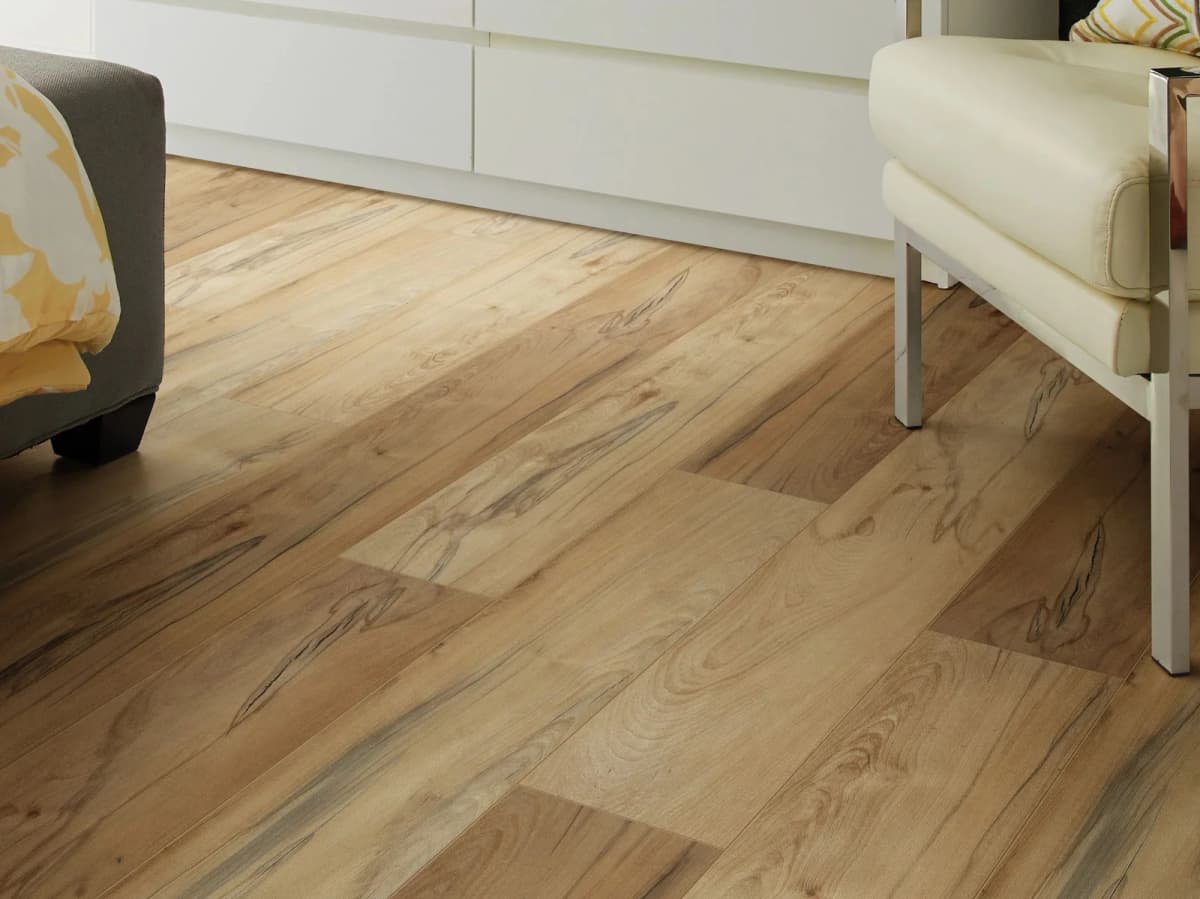
No floor is immune to a broken lock if the cause is still there, so start with the rest of this guide. If you're replacing a floor that separated, these are the Shaw and COREtec floors we'd look at, chosen for their install options and what the room asks of them. Prices are per square foot at the manufacturer's advertised price (MAP); each product page shows the carton price beside it. Lower prices may be available: request a quote by email using the "Email us for today's best price" link on any product page.
| Floor | Price | Core and thickness | Installation | Why it's here |
|---|---|---|---|---|
| COREtec Pro Classics VV017 | $4.09/sq ft | SPC, 0.196" | Floating, glue-down approved | A rigid core with a 20 mil wear layer and attached cork; a floating floor that can also be glued |
| COREtec Pro Enhanced VV491 | $4.79/sq ft | SPC, 0.204" | Floating, glue-down approved | A COREtec Pro SPC core in a long 9.06" × 72.83" plank, for fewer end joints across a big room |
| Shaw Infinite SPC | $3.89/sq ft | SPC, 0.173" | Floating | A rigid SPC core with a 20 mil wear layer and an attached 1mm EVA pad |
| Shaw Pantheon HD Plus | $6.49/sq ft | WPC, 0.315" | Floating or direct glue | A softer, warmer WPC build that can go down either way |
| Shaw Titan HD Plus Platinum | $6.79/sq ft | WPC, 0.472" | Floating or direct glue | The thickest here, with a 30 mil wear layer and an attached IXPE pad |
Core decides more than feel. COREtec's SPC guide allows a wider ambient temperature range after installation than its WPC guide does, which matters in a room that goes without climate control for part of the year, though Shaw's care guide asks its vinyl floors to stay above 55°F, so check the guides for your exact floor.Source 1Source 2Source 3 Our SPC vs WPC guide covers the rest of the trade.
Before you install: how to keep planks from separating
If there's one thing to tell someone before their install, it's this list.
- Follow the manufacturer's installation instructions to a T. Shaw's resilient warranty excludes performance failures resulting from a failure to follow the appropriate installation instructions.Source 4
- Document everything. Photos of the subfloor, the moisture readings, the expansion gap before the trim goes on, the room temperature on install day, the receipts. If you ever need the warranty, Shaw's asks for a valid proof of purchase, a detailed description of the issue and photographs.Source 4
- Do your moisture test per ASTM F2170 on any concrete slab, or the test your floor's guide names, and compare the reading to the limit in that guide and on the adhesive label.Source 9Source 1
- Acclimate, even though it might not be required.
- Leave enough expansion if the floor is floating, and never fasten trim or transitions through the planks.
- Hire a great installer. Our installer guide lists the questions to ask.
- Register your warranty. COREtec and Shaw both invite you to register your floor online; COREtec says it ensures faster service if you ever need your warranty coverage, and Shaw says it saves time later. Neither page says registration is required.Source 10Source 11
Final Word
Separating planks are a symptom, not a mystery. On a floating floor, look for what's breaking the locks: small chair wheels, a missing expansion gap, a subfloor that isn't flat, heat and sun, or a lock that was weak to begin with. On a glue-down floor, test for moisture. Close the gaps you can, glue the joints that are broken, re-adhere a glued floor only once the moisture is fixed, and fix the cause so the next season doesn't open them again.
When you're choosing the next floor, order $5 samples first and check them in the room where they'll go. Every sample dollar comes back as credit toward your order when you sign in at checkout with the same email you used for samples.
In this article
The floors from this guide

COREtec Floors
COREtec Pro Classics VV017
Chesapeake Oak
Samples are $5 each, credited back at checkout when you sign in.

COREtec Floors
COREtec Pro Enhanced VV491
Madrid Oak
Samples are $5 each, credited back at checkout when you sign in.

Shaw Floors
Infinite SPC
Shadow
Samples are $5 each, credited back at checkout when you sign in.

Shaw Floors
Titan HD Plus Platinum
Imperial Beech
Samples are $5 each, credited back at checkout when you sign in.
Common questions
Frequently Asked Questions
Why is my vinyl plank flooring separating?
On a floating floor, the most common cause we see in the field is a broken locking joint. Rolling chairs with small wheels, too little expansion space at the walls, a subfloor that isn't flat enough, and big temperature swings or direct sun are what usually break or stress the joints, and lower-priced floors tend to have weaker locks to begin with. On a glue-down floor, separation is usually a moisture problem under the floor, coming up through the subfloor and attacking the adhesive bond.
How do you fix separating vinyl plank flooring?
On a floating floor, it depends on whether the locking joint is still intact. Sometimes you can pull a piece of quarter round or baseboard at the far end of the run and tap the planks back together with a tapping block, striking the edge of the plank so you don't damage the locking profile. A strip of two-sided tape on the plank face can also give you enough grip to nudge a plank back until it locks. If the locking joint itself is broken, the planks won't stay together on their own, so glue the two planks together at that joint as you close it, to help keep them from coming apart again. That can become a maintenance job you repeat every so often if you don't want to replace the planks. On a glue-down floor, tapping won't help: find and stop the moisture first, then have the loose planks re-adhered with the adhesive the manufacturer specifies.
Can rolling office chairs cause vinyl plank flooring to separate?
Yes, and we see it often. Small chair wheels put a lot of pressure per square inch on a small spot, and over time that can break the locking joints. Shaw's hard-surface care guide asks for broad-surface, non-staining casters at least 2 inches in diameter on swivel office chairs and other rolling furniture, and Shaw's and COREtec's residential resilient warranties list damage from castor chairs and rolling loads as not covered, with an instruction to use chair pads under rolling chairs.
Do temperature changes make vinyl plank flooring separate?
On a floating floor, temperature swings and direct sun play a big role. COREtec's and Shaw's installation guides warn that excess temperature from direct sunlight can cause thermal expansion, recommend drapes or blinds during peak sunlight hours, and ask for the floor to go down in a climate-controlled room between 55°F and 85°F. When planks grow in the heat and shrink as they cool, the locking joints of a floating floor take the strain, which is why gaps tend to show up near sliding doors, in sunrooms and in homes that sit closed up with the heat or air conditioning off.
Should I register my vinyl plank flooring warranty?
Yes. COREtec and Shaw both invite you to register your floor on their websites: COREtec says it ensures faster service if you ever need your warranty coverage, and Shaw says it saves time later. Neither page says registration is required, and registering doesn't replace your paperwork: Shaw's resilient warranty asks for a valid proof of purchase, a detailed description of the issue and photographs, so keep your receipt and document the installation as well.
Referenced in this guide
Sources
COREtec Pro SPC Installation Guidelines (rev. 11/05/2024)
Shaw Industries (USFloors / COREtec) · Accessed 2026-10-29
https://pdmsview.shawinc.com/viewer/document/doc/10195Resilient Installation Guidelines for WPC Products (rev. 03/01/2022)
Shaw Industries (USFloors / COREtec) · Accessed 2026-10-29
https://pdmsview.shawinc.com/viewer/document/doc/11746Hard Surface Warranties, Care & Maintenance
Shaw Floors (Shaw Industries) · Accessed 2026-10-29
https://lighthouse.shawinc.com/SiteFiles/Lighthouse/pdf/SBF-ResilientVinylWarranty-Care-and-Maintenance.pdfResidential Resilient Limited Warranty: Defects, Wear, Waterproof, Petproof (rev. 06/28/2023)
Shaw Floors (Shaw Industries) · Accessed 2026-10-29
https://pdmsview.shawinc.com/viewer/document/doc/28855COREtec Residential Resilient Limited Warranty: Defects, Wear, Waterproof, Petproof (rev. 06/28/2023)
COREtec (Shaw Industries) · Accessed 2026-10-29
https://pdmsview.shawinc.com/viewer/document/doc/19721Luxury Vinyl Angle/Angle SPC Installation Guidelines (rev. 09/18/2024)
Shaw Floors (Shaw Industries) · Accessed 2026-10-29
https://pdmsview.shawinc.com/viewer/document/doc/7273ASTM F710-26: Standard Practice for Preparing Concrete Floors to Receive Resilient Flooring
ASTM International · Accessed 2026-10-29
https://store.astm.org/f0710-26.htmlResidential Resilient Maintenance (doc 4313, rev. 08/04/2021)
Shaw Floors (Shaw Industries) · Accessed 2026-10-29
https://pdmsview.shawinc.com/viewer/document/doc/4313ASTM F2170-19a: Standard Test Method for Determining Relative Humidity in Concrete Floor Slabs Using in situ Probes
ASTM International · Accessed 2026-10-29
https://store.astm.org/f2170-19a.htmlPurchased Your COREtec Floor? Register Your Warranty Today
COREtec · Accessed 2026-10-29
https://coretecfloors.com/en-us/warranty-registrationFlooring Warranty Information & Registration
Shaw Floors · Accessed 2026-10-29
https://shawfloors.com/en-us/warranties
Related Posts
Keep Reading

Can You Put Vinyl Plank Over Tile? What COREtec's and Shaw's Install Guides Say
11 min read
My Dog Ruined the Hardwood: Repair It, or Switch to Waterproof LVP?
13 min read

COREtec Tile & Stone Looks: The DIY Alternative to Ceramic and Porcelain (2026)
9 min read
LVP Wear Layer Explained: What 6, 12, 20, 22 and 30 Mil Mean, and Which to Choose
9 min read
Keep browsing