
SPC vs WPC Vinyl Plank: What's the Real Difference — and Which of Our Floors Is Which? (2026)
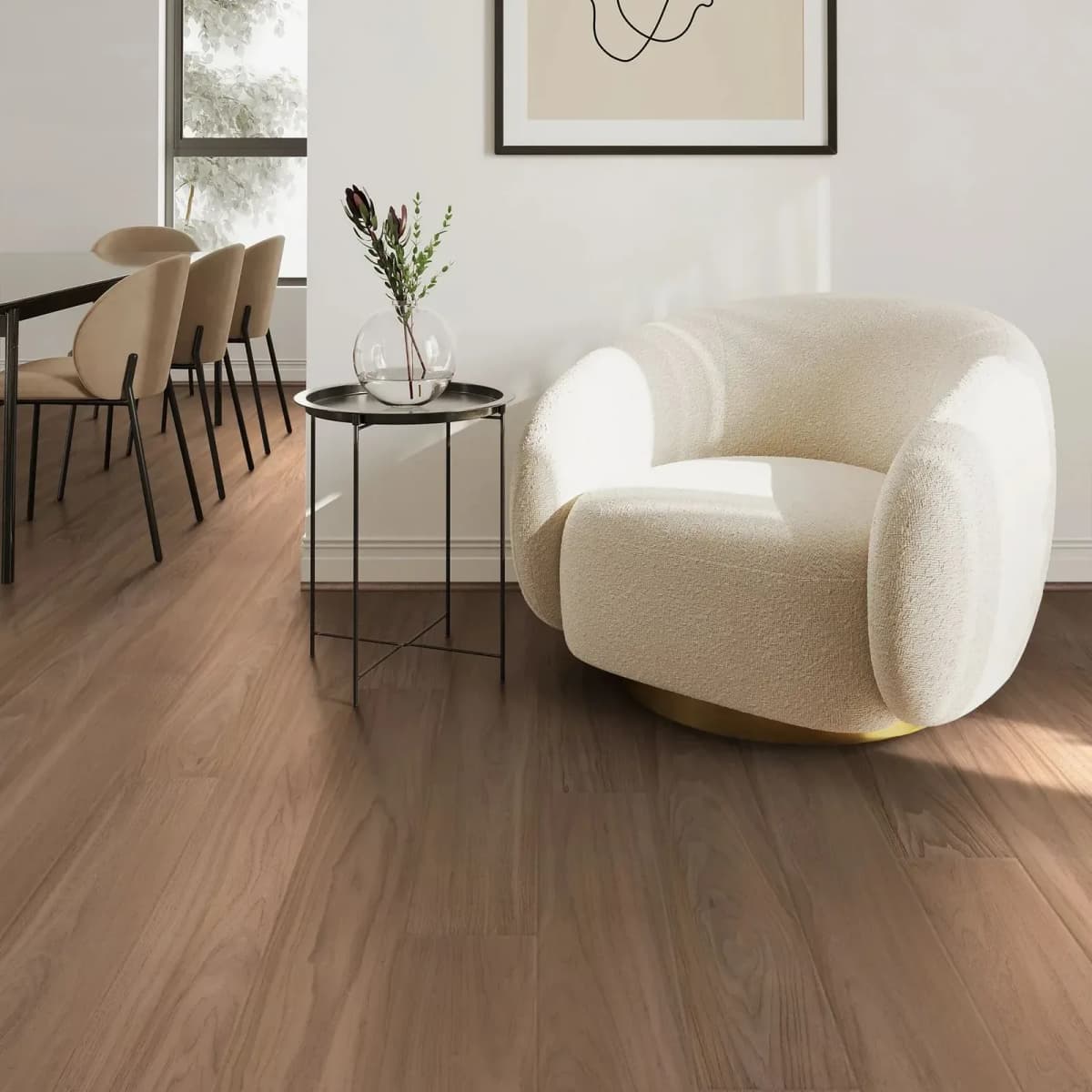
Floor names link to their product pages in a new tab.
Quick answer: SPC (stone-polymer composite) is denser, thinner, firmer, and more dent-resistant — the better core for kitchens, entries, and busy households. WPC (wood-polymer composite) is thicker, softer, warmer, and quieter — the better core for bedrooms, living rooms, and anywhere you're barefoot. In our catalog the map is clean: COREtec Pro is SPC (from $4.09/sq ft), COREtec Originals is WPC (from $5.39/sq ft), and Shaw's resilient lineup spans both with Infinite SPC at $3.89/sq ft naming its core outright. Neither core changes whether the floor is waterproof.
Search "SPC vs WPC" and you'll get a dozen articles that all say the same correct, useless thing: SPC has limestone in the core, WPC has wood flour in the core, SPC is harder, WPC is softer, here are some generic pros and cons. Every one of them stops exactly where the decision starts. You finish reading, you understand the chemistry, and you still have no idea which floor on which product page is which.
That gap is real, and it isn't your fault. Most manufacturers don't print the core type on the product page at all. They'll tell you the wear layer, the plank size, the thickness, the finish, the edge profile — and stay quiet on the one spec this entire comparison is about. You're expected to infer it from a collection name, and collection names are marketing. It's a solvable problem — our own product pages print the core in the specifications, and we'll show you exactly where below — but almost nowhere else will hand it to you.
So this guide does both halves. First the honest explanation of what the two cores actually are and what changes when you stand on them. Then the part nobody else writes: the map onto the specific floors we sell, with the product links, the measured thicknesses off our own product pages, and a straight answer about where the label is genuinely unclear. We're an authorized dealer for both COREtec and Shaw and we carry both cores in both brands, so we have no reason to talk you into one.
What SPC and WPC Actually Are
Both are rigid core vinyl plank, and that shared half matters more than the difference. Before rigid core existed, luxury vinyl was a flexible sheet or tile that needed a near-perfect subfloor — every ripple and trowel ridge underneath eventually showed through. Rigid core solved that with a stiff, dimensionally stable center layer that bridges minor imperfections and doesn't expand and contract dramatically with room temperature.
The two cores are two recipes for that center layer:
SPC — stone-polymer composite (you'll also see stone-plastic composite). Limestone powder blended with PVC and stabilizers, pressed into a very dense, very hard core. Shaw describes SPC as a solid polymer core and a more rigid product than WPC.Source 1 Because the material is so dense, manufacturers get the stiffness they need out of a thin plank — most SPC lands around 4–6mm.
WPC — wood-polymer composite (or wood-plastic composite). Wood flour blended with PVC and a foaming agent, which puts microscopic air pockets through the core. Those air pockets are the entire point: they make the plank lighter, warmer to stand on, quieter under footsteps, and slightly forgiving underfoot. To get comparable rigidity out of a less dense material, the plank has to be thicker — WPC generally runs 8mm and up.
One clarification worth making, because it trips up a lot of shoppers: "wood-polymer" doesn't mean the floor has a wood core that can swell. The wood content is flour-fine particles fully encapsulated in PVC, not fibers pressed into a board. That's the difference between WPC and laminate, whose high-density fiberboard core genuinely is compressed wood and genuinely does swell when water reaches it — the distinction we walk through in LVP vs laminate. Both SPC and WPC are waterproof cores. Neither one is the compromise.
The Short Version
| SPC (stone-polymer) | WPC (wood-polymer) | |
|---|---|---|
| Core recipe | Limestone powder + PVC | Wood flour + PVC + foaming agent |
| Density | Higher — denser, harder ✓ | Lower — air pockets by design |
| Typical thickness | 4–6mm | 8–12mm+ ✓ |
| Feel underfoot | Firmer, cooler | Softer, warmer ✓ |
| Sound underfoot | Good with attached pad | Quieter — the core absorbs more ✓ |
| Dent & impact resistance | Better — denser core takes a hit ✓ | Good, but softer under point loads |
| Uneven subfloor tolerance | Better — less flex to telegraph ✓ | Good |
| Waterproof core | Yes | Yes |
| Entry price in our catalog | $2.99/sq ft (Shaw Endura Plus and Impact Plus) ✓ | $4.19/sq ft (Shaw Ignite) |
| Best rooms | Kitchens, entries, mudrooms, basements | Bedrooms, living rooms, open layouts |
The row people expect to be decisive — waterproof — is a tie, and that's the most important thing in the table. If a salesperson tells you to pay up for one core because it's "more waterproof," they're selling, not explaining. Both cores are plastic-based and neither absorbs water. What you're actually buying with the upgrade is feel.
Four Things That Actually Change
1. Comfort and Sound
This is the difference you notice in the first ten seconds. WPC's foamed core has give. Stand on it barefoot on a January morning and it isn't cold the way a dense plank over a slab is; walk across it and footsteps land softer, with less of the hard tap a thin plank makes. In a bedroom, a nursery, or an open living space where people are on the floor, that's the whole reason WPC costs more.
SPC is firmer and reads a touch cooler. In a kitchen where you're standing on a rigid plank over concrete anyway, that firmness is a feature rather than a compromise — but nobody has ever described an SPC floor as cozy.
Attached underlayment narrows this gap considerably and is worth understanding on its own terms, since it's doing a lot of the acoustic work on both cores — see attached underlayment explained for what the different pad materials actually do.
Edge: WPC. Warmth and quiet are what most people are chasing when they upgrade.
2. Dents and Impact
The flip side of give is that a denser core takes a hit better. Drop a cast-iron pan, park a refrigerator on four small feet, drag a bar stool across the same strip of floor for five years — SPC's density resists that concentrated point load better than a foamed core does.
Worth separating clearly: this is about the core, not the surface. Surface wear is the wear layer's job, and that's an independent spec you choose separately — a 30 mil WPC plank has two and a half times the wear layer of a 12 mil SPC one. Our LVP wear layer guide covers which thickness we'd choose for which home.
Edge: SPC. For dents and dropped-object abuse, density wins.
3. Thickness and the Subfloor
SPC's thinness is genuinely useful in ways that don't show up on a spec sheet. A 4–6mm plank clears existing door jambs and appliance toe-kicks more easily, makes transitions to adjoining rooms less awkward, and — because there's less material to flex — telegraphs a slightly out-of-level subfloor less than a thicker foamed plank does.
WPC's thickness buys substance. A 12mm plank feels more like a floor and less like a covering, and the extra material is part of what's absorbing sound.
Edge: SPC on install practicality, WPC on substance. Genuinely depends on your subfloor and your door clearances.
4. Price and the Wear-Layer Ceiling
COREtec prices its SPC Pro family from $4.09/sq ft and its WPC Originals family from $5.39, and the gap makes sense, because you're buying less material and the manufacturing is simpler. WPC asks a premium for comfort, and it's also where the brands put their top-end construction — the thickest planks and the highest wear layers tend to live in the WPC families.
Edge: SPC on price, WPC on ceiling.
Which of Our Floors Is Which
Here's the part the abstract guides skip. Every price below is per square foot at the manufacturer's advertised price (MAP); each product page also shows the full per-carton (box) total next to that per-square-foot figure so you can budget the whole room. Lower prices may be available — request a quote by email using the "Email for today's best price" form on any product page.
COREtec: The Cleanest Split in the Business
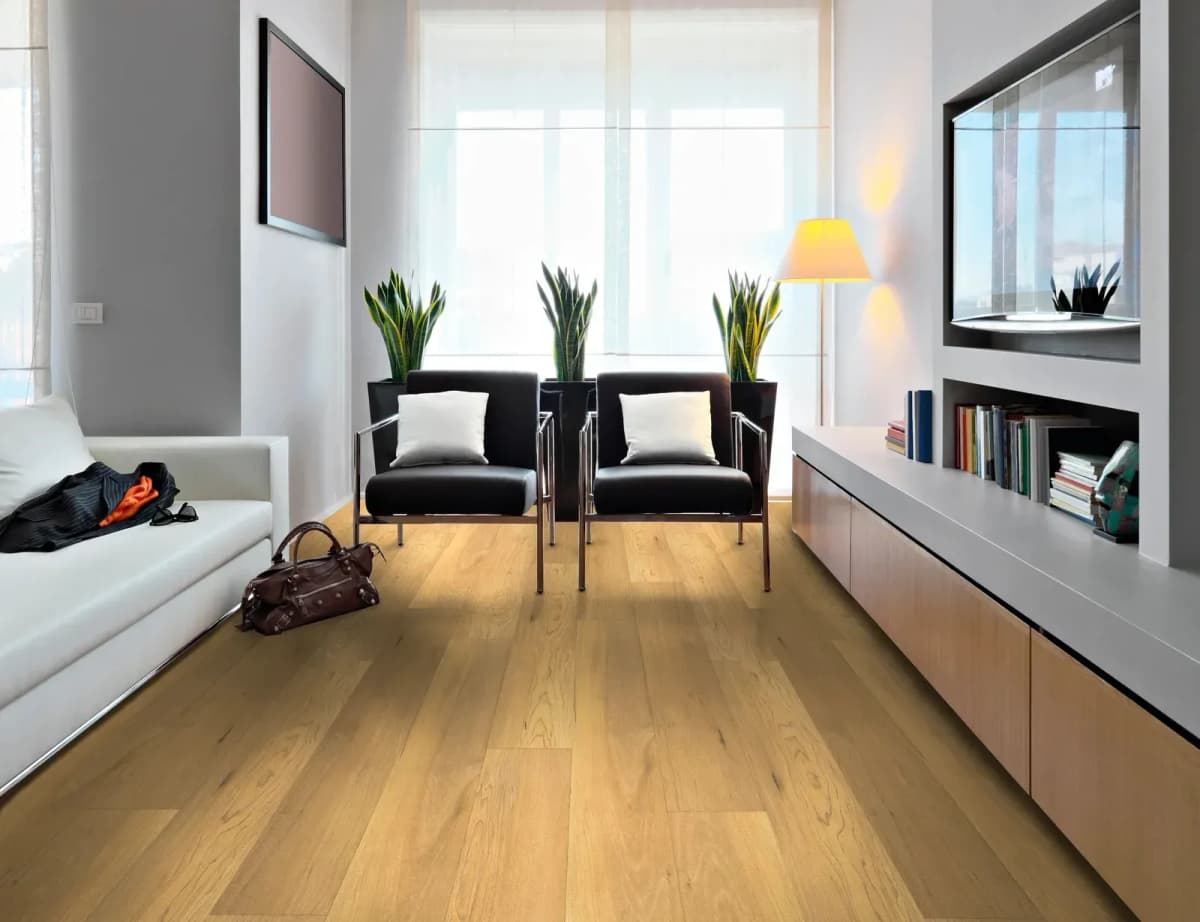
COREtec is the easiest brand to map, because the core divide is the product-family divide. Pro is SPC. Originals is WPC. That's it — one rule, no exceptions, and it holds across all 27 COREtec plank styles we carry ($4.09–$10.69/sq ft MAP). The three COREtec tiles are their own collection, two of them SPC and one WPC.
COREtec Pro — the SPC family:
| Style | Price | Wear layer | Plank size | Thickness |
|---|---|---|---|---|
| Pro Classics VV017 | $4.09/sq ft | 20 mil | 7" × 48" | 0.196" (~5mm) |
| Pro Enhanced VV491 | $4.79/sq ft | 20 mil | 9.06" × 72.83" | 0.204" (~5mm) |
| Pro Premium VV800 | $6.29/sq ft | 20 mil | 7.13" × 49" | 0.236" (~6mm) |
COREtec Originals — the WPC family:
| Style | Price | Wear layer | Plank size | Thickness |
|---|---|---|---|---|
| Originals Enhanced CR501 | $5.89/sq ft | 22 mil | 8.98" × 72.05" | 0.314" (~8mm) |
| Originals Classics VV024 | $6.29/sq ft | 20 mil | 7.13" × 48.03" | 0.314" (~8mm) |
| Originals Classics VV023 | $6.39/sq ft | 20 mil | 4.96" × 48.03" | 0.314" (~8mm) |
| Originals Premium VV457 | $9.09/sq ft | 30 mil | 8.98" × 72.05" | 0.472" (~12mm) |
Read the thickness column. Every Pro style sits between 0.196" and 0.236". Every Originals style we carry is at least 0.255" (VV585), most start at 0.314", and they climb to 0.748". That gap isn't styling — it's the two core recipes doing exactly what the theory says they do, measured off our own product pages. Our product pages now name the core outright in the specifications, so you don't have to run this inference on our site — but the thickness tell still works anywhere the core goes unnamed.
The attached pad follows the same line, floor by floor rather than tier by tier. Pro Classics VV017, Pro Plus Enhanced Planks VV492 and Pro Premium VV800 carry 1mm of cork, and Pro Enhanced VV491 and Pro Plus Enhanced HD 9" VV488 1.2mm — so Pro Enhanced and Pro Premium each hold one of each. The Originals floors run from 1mm of cork up to 3mm on Originals Premium VV457, and three Originals Premium floors, VV810, VV820 and VV880, use a 3.5–3.75mm Soft Step foam pad instead. Every COREtec pad thicker than 1.2mm is on a WPC floor, which is part of why the comfort story and the core story line up.
For the full two-way on which family fits your rooms and budget, we go deeper in COREtec Originals vs Pro; the complete tier-by-tier walk-through is in our COREtec LVP buyer's guide.
Shaw: The Core Is in the Specs, Not Always in the Name
Shaw's resilient lineup — 23 styles from $2.99 to $8.19/sq ft — used to be the harder half of the map, because Shaw's style names only sometimes give the core away.
Shaw names the core in its own marketing on some styles and not others. Infinite SPC ($3.89/sq ft) puts it right in the style name — 20 mil wear layer, 6.93" × 48.03" planks, 0.173" thick with a 1mm EVA pad. It's the easiest Shaw style to recommend without caveats, because there's nothing to interpret.
The rest of the lineup used to be the guessing game. It isn't anymore: every LVP product page on this site now carries a Core Type row in its specifications, reading SPC or WPC straight off the manufacturer's per-style spec data — including the Shaw styles whose names and collections say nothing about the core. Two worth calling out:
- Endura Plus ($2.99/sq ft) — 12 mil wear layer, EVA pad, 17 colors, a 30-year residential warranty shown on 15 of them. Our Shaw LVP buyer's guide treats this as the entry-tier value pick, and the 12 mil wear layer is the spec to weigh, not the core.
- Titan HD Plus Platinum ($6.79/sq ft) — 30 mil wear layer, 8.98" × 72.05" planks, 0.472" thick, attached IXPE. As thick a wear layer as Shaw's LVP lineup offers — and per Shaw's own spec data, now printed in the specifications on its product page, it's a WPC build, one of six floors in our catalog that pair a 0.472" plank with a 30 mil wear layer.
Notice that Titan HD Plus Platinum measures the same 0.472" as COREtec's WPC Originals Premium VV457. That's the honest limit of the thickness shortcut: it's a reliable tell within one brand's families, not a universal decoder across brands. Different manufacturers target different stiffness with different recipes.
Our practical advice, and what we'd tell you on the phone: if the core type is the deciding factor for your project, you don't have to infer it and you don't have to call us — open the product page for the exact style you're considering and read the Core Type row in the specifications. It says SPC or WPC, per style, from the manufacturer's spec data. If we ever can't confirm the core for a style, we leave that row off the page instead of guessing at it — so if it's missing, or the answer doesn't match what you're reading elsewhere, ask us and we'll pull the spec sheet for that exact style. And if your deciding factors are wear layer, plank size, attached pad, and price — which is true for most projects — those are printed on every product page too.
Pick by Room
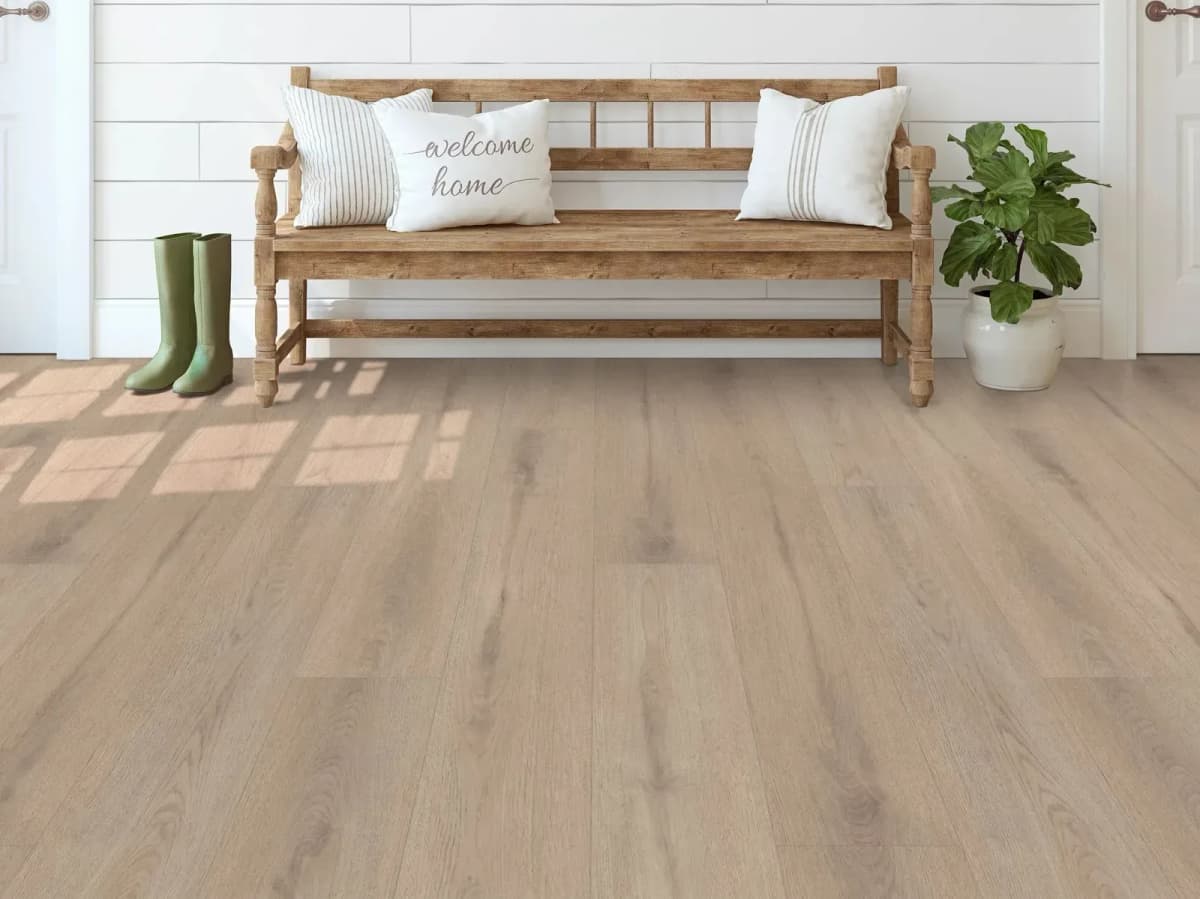
| Room | Core | Why | A floor that fits |
|---|---|---|---|
| Kitchen | SPC | Dropped cookware, appliance feet, stools | Pro Classics VV017, $4.09 |
| Entry / mudroom | SPC | Grit, boots, concentrated traffic | Infinite SPC, $3.89 |
| Bedrooms | WPC | Barefoot warmth, quiet | Originals Classics VV024, $6.29 |
| Living / family room | WPC | Comfort and sound absorption | Originals Enhanced CR501, $5.89 |
| Finished basement | WPC | Cold slab — thicker core insulates | Originals Classics VV023, $6.39 |
| Utility basement / uneven slab | SPC | Thin, dense, tolerant of high spots | Pro Enhanced VV491, $4.79 |
| Bathroom / laundry | Either | Both cores are waterproof | Infinite SPC, $3.89 |
| Whole house, one floor | SPC | Covers the wet and busy rooms without compromise | Pro Classics VV017, $4.09 |
| Thickest wear layer | WPC | 30 mil comes only on WPC in our catalog | Originals Premium VV457, $9.09 |
Below grade deserves a note beyond the table. Both cores handle basement moisture — the deciding factors down there are slab flatness, a vapor barrier where the manufacturer calls for one, and how much you care about a cold floor. Our basement flooring guide covers the prep that actually determines whether a below-grade install succeeds.
And a perfectly sane answer for a mixed-use house: run both. SPC in the kitchen, entry, and mudroom; WPC in the bedrooms and living room. Same brand, same visual family, different core where the room asks for it.
What the SPC/WPC Label Doesn't Decide
Three things get attributed to the core that have nothing to do with it.
Waterproofing. Both cores are plastic-based and neither absorbs water. Every active LVP style we carry is flagged waterproof on its product page, and the rating is a per-product spec you can confirm on the exact style you're considering — our waterproof flooring explainer covers what the label does and doesn't promise, and our bathroom flooring guide covers the wet rooms specifically.
Surface wear. That's a wear-layer question, not a core question. The wear layer is the clear material that takes the wear, and it's a separate spec from the core: in our catalog SPC floors run from 6 to 20 mil and WPC floors from 12 to 30 mil. Choose the core for feel and the wear layer for how hard the floor is used (we'd pick 20 mil for a busy household) — they're separate decisions and conflating them is the most common mistake we see.
Pet coverage. On COREtec, one residential resilient warranty document covers the WPC and SPC products alike, so the Petproof stain coverage reads identically whichever core you buy — and it excludes surface scratches unless a scratch warranty covers them, which none of these products carries.Source 2 So for dogs we'd choose on the wear layer, 20 mil for most of them, not on the core, and no thickness makes a floor scratch-proof.
One more thing neither core asks of you: an acclimation period. COREtec states that acclimation of its planks and tiles prior to installation is not required, asking only that the room be climate-controlled when the floor goes down.Source 3 That holds for Pro and Originals alike — a real practical difference from hardwood, which has to reach moisture equilibrium with the room first.
Final Word
SPC versus WPC is a comfort-versus-density question, and it resolves by room far more cleanly than it resolves by budget.
Where the choice is clear:
- Kitchens, entries, mudrooms, busy households, uneven slabs: SPC. Denser core, better dent resistance, thinner plank, lower price.
- Bedrooms, living rooms, finished basements, anywhere barefoot: WPC. Warmer, quieter, more substantial underfoot.
- One floor for the whole house: SPC. It handles the demanding rooms without a compromise, and the comfort gap in the quiet rooms is smaller than the durability gap in the busy ones.
Where it's genuinely close: the $5.89–$6.29 band, where COREtec Pro Premium VV800 and Originals Enhanced CR501 sit within forty cents of each other. Same brand, attached cork on both, different core. There, no spec sheet settles it — your feet do.
And that's the real reason to stop reading about cores and go stand on one. A photograph can show you a color. It cannot show you the difference between a plank that gives slightly underfoot and one that doesn't, and that difference is the entire comparison.
Browse both cores side by side on the luxury vinyl plank catalog, or by brand at COREtec LVP and Shaw LVP. Then order a $5 sample of one from each core before you commit — the full $5 comes back as credit toward your floor when you sign in at checkout with the same email you used for samples, and the credit applies automatically (guests checking out anonymously don't get it, so sign in). Feeling the difference in your own room costs you nothing in the end.
In this article
The floors from this guide

Shaw Floors
Infinite SPC
Pampas
Samples are $5 each, credited back at checkout when you sign in.

COREtec Floors
COREtec Originals Enhanced 9x72 CR501
Saffron Pecan
Samples are $5 each, credited back at checkout when you sign in.

COREtec Floors
COREtec Pro Classics VV017
Chesapeake Oak
Samples are $5 each, credited back at checkout when you sign in.

COREtec Floors
COREtec Originals Premium VV457
Grandure Oak
Samples are $5 each, credited back at checkout when you sign in.
Common questions
Frequently Asked Questions
Is COREtec SPC or WPC?
Both — it depends on the family, and that's the single most useful thing to know about the brand. COREtec Pro is the SPC line: a denser stone-polymer core, thinner planks (our Pro styles measure 0.196" to 0.236", roughly 5–6mm), starting at $4.09/sq ft for Pro Classics VV017. COREtec Originals is the WPC line: a wood-polymer core, noticeably thicker planks (our Originals styles run 0.255" to 0.748", about 6.5–19mm, and most are 0.314"/8mm or more), starting at $5.39/sq ft for Retro Revival CR504. Both families ship with an attached underlayment — cork on every Pro floor and on all but three Originals floors, which use a foam Soft Step pad — both are rated waterproof, and both carry the same COREtec pet-stain warranty — so the core is what you're actually choosing between, not the feature list.
Is rigid core the same as SPC?
No, and the two terms get swapped constantly. 'Rigid core' is the umbrella category — any vinyl plank built on a stiff, dimensionally stable core instead of a flexible sheet of vinyl. SPC and WPC are the two kinds of rigid core underneath that umbrella. So every SPC floor is rigid core, every WPC floor is rigid core, and 'rigid core' by itself tells you the plank won't telegraph a wavy subfloor but says nothing about whether it'll feel firm or forgiving underfoot. That's why our own product pages print a Core Type row in the specifications — SPC or WPC by name, taken from the manufacturer's spec data for that exact style — rather than leaving you at 'rigid core.' On a page anywhere else, if all you see is 'rigid core,' you still don't know which of the two you're getting.
Is SPC or WPC better for a basement?
Either core handles below-grade moisture, because neither one absorbs water the way a wood-fiber laminate core does. The tiebreaker below grade is usually temperature, not water: basement slabs run cold, and WPC's thicker core plus attached underlayment insulates better underfoot, while SPC's thinner, denser build sits flatter on a slab that isn't perfectly level and handles temperature swings with less movement. For a finished basement you'll actually spend time in, WPC comfort is worth the premium; for a utility basement, storage room, or a slab with known high spots, SPC is the more forgiving install. Our basement flooring guide covers subfloor prep and moisture testing in detail.
Is SPC or WPC better for a kitchen?
SPC, in most kitchens. The kitchen is where dropped cast iron, heavy appliance feet, and bar stools dragged across the same three feet of floor all happen, and a denser core resists that kind of concentrated point load better than a softer one. WPC's give is a genuine comfort advantage if you cook standing for hours, so it isn't a wrong answer — but if you're deciding on durability alone, the denser core wins the room. Wear layer matters at least as much as core here: 20 mil is the wear layer we'd choose for a kitchen, whichever core you pick.
Referenced in this guide
Sources
Vinyl Flooring Overview | Durable, Stylish & Waterproof
Shaw Floors (shawfloors.com) · Accessed 2026-08-03
https://shawfloors.com/en-us/vinyl-overviewResidential Resilient Limited Warranty — Defects, Wear, Waterproof, Petproof (USFloors/COREtec, rev. 06/28/2023)
Shaw Industries, Inc. (USFloors / COREtec) · Accessed 2026-08-05
https://pdmsview.shawinc.com/viewer/document/doc/19721Installation & Maintenance
COREtec · Accessed 2026-08-03
https://coretecfloors.com/en-us/installation-maintenance
Related Posts
Keep Reading
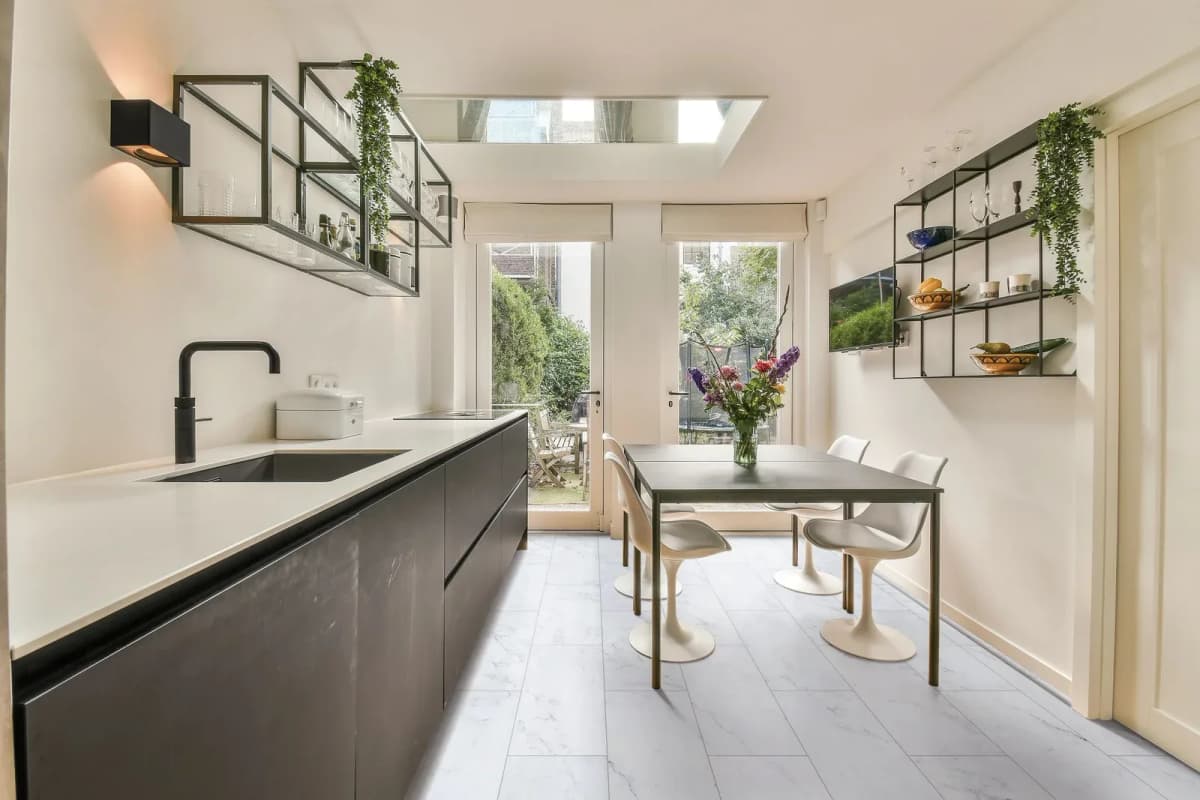
COREtec Tile & Stone Looks: The DIY Alternative to Ceramic and Porcelain (2026)
9 min read
LVP Wear Layer Explained: What 6, 12, 20, 22 and 30 Mil Mean, and Which to Choose
9 min read
Shaw LVP Buyer's Guide: Classic Series vs Pro Series, and Where 5th and Main Fits (2026)
10 min read
Will Heavy Furniture Dent Vinyl Plank Flooring? What Holds Up (2026)
14 min read
Keep browsing