
LVP Wear Layer Explained: Why 12 Mil and 20 Mil LVP Overlap on Price and Wear Differently

Floor names link to their product pages in a new tab.
Two luxury vinyl plank floors sit side by side at $5 per square foot. Same brand. Same width. Same wood-look visual.
One has a 12 mil wear layer. The other has a 20 mil wear layer.
The 20 mil floor carries two-thirds more clear coat over its printed design layer — the part of the plank that takes every footstep, chair slide and claw. The price difference at purchase is about $1 per square foot. Neither manufacturer will tell you how many years either floor lasts; both will tell you what they warrant, and that is where the gap shows.
Wear layer thickness is the single most important spec on luxury vinyl plank, and the one most buyers ignore. Most LVP shoppers compare total plank thickness (the millimeter number) and miss the wear layer entirely. That's a mistake. This post fixes it.
Quick answer: A wear layer on LVP is the clear protective film over the printed design layer, measured in mils (thousandths of an inch). 6 mil is entry-grade (bedrooms, guest rooms), 12 mil is standard residential, 20 mil is the active-household sweet spot, and 30 mil is commercial-grade. Thicker wear layers resist scratches, pet claws, and traffic longer — and often, but not always, come with longer warranties, so check the warranty on the exact style.
What does mil rating mean on LVP flooring?
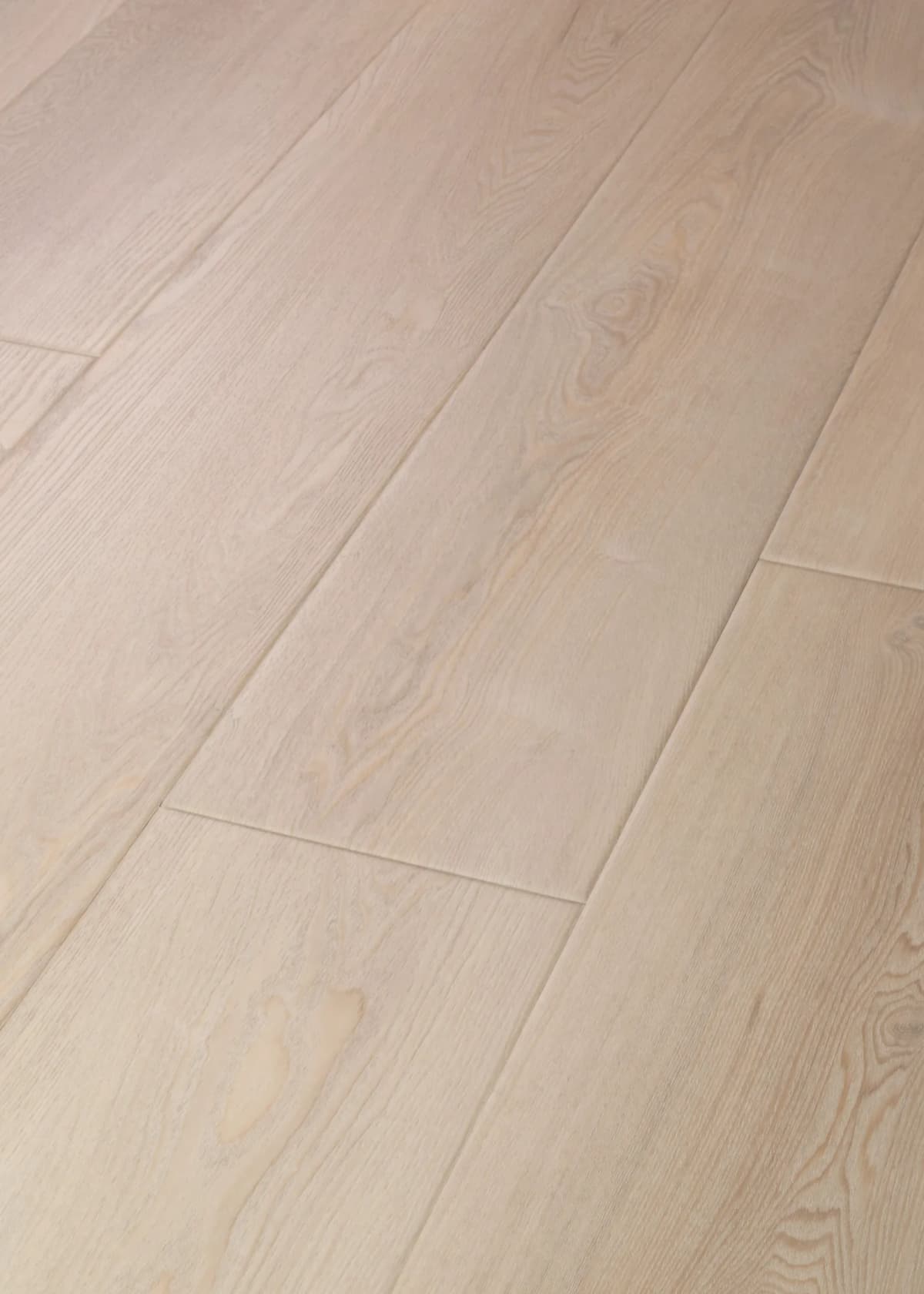
Luxury vinyl plank is built in layers. From bottom to top:
- Attached underlayment (usually cork or foam — most premium LVP includes this)
- Backing layer (gives the plank structural stability)
- Rigid core (WPC or SPC — the waterproof structural layer)
- Printed design layer (the photographic image that creates the wood, stone, or tile look)
- Wear layer (the clear protective coating on top)
The wear layer is the only part of the floor that touches the world. It's what your feet walk across, what your dog's claws scratch, what your kitchen chairs slide on. When the wear layer is gone, the printed design layer below is exposed — and that's a floor that needs replacement.
Critically, the wear layer is separate from total plank thickness. A 10mm-thick LVP plank can have a 12 mil wear layer. A 5mm-thick plank can have a 30 mil wear layer. Total thickness affects how the floor feels underfoot and how well it dampens sound. Wear layer affects how long the floor lasts.
The Mil Scale: What These Numbers Actually Mean
LVP wear layers are measured in mils. One mil equals 1/1000th of an inch (0.001"). For perspective: a human hair is about 3-4 mils thick. The wear layer is genuinely thin — but every additional mil meaningfully extends the floor's life.
LVP wear layers come in five common thicknesses, each with distinct use cases.
| Mil Rating | Equivalent | Best For | Example |
|---|---|---|---|
| 6 mil | 0.006" | Bedrooms, guest rooms, low-traffic spaces | Shaw Anvil Plus ($3.79/sq ft) |
| 12 mil | 0.012" | Standard family residential | Shaw Endura Plus ($2.99/sq ft) |
| 20 mil | 0.020" | Active families, pets, kitchens | COREtec Pro Classics VV017 ($4.09/sq ft) |
| 22 mil | 0.022" | High-traffic residential, premium positioning | COREtec Originals Enhanced 9x72 ($5.89/sq ft) |
| 30 mil | 0.030" | Commercial spaces, forever-floor residential | Shaw TITAN HD Plus Platinum ($6.79/sq ft) |
There is no lifespan column, and that is deliberate: neither Shaw nor COREtec publishes a service life in years for any wear layer. What each of them does publish is a warranty term, style by style — those are further down, with the source for each.
6 mil — Entry / Light Residential Only
Residential warranty: 30 years on Shaw Impact Plus,Source 1 lifetime on Shaw Anvil PlusSource 2 Best for: Bedrooms, guest rooms, closets, low-traffic rooms Where it fails: Active living areas, kitchens, hallways, any room with pets or kids
The thinnest wear layer commonly available on real LVP (anything thinner shows up only on entry-tier vinyl flooring at big-box stores). At 6 mil, the protective layer is just enough to prevent immediate damage from light residential use — but it doesn't have the depth to handle scratches from pet claws, dropped objects, or daily traffic patterns.
Products in our catalog at 6 mil:
- Shaw Anvil Plus ($3.79/sq ft) — 6 mil with EVA pad
- Shaw Impact Plus ($2.99/sq ft) — 6 mil with EVA pad, 5 colors
The honest take: 6 mil only makes sense for budget-constrained installations where the floor's job is to look acceptable and be replaced without much regret — investment properties, guest bedrooms, low-use spaces. For anywhere you'll actually live, skip 6 mil and step up to 12 mil minimum.
12 mil — Standard Residential
Residential warranty: 30 years on all three Shaw 12 mil stylesSource 3Source 4Source 5 Best for: Most homes, most rooms, normal family use Where it falls short: Pet households with active dogs, commercial spaces
Twelve mil is the residential workhorse. Thick enough for normal family wear, kid traffic, light pet use. In our catalog it's a short list, though: most of the LVP we carry at $3-5/sq ft has already stepped up to 20 mil.
Products in our catalog at 12 mil:
- Shaw Endura Plus ($2.99/sq ft) — 17 colors
- Shaw Paladin Plus ($3.89/sq ft) — 15 colors, floating or glue install
- Shaw Distinction Plus ($4.79/sq ft) — 8 colors
- COREtec Original Classics VV585 ($6.19/sq ft) — 12 mil COREtec at WPC pricing
The honest take: 12 mil is sufficient for most buyers. If your household doesn't have aggressive pets or commercial-grade traffic, you don't need to pay more for 20 mil. Save the money or invest in better visuals (wider planks, more colors) at the 12 mil tier.
20 mil — Active Household Standard
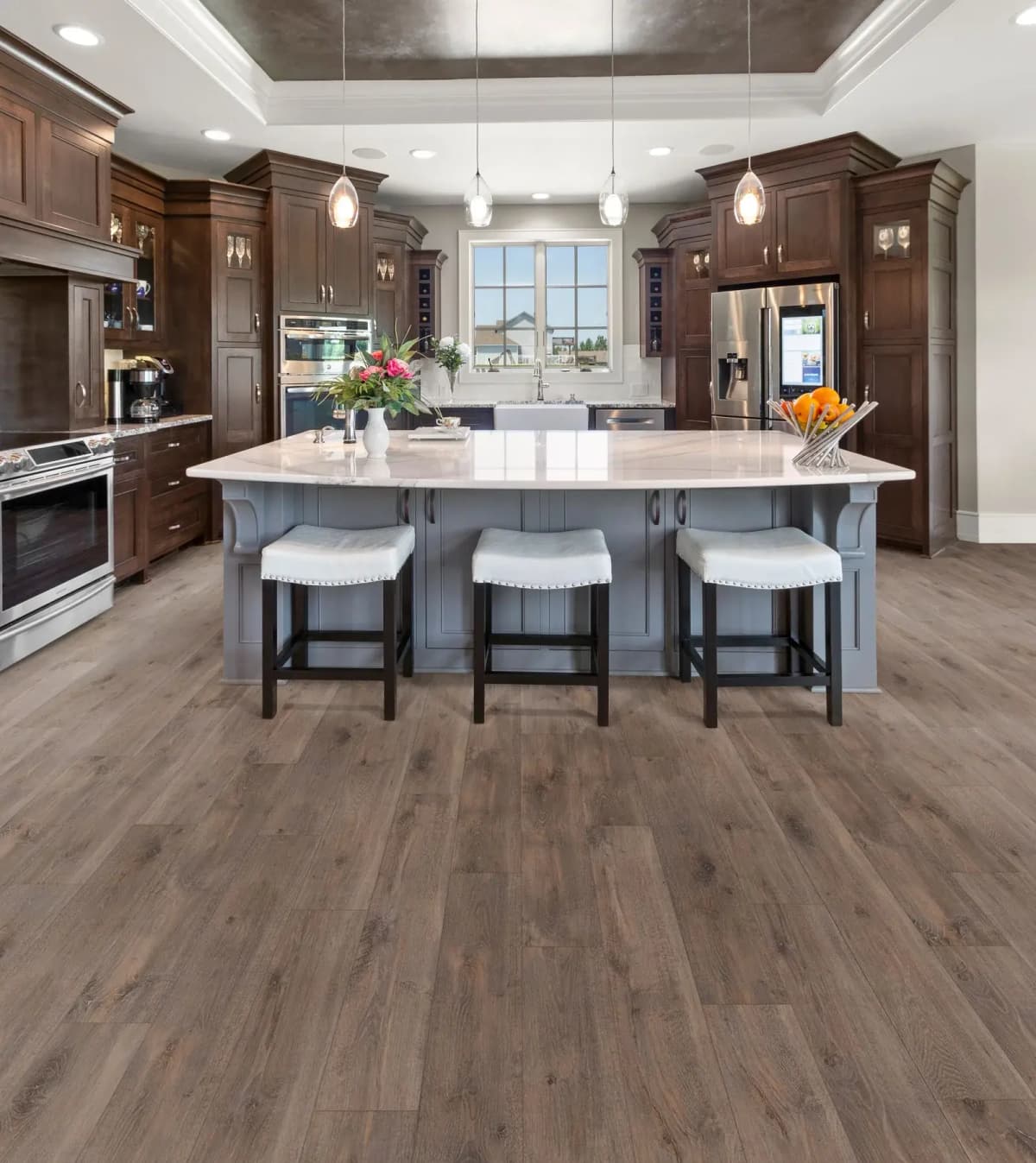
Residential warranty: mostly lifetime residential; Shaw Ignite and Shaw Ambition are the exceptions at 30 yearsSource 6Source 7 Best for: Active families, pet households, kitchens with real cooking, light commercial Where it makes sense: Most buyers ready to pay $5-7/sq ft for a long-term floor
Twenty mil is the industry "sweet spot" — and it's where most premium LVP lives. About two-thirds of the active LVP styles in our catalog carry 20 mil wear layers. Thick enough for serious traffic, heavy pet use, and light commercial applications. Warranties here are mostly lifetime residential, though not on every style.
Products in our catalog at 20 mil (selected examples):
- Shaw Infinite SPC ($3.89/sq ft) — 20 mil, SPC core, 13 colors
- Shaw Pantheon HD Plus ($6.49/sq ft) — 20 mil, attached pad, 11 colors
- COREtec Pro Classics VV017 ($4.09/sq ft) — 20 mil at entry-tier pricing
- COREtec Originals Classics VV023 ($6.39/sq ft) — 20 mil WPC, 21 colors (most options in our catalog)
- COREtec Originals Premium VV810 ($8.89/sq ft) — 20 mil with Soft Step underlayment
The honest take: For active households with kids and pets, 20 mil is the right baseline. The step from 12 mil to 20 mil is two-thirds more clear coat, and the warranty terms move with it more often than not. Pay the upcharge if your household actively uses the floor.
22 mil — Premium-Plus
Residential warranty: lifetime residential wear on COREtec Retro RevivalSource 8 Best for: High-traffic residential or light-commercial applications, premium positioning Where it makes sense: When the extra 2 mil is included at no price premium over 20 mil
Twenty-two mil exists as a middle ground between standard premium (20 mil) and commercial-grade (30 mil). The performance difference between 20 and 22 mil is marginal in practice, and the 22 mil styles we carry sit in the same lifetime-residential warranty band most 20 mil styles do. The 22 mil tier is often more about marketing positioning than meaningful durability difference.
Products in our catalog at 22 mil:
- COREtec Originals Enhanced 9x72 CR501 ($5.89/sq ft) — 22 mil, 9" wide planks
- COREtec Restored Era CR502 ($6.89/sq ft) — 22 mil, 7" × 60" planks
- COREtec Retro Revival ($5.39/sq ft) — 22 mil with vintage-styled visuals
The honest take: Don't pay a premium specifically for 22 mil over 20 mil. The performance gap is genuinely small. But when the 22 mil floor you like costs no more than the 20 mil floors you're weighing it against, the extra 2 mil is a free upgrade worth taking.
30 mil — Commercial-Grade
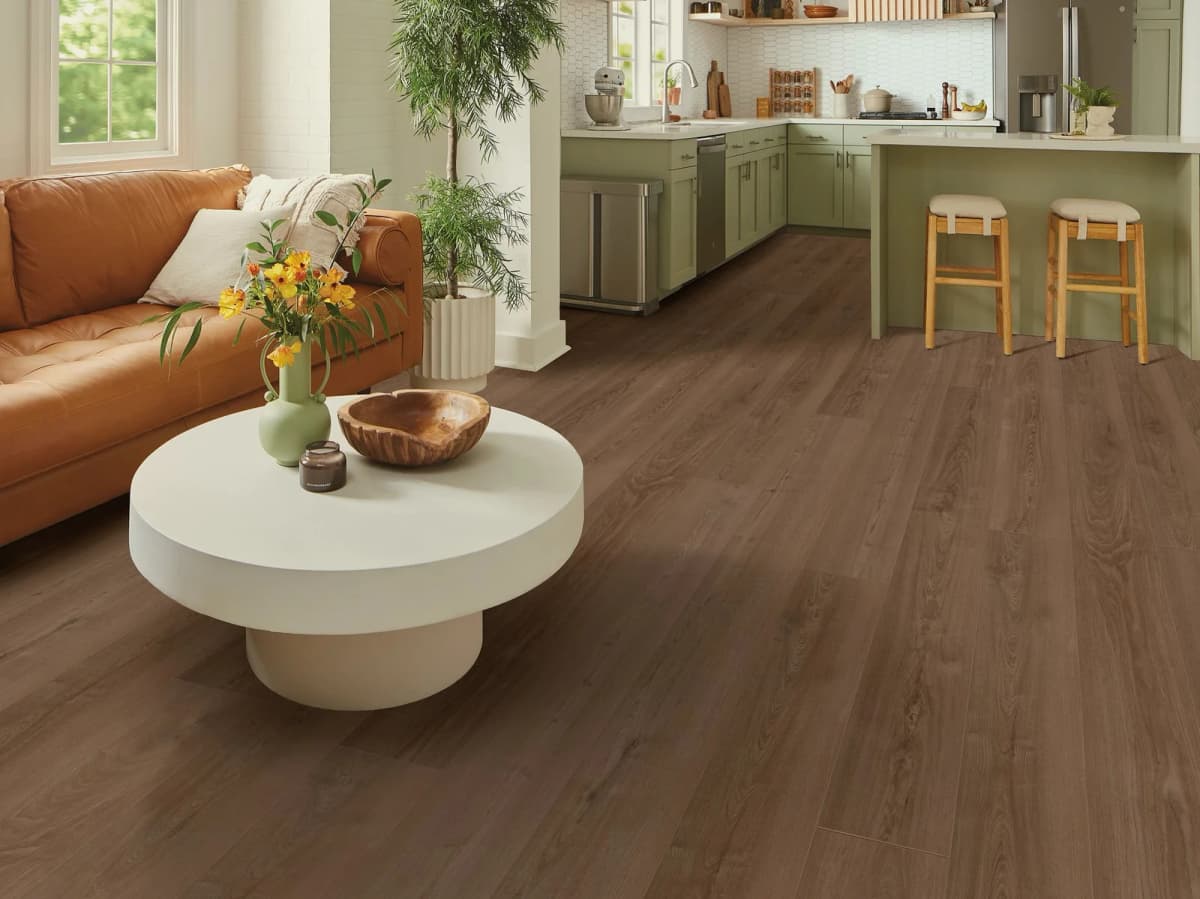
Residential warranty: lifetime residential on COREtec Originals Premium VV662Source 9 and Shaw Titan HD Plus PlatinumSource 10 Best for: Restaurants, retail stores, dental offices, busy commercial spaces; residential forever-floors Where it makes sense: Multi-generational installations, commercial buildings, floors you intend never to replace
Thirty mil is the thickest LVP wear layer commonly available. Built for commercial spaces where dozens of people walk the same floor every day for years, this tier is essentially overkill for residential use — but some homeowners specifically choose 30 mil for permanent installations where they want zero concerns about wear.
Products in our catalog at 30 mil:
- Shaw TITAN HD Plus Platinum ($6.79/sq ft) — 30 mil, 9" × 72" wide planks
- Shaw Titan HD Plus ($8.19/sq ft) — 30 mil with different colorway
- COREtec Coastal Luxe ($8.19/sq ft) — 30 mil with attached cork
- COREtec Lakehouse Luxe ($8.19/sq ft) — 30 mil with rustic styling
- COREtec Originals Premium VV457 ($9.09/sq ft) — 30 mil with 9" × 72" planks
- COREtec Originals Premium VV458 ($9.69/sq ft) — 30 mil with 7" × 72" planks
- COREtec Originals Premium VV662 ($9.59/sq ft) — 30 mil, 9" planks in lengths of 28", 55" and 82"
- COREtec Originals Premium 3/4" CR500 ($10.69/sq ft) — 30 mil, thickest LVP plank in our catalog
The honest take: 30 mil is appropriate for forever-floor installations, and for commercial traffic, which is what it was built for. For most residential applications, 20 mil delivers most of the protection at a meaningfully lower price. Choose 30 mil specifically when you want commercial-grade peace of mind or have a multi-generational installation in mind.
How to Choose: Quick Decision Framework
Don't overthink it. The wear layer decision comes down to your honest household profile.
Low-traffic spaces (bedrooms, guest rooms, closets): 6-12 mil is fine. Save the money.
Standard family rooms, living rooms, hallways: 12-20 mil. Step up to 20 mil if budget allows.
Active family with kids and pets, busy kitchens: 20 mil minimum. Twelve mil is thinner where it counts, and on the styles we carry it warrants for a term rather than for life.
Pet households with active large dogs: 20-22 mil minimum. The big paws and long nails accelerate wear patterns.
Light commercial / home offices with high traffic: 20-30 mil. Read the warranty on the exact style, because here it matters.
Heavy commercial / restaurants / retail: 30 mil. Built for that level of abuse.
Forever-floor installations: 30 mil, the thickest wear layer we carry, on a lifetime residential warranty.
Wear Layer vs Total Plank Thickness — Which Matters More?
This is the most common confusion in LVP shopping. People compare 7mm vs 8mm vs 12mm plank thickness and assume thicker = better.
It's the opposite. Some of the thickest LVP planks on the market have 12 mil wear layers and won't outlast a thinner plank with 20 mil wear layer.
Here's how to think about it:
- Total plank thickness affects how the floor feels underfoot, sound dampening, and forgiveness on imperfect subfloors. Thicker = more substantial feel, better sound, more forgiving of subfloor flaws.
- Wear layer thickness affects how long the floor lasts. Thicker = longer life and more scratch resistance, and often, but not always, a longer warranty.
These are two different specs solving two different problems. A thick plank with thin wear layer feels substantial but wears out fast. A thin plank with thick wear layer doesn't feel as substantial but lasts much longer.
Both matter. But if you have to pick one to prioritize, prioritize wear layer.
Wear Layer and Warranty: The Hidden Connection
Thicker wear layers and longer residential warranties tend to travel together, but not in lockstep. Here's how it plays out in the LVP we carry, going by each manufacturer's own product pages:
- 6 mil: it splits. Shaw Impact Plus carries a 30-year residential warrantySource 1 and Shaw Anvil Plus a lifetime oneSource 2
- 12 mil: Shaw Endura Plus, Paladin Plus and Distinction Plus carry 30-year residential warrantiesSource 3Source 4Source 5
- 20 mil: mostly lifetime residential, with exceptions. Shaw IgniteSource 6 and Shaw AmbitionSource 7 each carry a 30-year residential warranty
- 22 and 30 mil: typically lifetime residential, for example COREtec Retro Revival at 22 milSource 8, and COREtec Originals Premium VV662Source 9 and Shaw Titan HD Plus PlatinumSource 10 at 30 mil
The warranty is the manufacturer's contractual commitment, not marketing fluff, which is exactly why it's worth reading for the exact style rather than inferring it from the mil number: the 6 mil Anvil Plus carries a longer residential warranty than the 12 mil Endura Plus.
For an explanation of how waterproof claims interact with wear layer (and why "100% waterproof" doesn't mean immortal), see our waterproof flooring explainer.
Wear Layer for Specific LVP Brands
Our two main LVP brands handle wear layer differently:
Shaw spans the full range from 6 mil entry products through 30 mil commercial-grade. The Shaw LVP catalog rewards careful shopping — Endura Plus at $2.99/sq ft with 12 mil is genuinely competitive with COREtec products costing twice as much, while Shaw's premium tier (TITAN HD Plus Platinum at $6.79/sq ft with 30 mil) reaches commercial-grade wear protection. See our Shaw LVP buyer's guide.
COREtec has a higher floor — 12 mil minimum, with the bulk of products at 20 mil and premium products at 30 mil. COREtec's pricing reflects the spec floor — entry COREtec is more expensive than entry Shaw, but the spec consistency means buyers don't get surprised by a budget product with budget specs. See our COREtec LVP buyer's guide.
Wear Layer Compared to Hardwood Wear Layer
Worth noting for buyers crossing between flooring categories: LVP wear layer (measured in mils) and engineered hardwood wear layer (measured in mm) measure different things.
LVP wear layer is the clear protective coating on top of the printed design layer. It's a polyurethane-based finish that's measured in microscopic thickness (mil scale).
Engineered hardwood wear layer is the real wood veneer on top of the plywood core. It's measured in millimeters because there's measurably more material — typically 1.2mm to 6mm thick.
The two concepts are similar in spirit (both are the floor's surface protection), but the materials and measurements aren't directly comparable. A 20 mil LVP wear layer and a 4mm hardwood wear layer are both "premium" within their categories, but they protect against different types of damage in different ways.
Buyers cross-shopping into wood should also know that the wood flooring industry has its own trade association, the National Wood Flooring AssociationSource 11.
For the hardwood equivalent of this post, see our engineered hardwood wear layer guide.
Final Word
LVP wear layer thickness is the single spec that decides how much protection sits over the printed design layer. Most buyers don't ask about it. Most retailers don't proactively explain it.
When you're shopping LVP, five numbers tell the whole story:
- 6 mil = light residential, save money and plan on replacing it sooner
- 12 mil = standard residential workhorse, good for most homes
- 20 mil = active household sweet spot, mostly lifetime residential warranties
- 22 mil = premium-plus, small upgrade over 20 mil
- 30 mil = commercial-grade, forever floor for residential
Match the wear layer to how the floor will actually live. If you're flooring a guest bedroom, 12 mil works. If you have two dogs and a six-year-old, you want 20 mil. If you're flooring a restaurant or building a forever home, 30 mil is the right call.
Order a $5 sample before you commit. The wear layer isn't visible to the eye, so the spec sheet matters more than the showroom finish — but the print quality and visual realism vary meaningfully across products, even at the same wear layer tier.
In this article
The floors from this guide

Shaw Floors
Titan HD Plus Platinum
Imperial Beech
Samples are $5 each, credited back at checkout when you sign in.

Shaw Floors
Endura Plus
Cinnamon Walnut
Samples are $5 each, credited back at checkout when you sign in.

COREtec Floors
COREtec Pro Classics VV017
Chesapeake Oak
Samples are $5 each, credited back at checkout when you sign in.

COREtec Floors
COREtec Originals Enhanced 9x72 CR501
Saffron Pecan
Samples are $5 each, credited back at checkout when you sign in.
Common questions
Frequently Asked Questions
What does mil mean for LVP wear layer?
Mil is a unit of thickness equal to 1/1000th of an inch (0.001"). For reference, a human hair is about 3–4 mils thick. LVP wear layers are measured in this scale because the protective coating is genuinely thin — but every additional mil is more clear coat over the printed design layer. A 6 mil wear layer and a 20 mil wear layer may look identical on a product photo, and the difference shows up only as the floor takes traffic.
What is the difference between 12 mil and 20 mil LVP?
Both are within the standard residential range, but they serve different households. Twelve mil is sufficient for most homes without active pets. Twenty mil is two-thirds thicker and is the right choice for active families with kids and pets, busy kitchens, and light commercial applications. Neither manufacturer publishes a lifespan in years for either thickness — what they publish is the warranty, and that is where the two separate: at the $3–5/sq ft price overlap, most 20 mil styles carry a lifetime residential wear warranty while Shaw's 12 mil styles carry a 30-year residential warranty.
Is wear layer thickness the same as total LVP plank thickness?
No — these are two separate specs that measure different things. Total plank thickness (measured in millimeters) affects how the floor feels underfoot, how well it dampens sound, and how forgiving it is on imperfect subfloors. Wear layer thickness (measured in mils) is what takes the scratches and the traffic. A 10mm-thick LVP plank can have a 12 mil wear layer; a 5mm-thick plank can have a 30 mil wear layer. If you have to prioritize one spec, prioritize wear layer — it is the surface that wears.
When does a 30 mil wear layer make sense for a home?
Thirty mil is commercial-grade, built for restaurants, retail stores, and spaces where dozens of people walk the same floor daily for years. For residential use, 30 mil is technically overkill — but some homeowners choose it for permanent installations where they want zero concerns about wear. Products like Shaw TITAN HD Plus Platinum ($6.79/sq ft) and COREtec Coastal Luxe ($8.19/sq ft) represent the residential 30 mil options. For most active households, 20 mil delivers 90% of the performance at a meaningfully lower price.
Referenced in this guide
Sources
Impact Plus (6 mil) — 30 Year Residential Resilient Limited Warranty
Shaw Floors · Accessed 2026-09-14
https://shawfloors.com/en-us/vinyl/impact-plus-weathered-barnb-7-/2031v-00400Anvil Plus (6 mil) — Residential Resilient Lifetime Limited Warranty
Shaw Floors · Accessed 2026-09-14
https://shawfloors.com/en-us/vinyl/anvil-plus-chatter-oak-7-/2032v-00295Endura Plus (12 mil) — 30 Year Residential Resilient Limited Warranty
Shaw Floors · Accessed 2026-09-14
https://shawfloors.com/en-us/vinyl/endura-plus-cinnamon-walnut-7-/0736v-00150Paladin Plus (12 mil) — 30 Year Residential Resilient Limited Warranty
Shaw Floors · Accessed 2026-09-14
https://shawfloors.com/en-us/vinyl/paladin-plus-cinnamon-walnut-7-/0278v-00150Distinction Plus (12 mil) — 30 Year Residential Resilient Limited Warranty
Shaw Floors · Accessed 2026-09-14
https://shawfloors.com/en-us/vinyl/distinction-plus-french-oak-7-/2045v-00257Ignite (20 mil) — 30 Year Residential Resilient Limited Warranty
Shaw Floors · Accessed 2026-09-14
https://shawfloors.com/en-us/vinyl/ignite-golden-flare-7-/2428v-02148Ambition (20 mil) — 30 Year Residential Resilient Limited Warranty
Shaw Floors · Accessed 2026-09-15
https://shawfloors.com/en-us/vinyl/ambition-silk-7-/3425v-01216Retro Revival (22 mil) — Lifetime Residential Limited Wear Warranty
COREtec · Accessed 2026-09-14
https://coretecfloors.com/en-us/products/coretec-originals/mocha-field-oak-cr504-02115COREtec Originals Premium VV662 (30 mil) — Lifetime Residential Limited Wear Warranty
COREtec · Accessed 2026-09-14
https://coretecfloors.com/en-us/products/coretec-originals-premium/grande-vanilla-almond-maple-vv662-01037Titan HD Plus Platinum (30 mil) — Residential Resilient Lifetime Limited Warranty
Shaw Floors · Accessed 2026-09-14
https://shawfloors.com/en-us/vinyl/titan-hd-plus-platinum-imperial-beech-9-/3302v-00185
Related Posts
Keep Reading
Shaw LVP Buyer's Guide: Classic Series vs Pro Series, and Where 5th and Main Fits (2026)
10 min read
Will Heavy Furniture Dent Vinyl Plank Flooring? What Holds Up (2026)
14 min read
What Flooring Can Go Over a Concrete Slab? Floating vs Glue-Down, Moisture Testing, and What to Buy
14 min read
Is Luxury Vinyl Plank Toxic? VOCs, Off-Gassing, and What Flooring Certifications Actually Mean
15 min read
Keep browsing