
COREtec Tile & Stone Looks: The DIY Alternative to Ceramic and Porcelain (2026)
Floor names link to their product pages in a new tab.
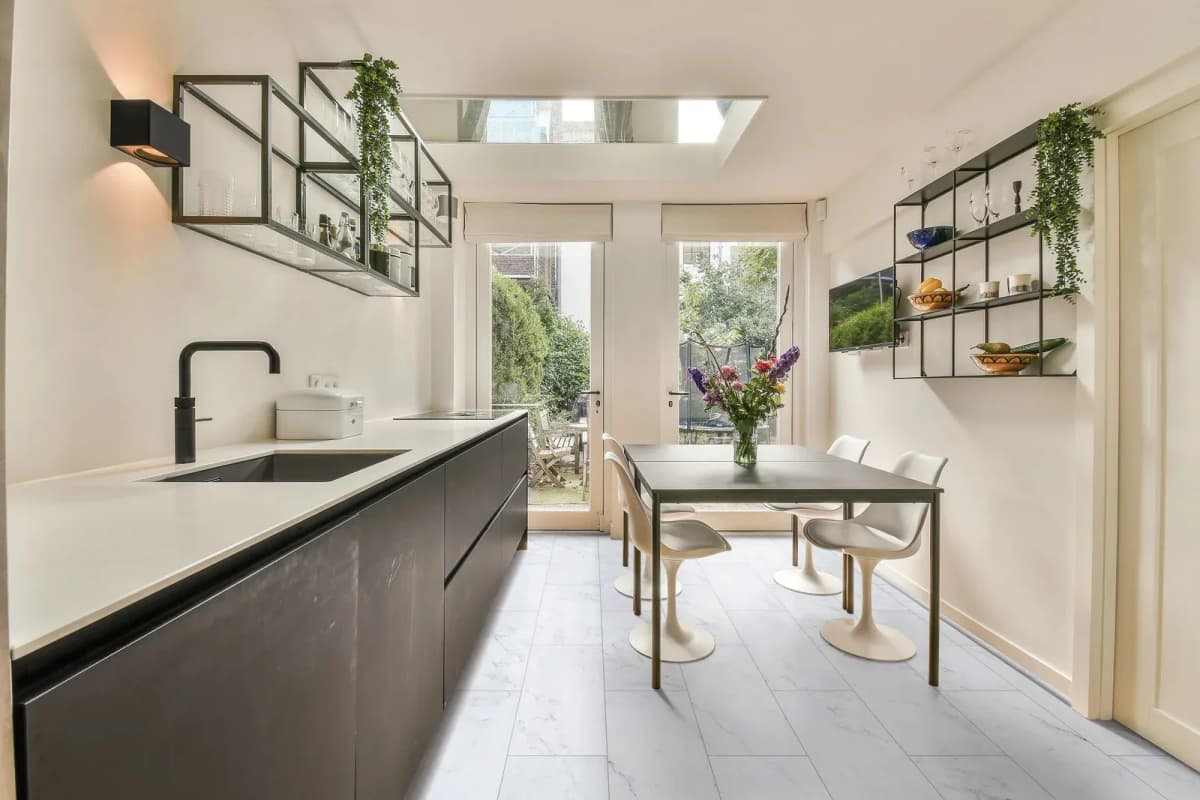
Quick answer: The COREtec tile we carry is luxury vinyl tile on the same waterproof SPC and WPC rigid cores COREtec uses for its planks: travertine, marble, slate, cement, and terrazzo visuals without the cold touch of ceramic, the grout upkeep, or the thinset-and-wet-saw labor. We carry three COREtec tile lines in two formats: the 18.50" × 37.01" COREtec Tile SPC 18 (VV840), designed to read as roughly 18-inch squares, at $8.19/sq ft, and a nominal 12" × 24" tile in two builds — COREtec Pro Plus Enhanced Tile (VV870) at $5.99/sq ft and the thicker COREtec Plus Tile (VV872) at $7.59/sq ft. All three run a 20 mil wear layer, attached cork, and a Lifetime Residential warranty. All three click together and float with no grout at all, and on our site VV870 is the one we offer with metal transition trims. For bathrooms, laundry rooms, and entryways, it's the DIY-friendly way to get the stone look.
Real stone and ceramic tile look beautiful and wear extremely well. They're also cold underfoot, brutal on dropped glassware, and among the hardest floors to install yourself — thinset mortar, a wet saw, grout, sealer, and a lot of kneeling. For a lot of homeowners, the stone look is the goal, but the stone labor is the dealbreaker.
That's the gap these COREtec tile lines fill. They're luxury vinyl built to read as travertine, marble, or slate, on the same waterproof rigid cores as COREtec's planks. You get the aesthetic of a tiled floor with a fraction of the install work — and a floor that's warmer to the touch and more forgiving to live on.
This guide covers what the three COREtec tile lines we carry actually are, why they tend to beat ceramic for DIY installs, how the click-together floor goes down, and the trim and edge details that make the finished floor read as tile. We sell COREtec as an authorized dealer, and we'll be straight about where real tile is still the better call.
Why These Tile Lines Beat Ceramic for DIY
Three things make them the more practical choice for a homeowner doing their own floors.
It's warmer and softer underfoot. Ceramic and porcelain are dense fired clay — cold to the touch, and unforgiving on your knees and anything you drop. Vinyl is inherently warmer to the touch, and all three lines ship with attached cork bonded to the back, which adds a bit of give. In a bathroom you step into barefoot every morning, that difference is felt daily.
It's waterproof at the core. COREtec's installation guidelines call both its SPC and its WPC flooring waterproof,Source 1Source 2 so a splash or a mopped floor won't swell the tiles themselves. Real tile shrugs off water too; its weak point is the grout — cement grout is porous, usually needs sealing, and can crack if the subfloor flexes. A click-together floor has no grout to maintain. It does leave an expansion gap at the walls, and in wet areas such as bathrooms COREtec's guidelines call for caulking that perimeter with flexible silicone.Source 1Source 2 All three lines are built on this waterproof construction, which makes them a natural fit for baths, laundry rooms, mudrooms, and basements. In a basement, lay the floor over a slab that has passed moisture testing, with 6-mil poly film underneath: a waterproof tile won't stop moisture coming up through the concrete from getting trapped beneath it.Source 1Source 2 Our best waterproof flooring for bathrooms guide goes deeper on moisture-prone rooms.
It installs without the wet trade. No thinset, no wet saw, no grout float, no sealer. The three lines click together as a floating floor; straight cuts take a utility knife, and a jigsaw handles curves like the cut around a toilet flange. On a subfloor that's already flat — COREtec asks for within 3/16" over 10 feetSource 1Source 2 — there's no cure time, and a first-time DIYer can floor a small bathroom in a day; the same room in ceramic is a multi-day job that punishes small mistakes.
Where real tile still wins: surface hardness (ceramic shrugs off scratches vinyl can't), heat tolerance in front of a wood stove or fireplace, and the simple fact that it's the genuine material — fired clay or quarried stone, not vinyl. If those matter more than install effort and underfoot comfort, buy the ceramic. For everyone else, the stone look on a warm, waterproof, DIY-friendly core is the more practical build.
The Three COREtec Tile Lines We Carry
We carry three of COREtec's tile lines, in two formats, sized and styled for different rooms and looks.
COREtec Tile SPC 18 (VV840) — 18.50" × 37.01"
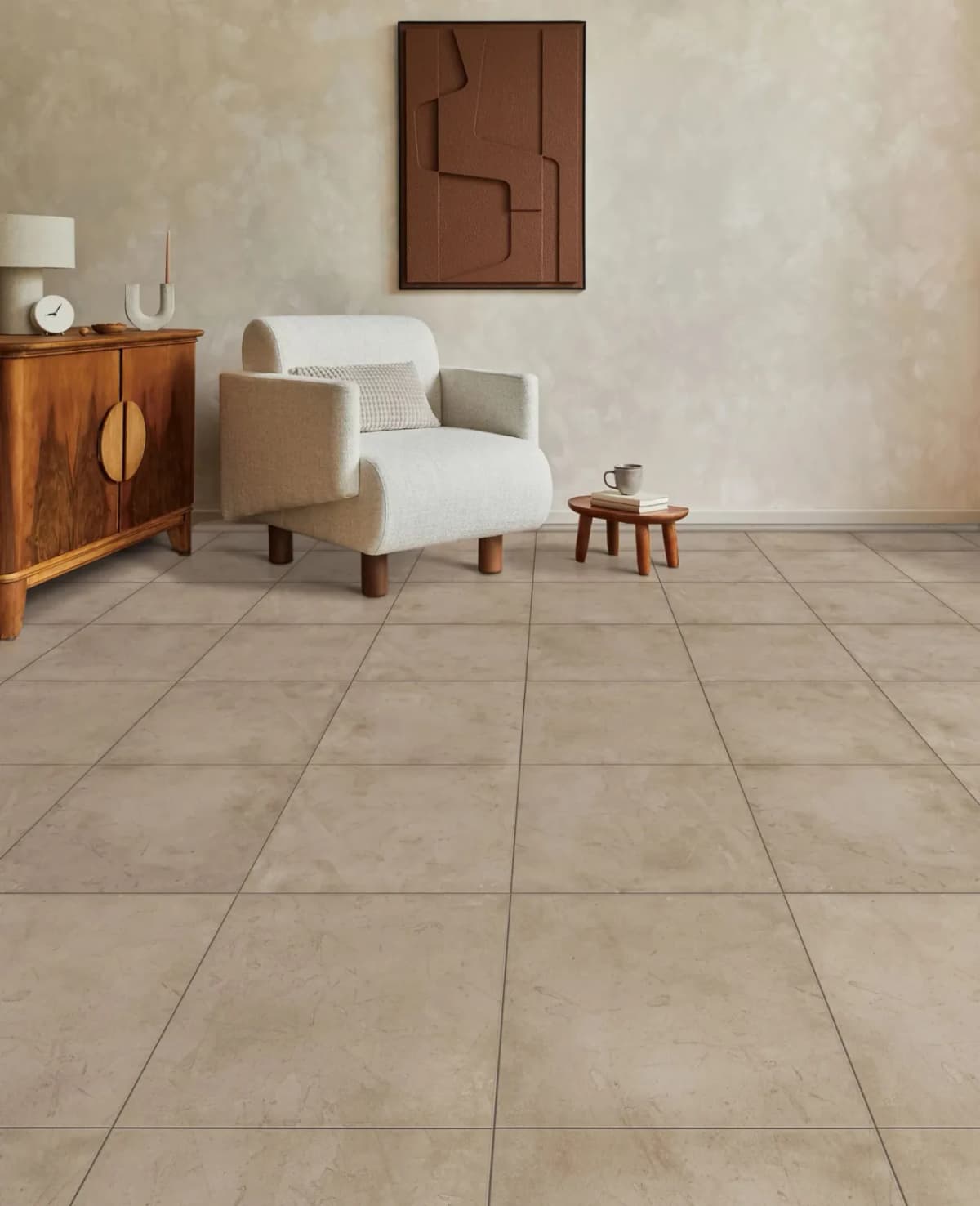
This is the large-format line. COREtec Tile SPC 18 runs 18.50" × 37.01" pieces (nominally 18" × 36") — 28.53 square feet per carton across 6 pieces — at $8.19/sq ft, 0.236" thick on a stone-polymer (SPC) core, with a 20 mil wear layer and 1 mm of attached cork. COREtec sells it as a square tile visual with integrated grout: each long piece is designed to read as two roughly 18-inch squares,Source 3Source 4 a Micro Bevel outlines the edges, and COREtec's own photos show the finished floor as a grid of large square tiles. Because that look depends on how the rows line up, lay this line out the way its product-specific instructions show; COREtec points installers to them through a QR code on the box.Source 5
Its five colorways mix stone looks (Dolomi Limestone, Eterna Marble) with architectural ones (Vivara Terrazzo, Romano Cement, Raw Terra Cotta). In a wide entryway, a primary bath, or an open kitchen-to-dining run, it reads like a floor of large square porcelain tiles — without any grout to install or maintain.
The 12" × 24" Lines (VV870 and VV872)
Two lines share the more classic 12" × 24" tile size (nominal; the pieces measure 12.01" × 24.02"). That size is the workhorse tile format, and in a small room, such as a powder room, laundry area or mudroom, more of the floor stays in whole tiles rather than cut pieces.
COREtec Pro Plus Enhanced Tile (VV870) is the thinner of the two at 0.196", with 28.03 square feet per carton across 14 pieces at $5.99/sq ft and five colorways — Serena Limestone, Foussana Limestone, Amani Marble, Ferro Sandstone, and Classic Travertine. COREtec Plus Tile (VV872) is the thicker build at 0.314" with 1.5 mm of attached cork, 32.04 square feet per carton across 16 pieces at $7.59/sq ft, and nine colorways that widen the range into slate and quartz looks — Mari Travertine, Bianco Marble, Perfecta Marble, Sonia Marble, Embra Slate, Iona Stone, Ligera Sandstone, Nella Sandstone, and Avesta Quartz. Both use an Enhanced Painted Bevel edge.
All three lines publish a 20 mil wear layer — the clear top layer that takes the foot traffic and scuffing a hardworking utility room sees — and all three carry a Lifetime Residential warranty. What differs is the build: 0.196" on VV870 and 0.236" on VV840, both on SPC cores with 1 mm of attached cork, and 0.314" on VV872, on a WPC core with 1.5 mm of cork. Each product page's spec table lists the core, the cork, and the carton coverage.
How the Tile Lines Install
All three tile lines are engineered to float, and on the floor itself, floating is how we sell and support them; at the stairs we'd glue, as covered below.
Floating (click) install locks the pieces together edge-to-edge and "floats" over the subfloor without adhesive. COREtec's installation page files one guideline for its SPC tile and one for its WPC tile,Source 5 and each says the flooring is designed to be installed using the floating methodSource 1Source 2 — which covers all three tile lines: the SPC-cored VV840 and VV870, and the WPC-cored VV872. It's the faster, more DIY-friendly method, and floated or glued, the tiles seam tightly with no grout at all.
Lay it in an offset pattern. Both guidelines set the layout: tile goes down in a staggered (offset) brick pattern, not a straight stack. The SPC guideline asks for at least a one-third offset and prefers a half, and the WPC guideline has you start each row with a full or half tile.Source 1Source 2 COREtec Tile SPC 18's square look depends on how its rows line up, so confirm its layout in the product-specific instructions before you set the offset.
Glue-down is approved, not preferred. COREtec approves glue-down installation over approved wood and concrete substrates,Source 1Source 2 so an installer who wants to work that way has the manufacturer behind them. The three-season range each guideline allows in spaces without climate control (−25°F to 155°F for SPC, 32°F to 100°F for WPC) applies to floating floors only. For a three-season room that drops below freezing, only the SPC lines, VV840 and VV870, stay within their guideline's range. The one place both guidelines require the floor to be glued down is under cabinets or an island set on top of it, plus 2 feet beyond them,Source 1Source 2 so set cabinets and vanities first and float the tile up to them. We sell COREtec as a floating floor and carry no adhesive for it.
Confirm the methods listed on the product page for the style you want. For the broader picture across COREtec, our COREtec LVP buyer's guide walks through it.
Finishing the Edges: The Trim We Offer With Each Line
Here's a detail buyers miss until the floor is down and they're standing at a doorway wondering how to finish the edge. On our site, VV870 is the tile line we offer with metal transitions; for VV840 and VV872 we offer the molded set. The companion list on each product page shows exactly what we offer for that floor.
COREtec Pro Plus Enhanced Tile (VV870): metal transitions
For VV870 we offer metal companion pieces alongside the usual molded ones:
- Metal Stair Cap — caps the exposed floor edge at the top of a stair in a slim, square metal profile
- Metal T-Molding — for transitions between two floors of equal height
- Metal Reducer — for transitioning down to a lower adjacent floor
These come in Satin Silver and Satin Nickel finishes, and a slim satin-metal edge suits a clean, contemporary stone look. VV870 also lists the molded T-molding, reducer, quarter round, and baby threshold — plus a flush stairnose on every colorway except Classic Travertine — so you can mix or stay entirely molded.
COREtec Tile SPC 18 (VV840) and COREtec Plus Tile (VV872): the molded set
For these two we offer the molded set, the same profiles you'd order for a plank floor:
- T-Molding — where the tile meets another floor of equal height, usually in a doorway
- Flush Stairnose — caps the exposed edge at the top of a stair, finishing level with the floor surface
- Reducer — the piece for stepping down to a lower floor
- Quarter Round — hides the expansion gap at the wall
- Baby Threshold — caps the floor edge against carpet, tile, or a sliding-door track
Trim availability varies by style and colorway, so check the companion trims on the specific product page before you order, and add them to your flooring order: trim ships with the floor at no added freight. Trim and transitions are final sale, so measure the doorways before you add them.
At a staircase, we'd glue. Wherever a flush stairnose meets the floating floor at the top of a stair, we'd glue the first row of flooring, at least 6 inches, with a band of adhesive, and if the floor continues up the stairs, every tread and riser should be fully adhered, even when the same floor floats in the room. On COREtec both are our position rather than a COREtec instruction; we carry no adhesive for COREtec, so your installer supplies it. Our stairs guide walks through the method and the Shaw guideline behind the first-row rule.
Grout-Look Edges Without the Grout
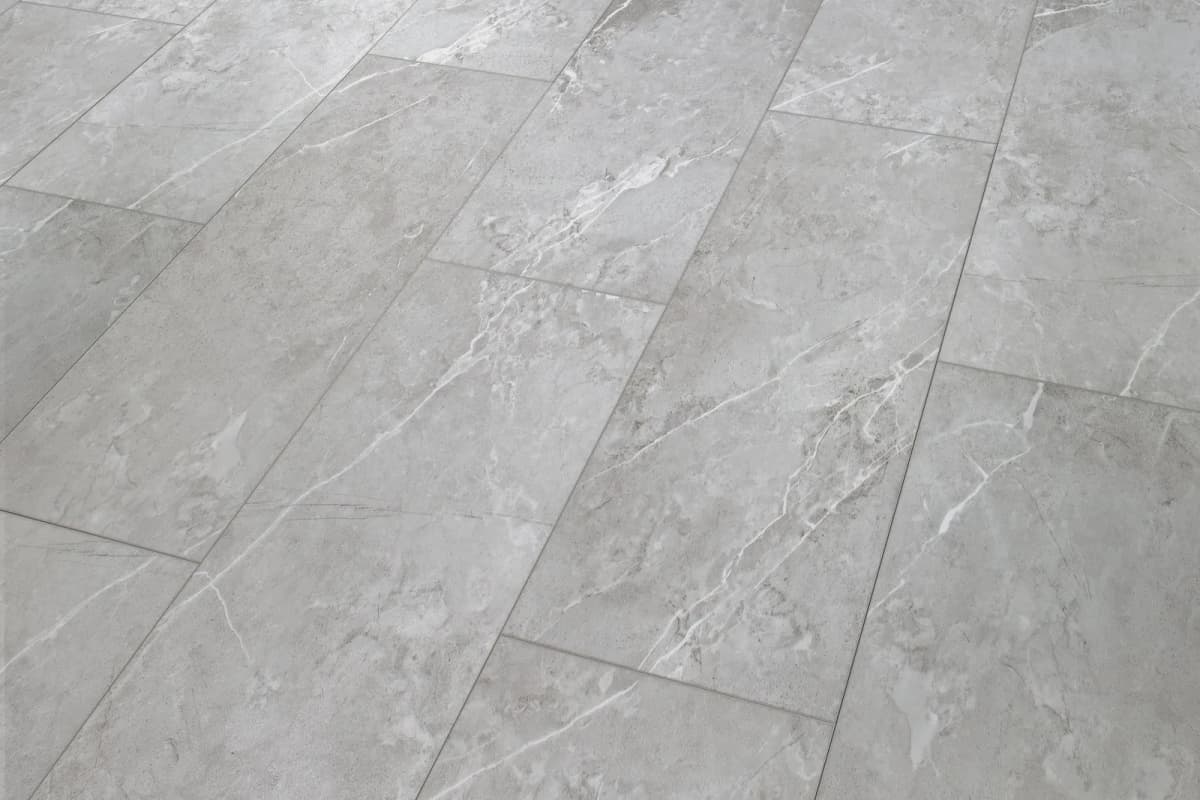
One of the quiet advantages of these lines is that they give you the look of grout lines without any of the grout. COREtec builds it into the tile and calls it integrated grout.Source 6
All three lines are beveled, and the Edge Type row on each product page tells you which treatment you're getting: a Micro Bevel on VV840, and an Enhanced Painted Bevel on the 12" × 24" VV870 and VV872. Either way, each piece has a defined edge, so the installed floor shows a crisp line at every joint, and VV840 adds a grout line built into each piece, which gives it its square-tile look. The result reads as individually set tiles, with the visual rhythm of grout joints, from what is actually click-together vinyl.
That pays off in upkeep: no grout to seal, no grout to scrub, no grout to watch discolor over the years — just the appearance of it. In our catalog, every colorway of each line carries that line's bevel, so the grout-line look comes with whichever color you choose.
How to Choose
The decision comes down to room and look:
- Big open rooms, primary baths, wide entryways: COREtec Tile SPC 18 (VV840, $8.19/sq ft), the largest piece of the three, designed to read as roughly 18-inch squares.
- Powder rooms, laundry, mudrooms, smaller footprints: the 12" × 24" lines keep more of a small room in whole tiles — VV870 at $5.99/sq ft, or VV872 at $7.59/sq ft for a thicker build and a wider colorway range.
- The widest choice of stone looks: VV872, with nine colorways spanning travertine, marble, slate, sandstone, and quartz.
- Want the tiled-joint look with none of the grout: any of the three. Every line clicks together as a floating floor and every line is beveled, so you get the joint lines without the grout — just add the coordinating trim to the same order: we offer molded trim for all three (the full molded set on VV840 and VV872) and the metal option for VV870.
The three tile lines run $5.99 to $8.19 per square foot at the manufacturer's advertised price (MAP); COREtec as a whole runs $4.09 to $10.69 in our catalog. Lower prices may be available — request a quote by email using the "Email us for today's best price" form on any product page. New to the brand overall? Start with what COREtec flooring is for the full background.
Order a Sample First
Stone visuals are hard to judge on a screen. A marble or travertine print that reads warm and creamy on your monitor can pull gray or pink in your actual room light — and on large-format tile, the veining matters at scale.
Order $5 samples before you commit. Lay each one flat in the room where it'll live, look at it in both morning and evening light, step back ten feet to see how the color reads at a normal viewing distance, and live with it a day or two before deciding. A sample settles color, sheen, and texture; for how the veining runs across a full tile, study the room photos on the product page. Every sample dollar comes back as credit toward your floor order when you sign in at checkout with the same email you used for samples. Our guide to evaluating flooring samples covers the full method.
A couple of practical notes for when you're ready: samples ship by parcel, usually FedEx, and full-floor orders ship LTL freight, which is a curbside delivery. Freight is free when the flooring on your order comes to $1,799 or more. Browse the full range on the COREtec collection hub, and if you're weighing tile-format LVP against other waterproof options for a specific room, the best waterproof flooring for bathrooms guide is the right next read.
In this article
The floors from this guide

COREtec Floors
COREtec Tile SPC 18 VV840
Raw Terra Cotta
The large-format line — 18.50" × 37.01" pieces, 6 to a carton
Samples are $5 each, credited back at checkout when you sign in.

COREtec Floors
COREtec Plus Tile VV872
Avesta Quartz
Samples are $5 each, credited back at checkout when you sign in.

COREtec Floors
COREtec Pro Plus Enhanced Tile VV870
Serena Limestone
Samples are $5 each, credited back at checkout when you sign in.
Common questions
Frequently Asked Questions
Is COREtec tile better than ceramic tile?
It depends on the room and who's installing. The COREtec tile lines we carry are waterproof and use no real grout, so there's no grout to seal, stain, or crack. They're warmer to the touch than ceramic or porcelain, their attached cork adds a bit of give underfoot, and they install without thinset mortar, grout, or a wet saw — which makes them far more DIY-friendly. Real ceramic and porcelain still win on surface hardness, heat tolerance in front of a wood stove or fireplace, and the fact that they're genuine fired clay rather than vinyl. For a bathroom, laundry room, or mudroom where you want the stone look without the labor, these tiles are the more practical build.
Can you install COREtec tile without grout?
Yes. The three COREtec tile lines we carry click together as a floating floor and seam tightly with no grout at all — an advantage over ceramic, whose cement grout is porous and is usually sealed to keep stains out. COREtec builds the grout look into the tile instead and calls it integrated grout: every piece is beveled — a Micro Bevel on COREtec Tile SPC 18, an Enhanced Painted Bevel on the two 12" × 24" lines — and COREtec Tile SPC 18 also has a grout line built into each piece, which gives it its square-tile look. Every colorway of each line carries that line's bevel, and the Edge Type row on the product page confirms it.
What sizes does COREtec tile come in?
We carry three COREtec tile lines, in two formats. COREtec Tile SPC 18 (VV840) is the large-format one: 18.50" × 37.01" pieces (nominally 18" × 36"), each designed to read as two roughly 18-inch squares, 0.236" thick, 28.53 square feet per carton across 6 pieces, $8.19/sq ft, in limestone, marble, terrazzo, cement, and terra cotta looks. The other two run a nominal 12" × 24" tile (12.01" × 24.02" actual). COREtec Pro Plus Enhanced Tile (VV870) is 0.196" thick with 28.03 square feet per carton across 14 pieces at $5.99/sq ft and five colorways; COREtec Plus Tile (VV872) is the thicker 0.314" build with 32.04 square feet per carton across 16 pieces at $7.59/sq ft and nine colorways. All three carry a 20 mil wear layer, attached cork, and a Lifetime Residential warranty.
What transition trim does COREtec tile use?
On our site, COREtec Pro Plus Enhanced Tile (VV870) is the tile line we offer with metal transitions: a Metal T-Molding, a Metal Stair Cap, and a Metal Reducer, each in Satin Silver and Satin Nickel, alongside a molded T-molding, reducer, quarter round, and baby threshold — plus a flush stairnose on every colorway except Classic Travertine. For COREtec Tile SPC 18 (VV840) and COREtec Plus Tile (VV872), we offer the molded set: a T-molding, a flush stairnose, a reducer, quarter round, and a baby threshold. Check the companion trims listed on the specific product page before you finalize your order.
Referenced in this guide
Sources
COREtec Pro SPC Installation Guidelines (rev. 11/05/2024)
Shaw Industries (USFloors / COREtec) · Accessed 2026-09-26
https://pdmsview.shawinc.com/viewer/document/doc/10195Resilient Installation Guidelines for WPC Products (rev. 03/01/2022)
Shaw Industries (USFloors / COREtec) · Accessed 2026-09-26
https://pdmsview.shawinc.com/viewer/document/doc/11746Raw Terra Cotta LVT Flooring (VV840-12271)
COREtec · Accessed 2026-09-26
https://coretecfloors.com/en-us/products/coretec-tile/raw-terra-cotta-vv840-12271The Stress-Free Style of Luxury Vinyl Tile
COREtec · Accessed 2026-09-26
https://coretecfloors.com/en-us/blog/the-stress-free-style-of-luxury-vinyl-tileInstallation & Maintenance
COREtec · Accessed 2026-09-26
https://coretecfloors.com/en-us/installation-maintenanceCOREtec Tile: Luxury Vinyl Tile Flooring
COREtec · Accessed 2026-09-26
https://coretecfloors.com/en-us/shop-by-collection/coretec-tile
Related Posts
Keep Reading

LVP Wear Layer Explained: Why 12 Mil and 20 Mil LVP Overlap on Price and Wear Differently
9 min read
Shaw LVP Buyer's Guide: Classic Series vs Pro Series, and Where 5th and Main Fits (2026)
10 min read
Will Heavy Furniture Dent Vinyl Plank Flooring? What Holds Up (2026)
14 min read
What Flooring Can Go Over a Concrete Slab? Floating vs Glue-Down, Moisture Testing, and What to Buy
14 min read
Keep browsing