
How to Find a Good Flooring Installer (And 5 Red Flags to Avoid)

You can buy the best flooring on the market and still end up with a disaster if the installation is wrong. Uneven planks, visible seams, hollow spots, flooring that creaks after six months — almost every horror story traces back to the installer, not the product.
Finding a good flooring installer isn't hard, but it does require asking the right questions and recognizing the warning signs. Here's a straightforward guide to hiring someone you can trust with your home.
What a Good Installer Looks Like
Before we talk about red flags, let's define what you should actually be looking for.
Licensed and insured. This is non-negotiable. A proper flooring installer carries general liability insurance (to cover damage to your home) and workers' compensation (to cover injuries on the job). If an uninsured installer falls through your staircase or damages a water line, you're liable. Ask for proof of insurance — a legitimate contractor will provide a certificate without hesitation.
Licensing requirements vary by state and municipality. Some states require a specific flooring contractor license; others include it under a general contractor license. Check your local requirements and verify the installer's license is current.
Willing to do a site visit before quoting. Any installer who gives you a firm price over the phone without seeing the job site is guessing. A proper quote requires evaluating the subfloor condition, measuring the actual square footage (rooms are rarely perfectly rectangular), identifying transition areas, checking for moisture issues, and noting any unusual challenges like radiant heat, uneven concrete, or multiple levels.
Provides a written, itemized quote. The quote should break out labor, materials (if they're supplying any), removal of old flooring, subfloor preparation, transitions and trim, and disposal. A single lump-sum number with no detail is a setup for surprise charges later.
Offers a labor warranty. A reputable installer stands behind their work. Look for at least a one-year labor warranty that covers defects in installation — things like planks coming apart, improper expansion gaps, or subfloor issues that should have been caught during prep. This is separate from the manufacturer's warranty on the flooring product itself.
Has verifiable reviews and references. Online reviews on Google, Yelp, or the Better Business Bureau are a starting point. But also ask for references from recent jobs similar to yours — and actually call them. Ask the references if the job was completed on time, on budget, and if any issues arose after installation.
Questions to Ask Every Installer

These questions will tell you more than any review site:
"Will you handle removing my old flooring?" Some installers only do installation and expect you to handle demo. Others subcontract demo to a separate crew. Get clarity on who's doing what, what it costs, and who's responsible for disposal.
"What subfloor preparation is included?" Subfloor prep is where installations succeed or fail. Ask specifically about leveling (self-leveling compound for low spots), moisture testing (especially for concrete slabs), and cleaning. If the installer acts like subfloor prep is an optional add-on, they're cutting corners.
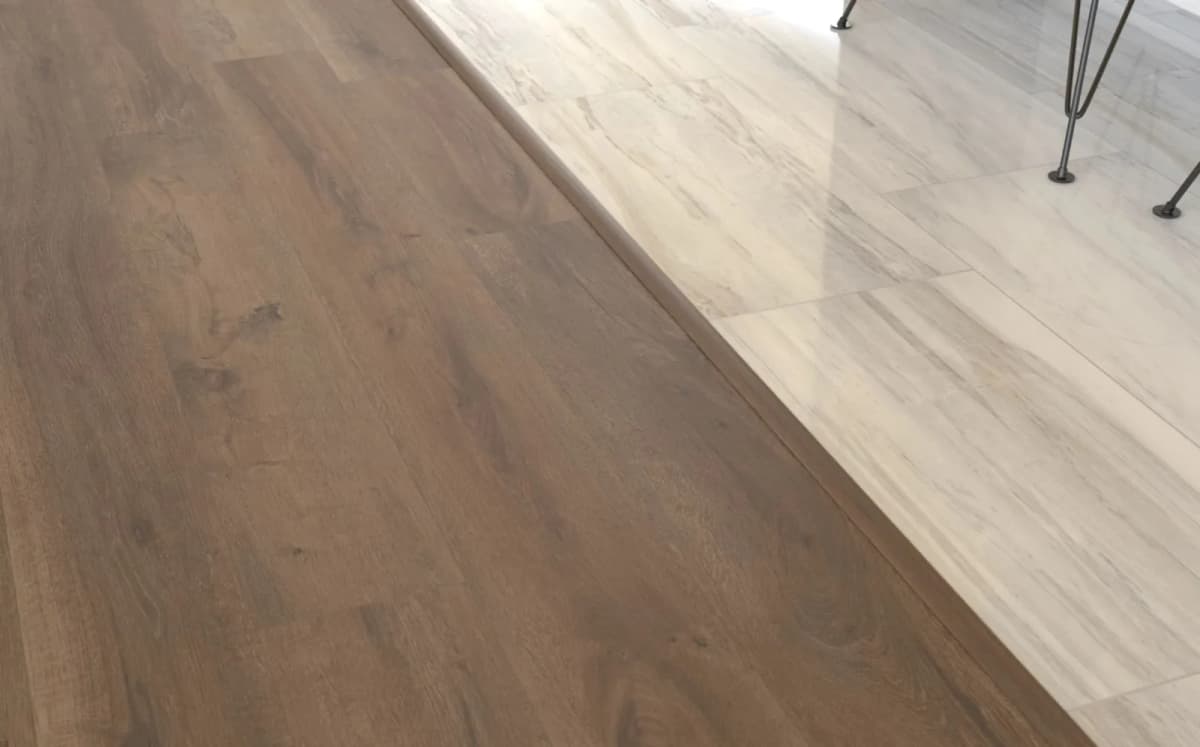
"How do you handle transitions between rooms and flooring types?" Transitions — the strips where one flooring type meets another — are one of the most visible parts of any installation. A good installer plans transitions carefully, uses quality transition strips that match the flooring, and discusses options with you before starting.
"What's your timeline, and do you handle other jobs simultaneously?" Some installers juggle multiple jobs and disappear for days at a time. Get a clear start date, estimated completion date, and an understanding of how many crew members will be on site.
"What happens if something goes wrong after installation?" You want to hear a clear answer about their labor warranty, their process for handling callbacks, and their willingness to fix issues. Vague answers like "we'll work something out" are not a warranty.
The 5 Red Flags
These are the warning signs that should make you walk away, no matter how competitive the price.
1. No written contract. A handshake deal is not a contract. Without a written agreement specifying scope, price, timeline, payment schedule, and warranty terms, you have no recourse if things go sideways. Every detail discussed verbally should appear in writing before work begins.
2. Demands full payment upfront. The standard payment structure for flooring installation is a deposit (typically 10-30%) to secure the job and order materials, with the balance due upon satisfactory completion. An installer who demands 50% or more upfront — or worse, full payment before starting — is either in financial trouble or planning to disappear. Never pay in full until you've inspected the completed work.
3. No proof of insurance or license. If they hesitate, make excuses, or tell you insurance "isn't necessary" for a flooring job, end the conversation. One accident or one piece of property damage and you're personally on the hook.
4. No online presence or verifiable reviews. In 2026, a legitimate business has some online footprint. No website, no Google Business listing, no reviews anywhere — that's not a "word of mouth only" business, that's a business with something to hide. A handful of reviews is fine; zero is suspicious.
5. Pressure to decide immediately. "This price is only good today" or "I have another job starting Monday so I need to know now" — these are pressure tactics, not legitimate business constraints. A good installer has a steady pipeline and doesn't need to strong-arm you into a commitment. Take your time, compare at least three quotes, and choose the installer who makes you most confident.
How Many Quotes Should You Get?
Three is the sweet spot. Fewer than three and you don't have enough data to evaluate pricing. More than five and you'll get diminishing returns while wasting everyone's time.
When comparing quotes, don't automatically choose the smallest number. Compare scope — does that quote include subfloor prep, transitions, and old flooring removal? Often the smallest quote excludes work that the larger quotes include, and the final cost ends up the same or higher.
One More Thing: The Flooring Matters Too

Even the best installer can't overcome a bad product. Make sure you're starting with quality flooring from reputable manufacturers. At FloorFreight, every product we sell comes with a delivery guarantee — your order arrives on time, undamaged, and ready for your installer. If anything goes wrong in transit, we handle it. That's one less variable for you and your installer to worry about.
Common questions
Frequently Asked Questions
How do I find a good flooring installer?
Start by getting at least three written, itemized quotes from licensed and insured installers who will visit the job site before pricing. Check Google, Yelp, and the Better Business Bureau, then call references from recent similar jobs and ask whether the work was completed on time, on budget, and whether any issues arose afterward. A good installer provides proof of insurance without hesitation, visits the site before quoting, and offers a written labor warranty.
What questions should I ask a flooring installer before hiring?
Ask whether they handle old flooring removal and who pays for disposal. Ask what subfloor preparation is included — leveling, moisture testing, and cleaning should not be optional extras. Ask how they handle transitions between rooms and flooring types. Ask for a clear start date, estimated completion date, and how many crew members will be on site each day. Ask specifically about their labor warranty and the process for callbacks if something fails after installation.
What are the red flags when hiring a flooring installer?
Walk away if the installer refuses to provide a written contract, demands full payment or more than 30% upfront before work begins, cannot provide proof of liability insurance and workers' compensation, has no verifiable online presence or reviews, or uses high-pressure tactics like "this price is only good today." Any of these is a serious warning sign regardless of how competitive the price looks.
How many flooring installation quotes should I get?
Three quotes is the practical minimum. Fewer than three doesn't give you enough data to evaluate pricing; more than five produces diminishing returns. When comparing, don't automatically choose the smallest number — check what each quote actually includes. Subfloor preparation, old flooring removal, transition strips, and disposal are often excluded from low quotes, which makes the apparent gap misleading. Compare scope, not just the bottom line.
Related Posts
Keep Reading

Best Place to Buy Flooring Online in 2026: How 11 Online Retailers Compare
22 min read
Flooring Transition Strips Explained: T-Molding vs Reducer vs Stair Nose
8 min read

How to Compare Flooring Samples: A Simple Method for Picking the Right Floor
8 min read

The Right Way to Evaluate Flooring Samples at Home
6 min read
Keep browsing