
How to Compare Flooring Samples: A Simple Method for Picking the Right Floor
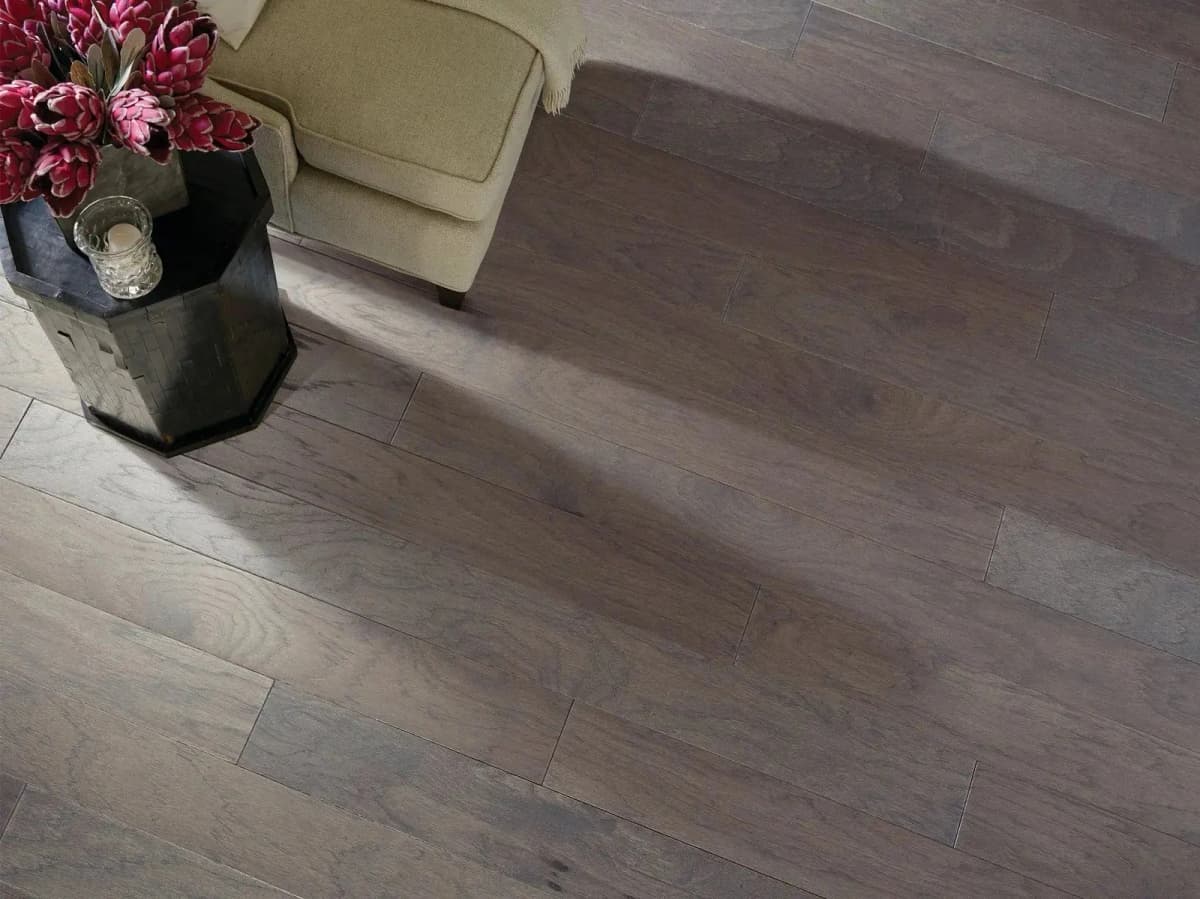
Floor names link to their product pages in a new tab.
Ordering samples is the easy part. Every serious flooring shopper ends up with a small stack of planks on the kitchen counter — the trouble is what happens next. Most people hold them up one at a time, decide the third one is "the nice one," and order forty cartons off a thirty-second impression.
That's not comparing. That's guessing with props.
Comparing samples well is a specific, unglamorous skill: two or three planks at a time, flat on the real floor, judged in your own light over a couple of days. It takes fifteen minutes of attention spread across a weekend, and at $5 a sample it's the surest way to avoid living with the wrong floor for years. Here's the method we walk customers through.
Quick answer: Lay two or three finalists flat on the floor in the actual room. Look at them in morning light and again in evening light. Step back ten feet and judge them the way you'll really see the floor — from across the room, not from six inches away. Live with them for a day or two before you commit. Compare colorways within one style first, then compare across styles. And remember a single plank can show you texture, sheen, and undertone, but not how much a whole floor of boards will vary.
Comparing samples is a different job than evaluating one
We have a companion piece on how to evaluate a single flooring sample at home — lighting, viewing angle, testing against your trim, the 48-hour rule. Read that for the fundamentals of reading one plank.
This post is about the harder part: holding two or three options against each other and deciding. Evaluation tells you whether a floor is good; comparison tells you which good floor is right for your room. The second is where people freeze up, keep ordering "just one more" sample, and never pull the trigger.
The comparison method, step by step
The method is deliberately boring, because boring is what works.
Lay them flat, in the actual room. A floor lives on the floor. Set each sample flat on the ground in the room it's destined for — not on a table, not propped against the wall, not held up to the window. A plank held vertically catches light completely differently than one lying flat reflecting your ceiling fixtures. If you're deciding between the living room and the bedroom for a particular color, test it in each; the light is not the same.
Judge them in morning light, then again in evening light. This is the step that saves people. Daylight shifts from cool and blue in the morning to warm and golden by late afternoon, and your bulbs add their own cast at night. A warm oak can read slightly ashy at 8 AM and glow at 7 PM — or the reverse. A colorway that only looks right at one hour of the day is a colorway you'll quietly regret. Leave the samples down and look at them at least twice: once in morning daylight, once under your evening lights.
Step back ten feet. Almost nobody looks at their floor from six inches away, yet that's how everyone inspects samples. Put the planks down, walk to the other side of the room, and look back. From ten feet, small differences in graining and knot detail melt away, and what's left is what actually matters: the overall tone and how it sits with the room. Colors that felt dramatically different in your hand often converge at a distance — and colors that looked identical up close can separate. The ten-foot look is the honest one.
Live with them a day or two. Never decide on delivery day. First impressions are contaminated by new-sample excitement and by whichever plank you unwrapped last. Leave your finalists on the floor and walk past them for a couple of days. Nine times out of ten, one option you loved on Saturday has quietly lost you by Monday — and that's the system working.
Keep it to two or three at a time. Comparison has a hard ceiling. With four or more planks down, every option blurs into a beige committee and decision fatigue sets in. Narrow to two or three finalists, remove the rest from view, and compare only those. If you can't get below three, you're probably comparing across too many styles at once — which brings us to the next part.
Compare colorways within one style first
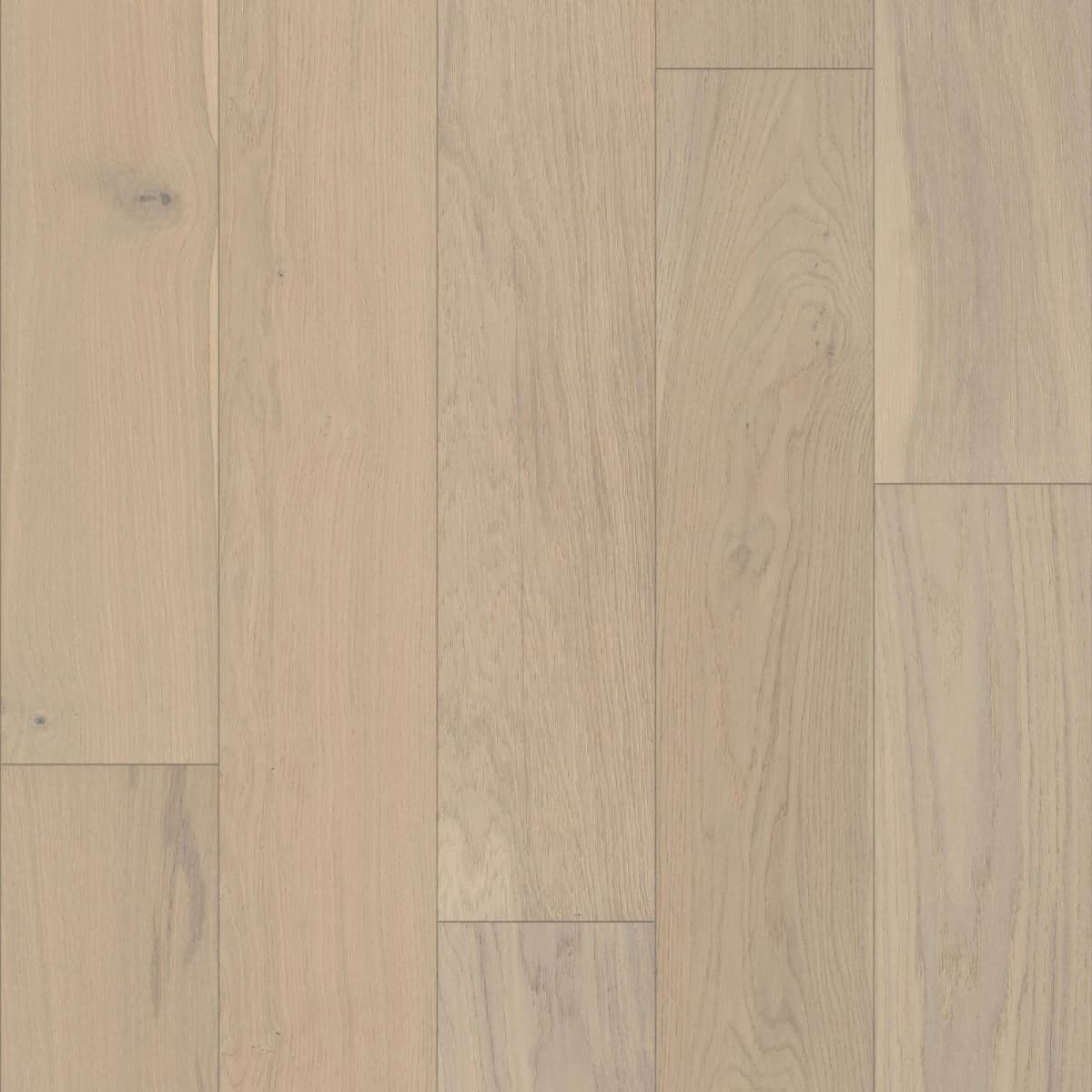
The cleanest comparison holds everything constant except color. Pick a style you already like — say COREtec Pro Classics or a Shaw LVP line — and put two or three of its colorways side by side. Same construction, same plank width, same texture, same edge. The only variable is tone and undertone, so that's the only thing your eye has to decide.
This is where you settle the questions that actually make or break a floor: Does the warm colorway fight your cool-gray cabinets? Does the gray one go flat and lifeless next to warm oak trim? Does the mid-tone read as "greige" in a way you'll get tired of? Hold each colorway right up against your baseboards, your cabinets, and your countertop. Undertone clashes are nearly impossible to predict from a screen and obvious the second the plank is on the floor next to the real thing.
Then compare across styles and constructions
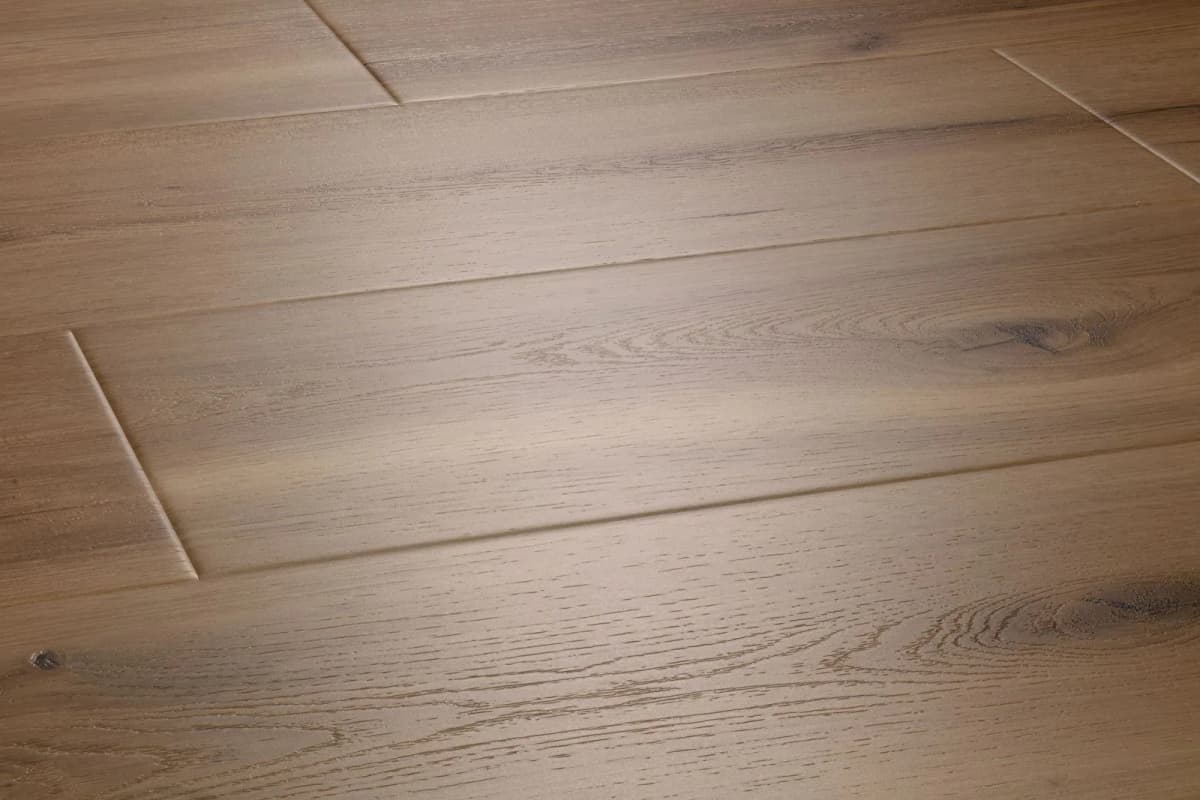
Once you've won the colorway battle within a style, run one more comparison across styles — but only one or two contenders, and only for the things color can't tell you. This is where you're judging construction, not shade: plank width, the edge bevel, the sheen level, and how the floor feels and sounds underfoot.
A Shaw SPC plank and a COREtec WPC plank in similar colors feel genuinely different — WPC is thicker, warmer, and softer; SPC is denser and more dent-resistant. A 9-inch wide plank reads more contemporary than a 5-inch one, and a herringbone like Anderson Tuftex's engineered-hardwood European Ash Herringbone makes a different statement than a straight-lay board (our herringbone flooring guide covers when the pattern earns its keep). A sample in your hand answers these format questions far better than a spec sheet does. Just don't run this comparison first — changing color, width, construction, and texture all at once is how people end up with ten samples and no decision.
What a sample can show you — and what it can't
Be clear-eyed about what a single plank is telling you. It's honest about the things you read up close:
- Texture — run your finger across it. Does the embossing follow the grain (registered), or is it random? A real, aligned texture is one of the biggest tells of a quality floor.
- Sheen — matte, satin, or something glossier. Sheen changes how much a floor shows dust and footprints, and it's very hard to judge from a photo.
- Undertone — the subtle warm or cool bias underneath the main color, which is exactly what clashes (or harmonizes) with your fixed elements.
What one plank can't show you is full-plank-to-plank variation: how much the color and graining shift across an entire floor of dozens of boards. Your sample is a single draw from that range — the actual floor will have lighter boards, darker boards, and more or less knotting than the one plank you're holding. To preview that spread, do two things. First, look at the multiple plank photos and lifestyle room shots on each product page; those show many boards photographed together and give you the real range at scale. Second, order a couple of colorways of the same style so you can see the variation in person rather than inferring it from one board.
A sample also can't show the specs that live on the label, not the surface. Two planks can look identical and carry very different wear layers — the clear layer over the design, measured in thousandths of an inch, which you can't judge by eye. Neither Shaw nor COREtec publishes a lifespan in years for any wear layer, so compare the visuals with your eyes, and read the wear layer and the warranty term on the product page.
How the $5 sample credit works
This part changes the math on ordering generously. Samples at FloorFreight are $5 each with shipping included, and every dollar comes back as credit toward your floor order when you sign in at checkout with the same email you used to order the samples.
That sign-in is the one condition, and we'll always say it plainly: guests who check out anonymously don't get the credit, so sign in. The credit doesn't expire, which means there's no ticking clock forcing a decision before you've properly compared. Samples go out by parcel, most often FedEx, usually within a business day.
Practically, order more than you think you need. Four or five colorways across two styles credits back against a floor you'll spend far more on — and the extra samples are exactly what make a real comparison possible.
When to stop comparing and move to a quote
There's a point where more samples stop helping. If you've compared your finalists flat, in both lights, from ten feet, over a couple of days, and one has quietly become "the floor" — you're done. Trust it. Ordering a seventh sample at that stage is procrastination, not diligence.
At that point the job shifts from which floor to how much and what's it cost. Work out your square footage — our flooring quantity guide walks through measuring and waste factor, or let the room calculator do the math — and round up to whole cartons, since flooring sells by the box. Every product page shows the per-square-foot and per-carton price at the minimum advertised price (MAP). Lower prices may be available — request a quote by email using the "Email us for today's best price" form on any product page. That's the natural handoff: samples settle the decision, then a quote turns it into an order.
Final Word
Comparing flooring samples isn't complicated, but it asks for a little patience most people skip. Lay two or three finalists flat in the real room. Look in the morning, look in the evening. Step back ten feet. Live with them a day or two. Compare colorways within a style before you compare across styles, and remember that a single plank tells you texture, sheen, and undertone honestly — while the full-floor variation lives in the product-page photos and in ordering more than one board.
Do that, and the right floor tends to announce itself. Then sign in, let your samples credit back against the order, and buy with the quiet confidence of someone who saw the floor in their own light before committing to it.
Order $5 samples from FloorFreight — Shaw, COREtec, and Anderson Tuftex, credited back on your floor order when you sign in at checkout.
In this article
The floors from this guide

COREtec Floors
COREtec Pro Classics VV017
Chesapeake Oak
Samples are $5 each, credited back at checkout when you sign in.

Anderson Tuftex
European Ash Herringbone
Plaza
Samples are $5 each, credited back at checkout when you sign in.
Common questions
Frequently Asked Questions
How do you compare flooring samples the right way?
Lay the samples flat on the floor in the actual room, not propped against a wall or held in your hand. Look at them in morning light and again in evening light, since a warm oak can read ashy at 8 AM and golden at 7 PM. Step back ten feet and look at them the way you'll see the floor from across the room, not from six inches away. Then live with them for a day or two before deciding — first impressions on delivery day are almost always wrong. Compare two or three finalists at a time; more than that and every option starts to look the same.
Should I compare colorways of one style, or samples from different styles?
Do both, in that order. Start by comparing two or three colorways within a single style you already like — same construction, same texture, so you're only judging color and undertone. Once you've found the colorway that works with your trim and cabinets, compare it against one or two samples from different styles or constructions (say, a Shaw SPC against a COREtec WPC) to confirm you like the plank width, edge, and feel underfoot. Comparing across styles first tends to overwhelm people, because you're changing five variables at once.
What can a flooring sample show you, and what can't it?
A single plank shows texture, sheen, and undertone accurately — the things your eye and hand read up close. What it can't show is full-plank-to-plank variation: how much the color and graining shift across an entire floor made of dozens of boards. One sample is a single draw from that range. To preview the variation, look at the multiple plank photos and room shots on the product page, which show many boards photographed together, and order a couple of colorways of the same style so you can see the spread in person.
How does the FloorFreight $5 sample credit work?
Samples are $5 each with shipping included, and every dollar comes back as credit toward your floor order — but the credit applies only when you sign in at checkout with the same email you used to order the samples. Guests who check out anonymously don't get it, so sign in. The credit doesn't expire, so there's no pressure to decide before it's gone. Samples go out by parcel, most often FedEx, usually within a business day.
Related Posts
Keep Reading
Best Place to Buy Flooring Online in 2026: How 11 Online Retailers Compare
22 min read
Flooring Transition Strips Explained: T-Molding vs Reducer vs Stair Nose
8 min read

The Right Way to Evaluate Flooring Samples at Home
6 min read
How to Find a Good Flooring Installer (And 5 Red Flags to Avoid)
7 min read
Keep browsing