
How Much Flooring Do I Need? The Complete Room Calculator Guide
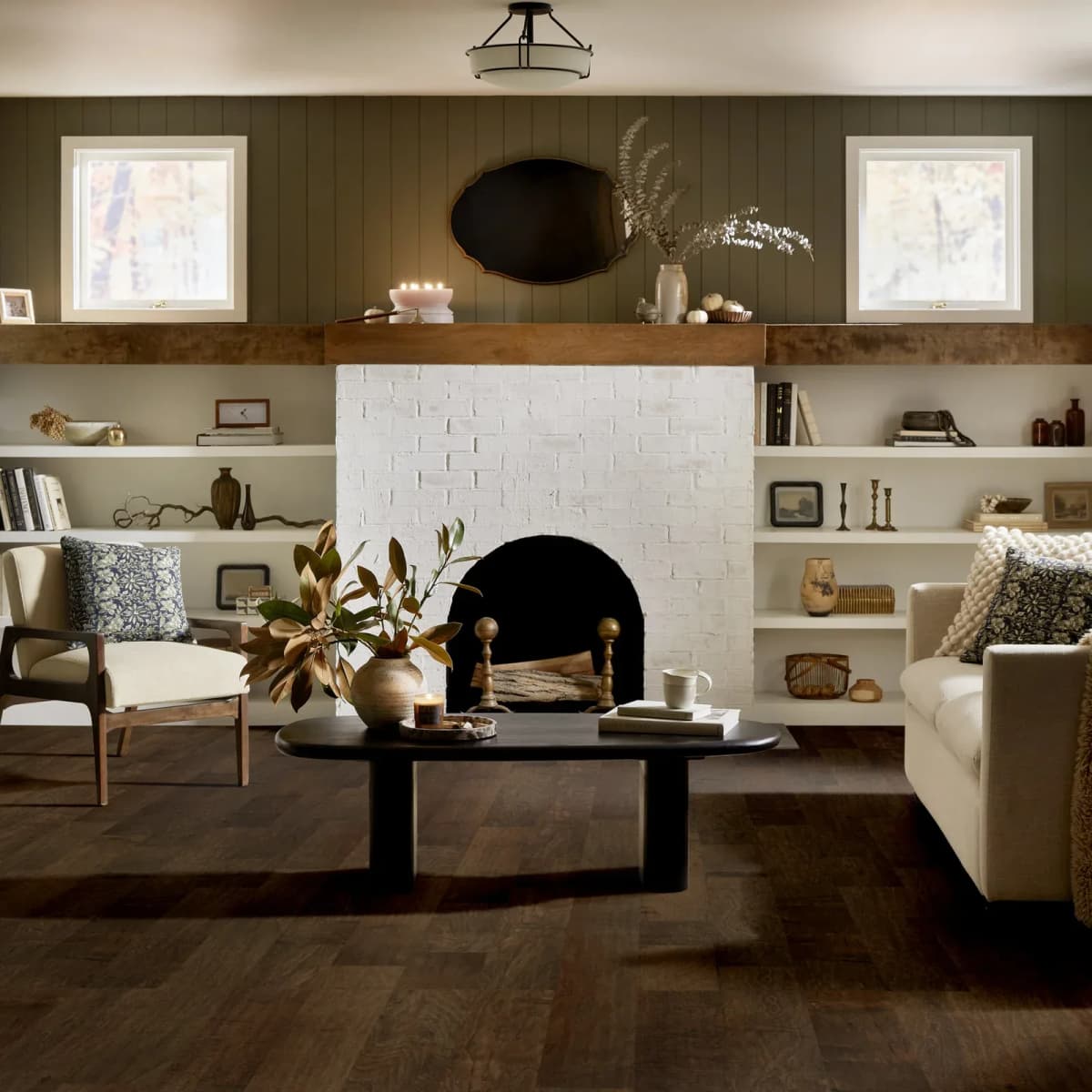
Floor names link to their product pages in a new tab.
One of the most common questions we get at FloorFreight is "how much flooring do I need?" Order too little and you'll delay your project waiting for a restock. Order too much and you've wasted money. Here's how to get it right every time.
If you want a dollar estimate as well as a quantity, our flooring cost calculator handles both.
Step 1: Measure Your Room
Grab a tape measure and measure the longest wall and the widest wall in feet. For rectangular rooms, it's simple: length × width = square footage.
Example: A room that's 12 feet long and 14 feet wide = 168 square feet.
If your tape reads in feet AND inches, convert the inches to a decimal before multiplying. 14 feet 6 inches becomes 14.5 feet (6 inches ÷ 12 = 0.5). 14.5 × 18 = 261 square feet.
For L-shaped or irregular rooms, break them into rectangles, calculate each one separately, and add them together. Draw it on paper if it helps — sketch the room shape, draw a line where you're splitting it, and label each section. You don't need an architecture degree, just basic rectangles.
Step 2: Add 10% (or 15%) for Cuts
Every flooring installation involves cuts — around doorways, along walls, at transitions between rooms. The cut-off pieces are usually too small to use elsewhere.
- 10% overage for standard rectangular rooms.
- 15% overage for hallways, diagonal layouts, or rooms with multiple doorways and obstacles. Hallways are deceptively expensive because every doorway requires precise cuts and narrow spaces mean more trimming per plank.
Example: 168 sq ft + 10% = 185 sq ft
This isn't waste — it's insurance. If you damage a plank during installation or need to replace one years later, you'll be glad you have matching material from the same dye lot.
Step 3: Calculate Cartons
Every flooring product comes in cartons that cover a specific number of square feet. At FloorFreight, each product page shows the exact coverage per carton (typically 18-25 sq ft depending on the style).
Example: 185 sq ft ÷ 20 sq ft per carton = 9.25 → round up to 10 cartons
Always round up. You can't buy partial cartons, and having an extra partial carton is much better than being short.
Don't Forget Closets and Hallways
Walk-in closets, pantries, and hallways are the most commonly forgotten spaces. If you're running flooring into a closet, measure it as a separate rectangle and add it to your total. Hallways especially deserve attention because of the higher waste factor mentioned above.
Multiple Rooms? Add Them Up
Doing several rooms at once? Measure each one separately:
| Space | Dimensions | Sq Ft |
|---|---|---|
| Living Room | 16 × 20 | 320 |
| Master Bedroom | 14 × 16 | 224 |
| Guest Bedroom | 12 × 12 | 144 |
| Hallway | 4 × 15 | 60 |
| Subtotal | 748 | |
| + 10% waste | 822.8 |
If your flooring covers 20 sq ft per carton: 822.8 ÷ 20 = 41.14 → order 42 cartons.
There's another reason to order extra: the 48-hour discovery window. Once cartons are opened, you may find one or two planks with manufacturing imperfections — a chipped edge, a print defect, a slightly warped board. This is normal and expected. Your overage covers these without sending you scrambling for more material.
The Dye Lot Rule

Here's something most big-box stores won't tell you: order all your cartons at once. Flooring is manufactured in production runs called "dye lots," and the color can vary slightly between runs. If you order 20 cartons now and 5 more later, those 5 might not match perfectly.
This is why we show a dye lot notice on every product page. It's not a scare tactic — it's genuinely important for a professional-looking result. That 10% buffer isn't just for cuts; it's insurance against dye-lot mismatches. Returning an unopened extra carton costs far less than ripping up and re-doing a floor because the replacement planks don't match.
Common Mistakes to Avoid
Measuring in inches and forgetting to convert. If your tape reads 174 inches, divide by 12 to get 14.5 feet before multiplying.
Subtracting for cabinets and islands. Don't. Your installer needs full planks to cut around these obstacles. The waste factor already accounts for this.
Ordering "just enough." There's no such thing. Always round up to the next full carton. A few extra cartons stored flat in a climate-controlled space are insurance, not waste — most installers recommend keeping 2-3 in reserve. If you ever damage a plank, you'll have a perfect match ready for repair.
Get Started
Try our free room planner tool to get your exact square footage and carton count in 30 seconds. Then order samples to make sure you love the look before you commit to the full order.
Once you've got your square footage figured out, run it through our cost calculator to see what the project actually costs — material, freight, and all.
Common questions
Frequently Asked Questions
How do I measure a room for new flooring?
Measure the longest wall and widest wall in feet, then multiply: length × width = square footage. Convert inches to decimals first — 14 feet 6 inches is 14.5 feet. For L-shaped rooms, split the space into rectangles, calculate each separately, and add the totals. Don't forget closets, pantries, and hallways — these are the most commonly missed spaces. Measure each one as a separate rectangle and add them to your total.
How much extra flooring should I order for waste?
Add 10% overage for standard rectangular rooms. Bump to 15% for hallways, rooms with diagonal layouts, or spaces with many doorways and obstacles — tight spaces require more precise cuts and generate more offcuts per plank. The overage isn't just for installation waste; it's also insurance against dye lot mismatches if you need to reorder later, and protection against the occasional defective plank discovered when opening cartons.
How do I calculate how many cartons of flooring I need?
Each product's carton covers a specific square footage — typically 18-25 sq ft depending on the style. Divide your total square footage (including overage) by the coverage per carton, then round up to the next whole number. You cannot buy partial cartons. For example: 185 sq ft ÷ 20 sq ft per carton = 9.25, rounded up to 10 cartons. Always round up — a partial extra carton is far less expensive than running short mid-project.
Should I order all my flooring cartons at once?
Yes. Flooring is manufactured in production runs called dye lots, and color can vary slightly between runs. If you order 20 cartons now and 5 more later, the second batch may not match exactly. Order all cartons for the project in a single order. Returning an unopened extra carton is also a far smaller problem than ripping up a finished floor because replacement planks from a later dye lot are a shade different. Most installers recommend keeping 2-3 extra cartons in reserve for future repairs.
Related Posts
Keep Reading
Best Place to Buy Flooring Online in 2026: How 11 Online Retailers Compare
22 min read
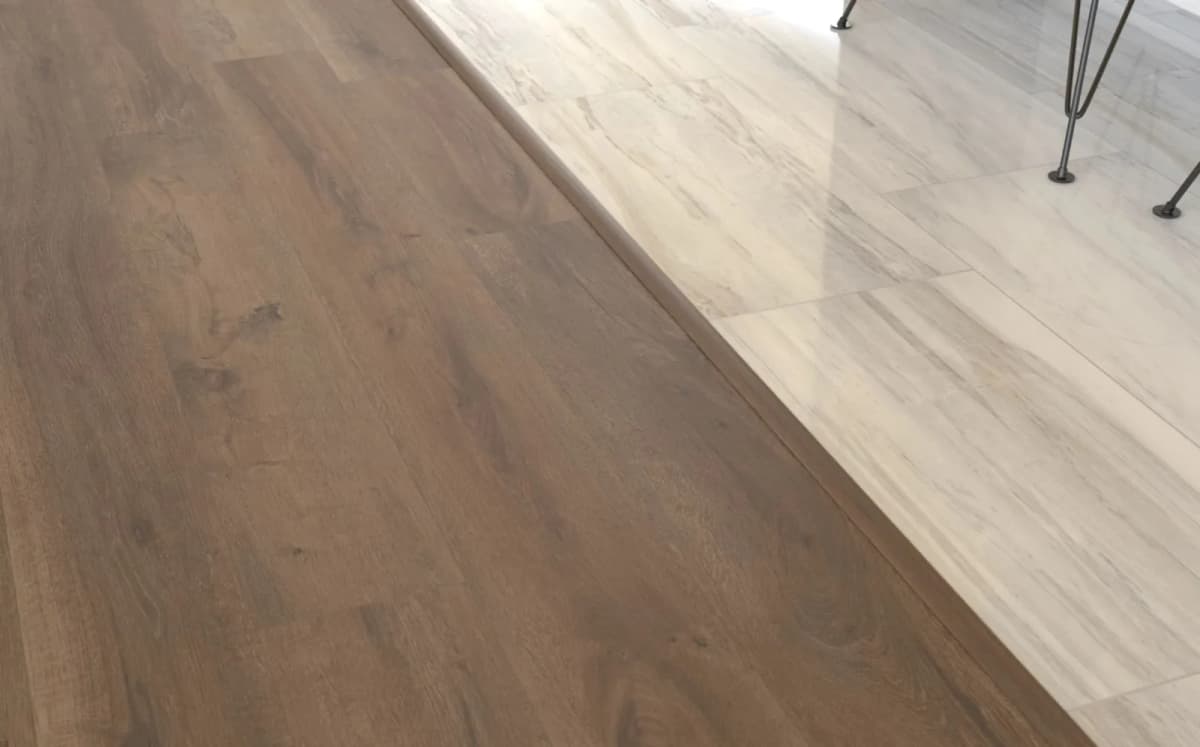
Flooring Transition Strips Explained: T-Molding vs Reducer vs Stair Nose
8 min read
How to Compare Flooring Samples: A Simple Method for Picking the Right Floor
8 min read
The Right Way to Evaluate Flooring Samples at Home
6 min read
Keep browsing