
Herringbone Flooring Guide: What Makes the Pattern Premium (2026)
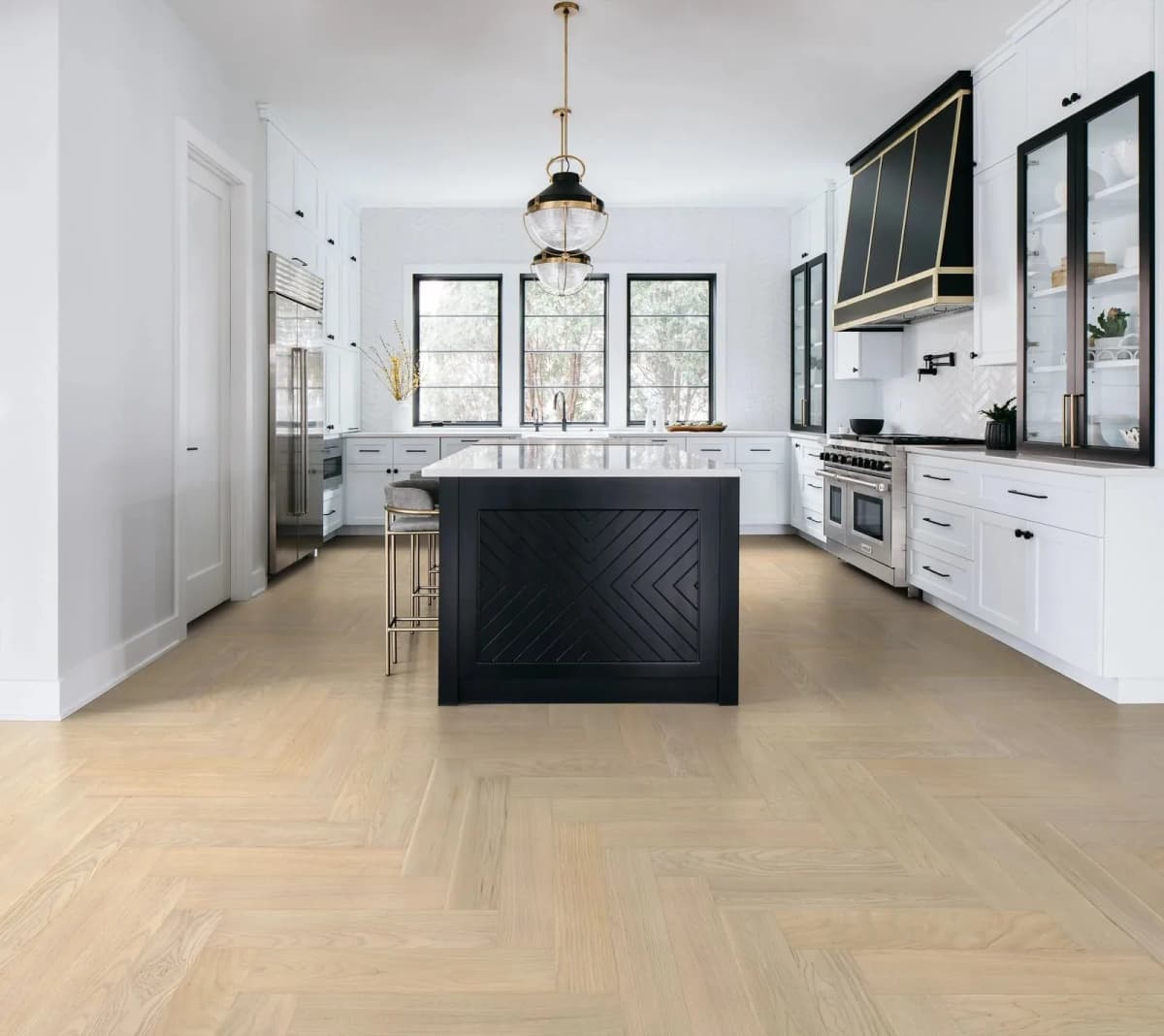
Floor names link to their product pages in a new tab.
Walk into a room with a herringbone floor and you notice it before you notice anything else. The zigzag pulls your eye across the space, the light breaks differently along each angled plank, and the whole floor reads as considered — as something someone chose on purpose. That's the effect. It's also, quietly, the whole story of why herringbone costs more.
Herringbone isn't a different material. It's a way of laying the same rectangular planks you'd otherwise run in a straight line — turned 90 degrees against each other into a repeating stepped pattern. But that layout decision changes the labor, the waste, and the price, and it's worth understanding before you fall for a showroom photo.
This guide covers what makes herringbone feel premium, how the pattern actually works, where to get it in real hardwood versus how to chase the look in LVP, and the honest install-cost realities most product pages skip.
Quick answer: Herringbone is rectangular planks laid at 90 degrees in a stepped zigzag — a layout, not a material. In our catalog the true herringbone product is engineered hardwood — three Anderson Tuftex lines: Provincial Herringbone, European Ash Herringbone and Revival Walnut Herringbone. You can approximate the look in waterproof LVP by laying standard planks in the pattern, but it's a more demanding install. Either way, plan for extra material and extra labor: pattern floors cost more to lay than a straight run, and it's typical to budget an extra 10–15% on material.
What Makes Herringbone Feel Premium
Part of it is heritage. Herringbone and its cousin chevron are parquet patterns with centuries of history in European homes and grand civic buildings — the pattern carries an association with craftsmanship that a straight lay doesn't. That association is real, and it's earned, because a herringbone floor is genuinely harder to lay well.
The rest is labor and geometry. A straight-lay floor is forgiving: run the planks wall to wall, stagger the seams, trim the edges. A herringbone floor has to be set out from a precise centerline, with every plank cut and angled to keep the pattern true across the whole room — and a small drift early on compounds into a visibly crooked pattern by the far wall. That precision is skilled work, and skilled work costs money. The "premium" feeling isn't marketing; it's the pattern telling you, correctly, that more went into the floor.
Herringbone, Chevron, and the Plank Ratio
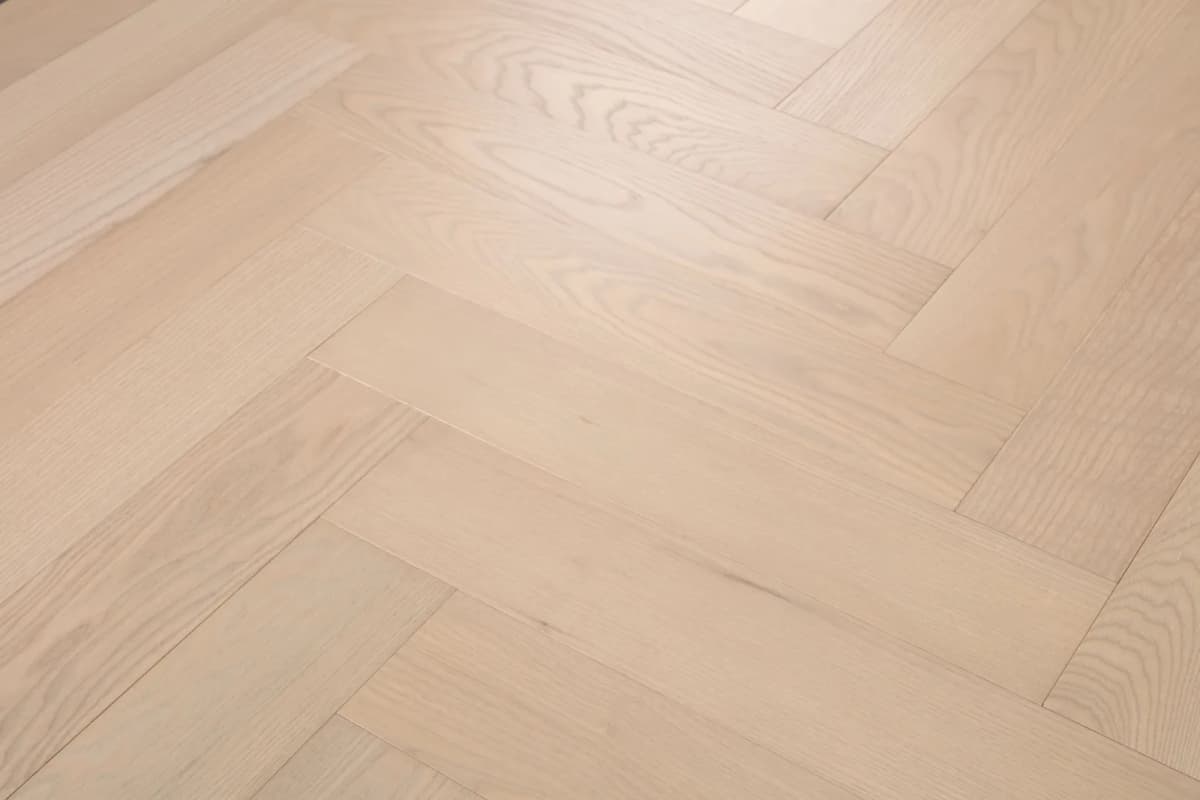
Two things define how a pattern floor looks: the pattern itself and the proportion of the planks.
Herringbone vs chevron. In herringbone, planks are cut with square ends and set at 90 degrees, so the end of one plank butts against the side of the next — creating that stepped, broken zigzag. In chevron, planks are cut on an angle (typically 45 or 60 degrees) and meet point-to-point, forming a continuous unbroken V that runs like an arrow down the room. Chevron is the more demanding, more expensive of the two because every plank is mitered; herringbone's square cuts make it a touch more forgiving. Most people picturing a "zigzag wood floor" are picturing herringbone.
The plank ratio. Herringbone lives or dies on proportion. The classic look uses planks with a length-to-width ratio around 2:1 or 3:1 — long enough to read as a plank, short enough to keep the zigzag tight and rhythmic. A very long, narrow plank laid in herringbone reads as busy and stretched; a stubby one reads as blocky. This is why purpose-made herringbone product comes in shorter, deliberately proportioned pieces rather than the 48-to-72-inch planks you'd use for a straight lay. When you evaluate a herringbone floor, look at the ratio as much as the color — it sets the entire mood of the room.
Hardwood Herringbone: The Real Thing
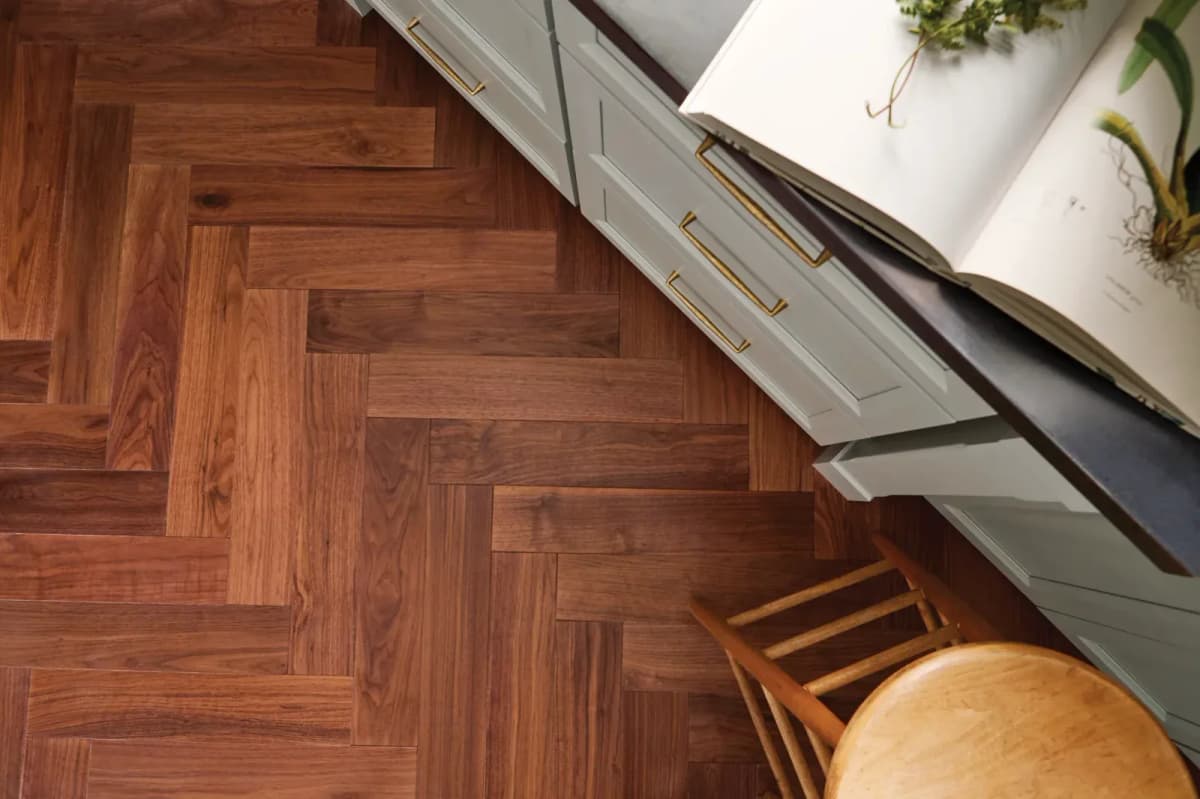
If you want authentic herringbone, engineered hardwood is where it lives in our catalog. Anderson Tuftex — Shaw's design-led hardwood brand — makes three herringbone lines, in white oak, European ash and American walnut. All three are engineered (a real wood veneer over a stable plywood core, so they handle modern homes better than solid wood), and no Shaw hardwood style we carry lays in the pattern, so a herringbone floor here is an Anderson Tuftex decision:
- Provincial Herringbone (AA853) — white oak, 5" wide, wire-brushed, a 3 mm wear layer, $10.79/sq ft, in five colorways including Parchment, Ashen, and Au Naturale. The warmer, more classic take — the parquet look people picture in a period dining room or a designer entryway, and the least expensive way into the pattern.
- European Ash Herringbone (AA846) — European ash, 4.72" wide, wire-brushed, a 4 mm wear layer, $12.89/sq ft, in eight colorways including Bistro, Carnival, and Plaza — the widest color choice of the three. Ash gives you a paler, minimalist grain that suits bright, modern interiors where you want the pattern to be the statement rather than a heavy wood tone.
- Revival Walnut Herringbone (AA833) — American walnut, 5" wide, smooth, a 4.5 mm wear layer, $14.29/sq ft, in three colorways: Era, Rye, and Sirocca. The thickest veneer of the three and the only one that isn't wire-brushed, in the darkest wood of the three. One difference worth knowing before you spec it: its warranty is residential only, where the other two add a five-year commercial term.
All three are pre-proportioned for the pattern, and all three are glue-down only — no nail, staple or floating option in their product data — part of why herringbone is an installer's floor, not a weekend DIY. For context, Anderson Tuftex hardwood as a whole runs $7.79 to $21.99/sq ft at the minimum advertised price (MAP), so the herringbone lines sit in the middle of the brand's range — you're paying for the design, the pattern-cut pieces, and premium engineered construction. Lower prices may be available — request a quote by email using the "Email us for today's best price" form on any product page.
Every count, price and spec in this section comes from the product data behind our catalog as of September 16, 2026. Prices move; the product page is the live figure.
For the full lineup and how herringbone fits against Anderson Tuftex's straight-lay collections, see our Anderson Tuftex hardwood buyer's guide. And because these are engineered floors, wear-layer thickness still drives how long they last and whether they can be refinished — our engineered hardwood wear-layer guide explains what to look for.
Getting the Herringbone Look in LVP
Here's the honest version. Our luxury vinyl plank catalog — Shaw and COREtec — ships as planks and tile, not as pre-assembled herringbone modules. There's no purpose-made herringbone LVP product on our shelves the way there is in hardwood.
That doesn't mean the look is off the table. A skilled installer can lay rectangular LVP planks in a herringbone pattern the same way they'd lay wood — cutting and angling each piece to build the zigzag. It can look excellent, with two honest caveats:
- It's a harder install than a straight lay. The angled seams and precise centerline work that make hardwood herringbone demanding apply just as much to LVP, and not every click-lock plank is well suited to the angled joints. Confirm the specific product works for a pattern before you commit, and budget for the same pattern labor premium you'd pay on wood.
- The proportion may not be ideal. Standard LVP planks are longer and narrower than purpose-cut herringbone pieces, so the pattern can read stretched unless the installer plans the ratio carefully.
The reason to do it anyway is water. Nearly all LVP is waterproof, so an LVP herringbone gives you the pattern in a kitchen, bath, laundry, or below-grade room where real-wood herringbone would be a risk. If you're weighing the two materials for a pattern floor, our LVP vs engineered hardwood comparison walks through where each belongs.
The Install-Cost Reality
This is the part product photos never mention, and it's the part that surprises people.
Labor runs higher. A straight-lay hardwood installation commonly lands somewhere around $3–6/sq ft in labor; herringbone and chevron sit above that because of the added layout time, the individual cuts, and the precision the pattern demands. The exact premium varies by installer and room, but expect a pattern floor to cost meaningfully more to lay than the same material run straight. Our cost of new flooring guide breaks down the labor side in more detail.
Plan for extra material. Pattern layouts generate more offcuts than a straight lay — every angled cut leaves a scrap you can't always reuse. Where a straight-lay floor needs a small waste cushion, it's industry-typical guidance to budget an extra 10–15% for a herringbone or chevron layout. Treat that as a planning range, not a promise: your installer will give you a real overage number once they've seen the room. And ordering short on a pattern floor is a genuine headache, since a later dye-lot may not match — so plan for the extra up front.
None of this is a reason to avoid herringbone. It's a reason to budget for it honestly, so the quote doesn't blindside you after you've fallen for the look.
How to Sample a Pattern Floor
Sampling matters more for herringbone than for a straight lay. The zigzag catches directional light on every angled plank, so a colorway looks different depending on where the light comes from and where you stand — far more variation than a floor running one direction.
So order two or three colorways, not one. Then judge them the way you'll actually live with the floor:
- Lay each sample flat in the actual room — on the floor, not propped against a wall or held up to the light.
- Check it in morning and evening light. A warm oak can read golden in the afternoon and ashy at 8 a.m.; you want a colorway that holds up in both.
- Step back ten feet and look across it the way you'll see the floor from a couch or doorway, not from directly above.
- Live with it a day or two before deciding. First impressions on a pattern floor are especially unreliable.
Samples are $5 each, and every dollar comes back as credit toward your floor when you sign in at checkout with the same email you used to order them — the credit applies automatically when you're signed in, and it doesn't expire, but guests checking out anonymously miss it, so sign in. Our full guide to evaluating flooring samples at home covers the method in depth. When you're ready, order samples here.
One shipping note for the real floor: hardwood ships as LTL freight, which is curbside delivery, and shipping is free when the flooring on your order comes to $1,799 or more. Samples come separately by parcel, usually FedEx.
Final Word
Herringbone is a layout, not a luxury material — but the layout is exactly what makes it feel luxurious. The pattern carries centuries of design heritage, and it genuinely takes more skill, more time, and more material to lay well. That's the premium, and it's a real one.
If you want authentic herringbone, it's a hardwood decision in our catalog: Anderson Tuftex's Provincial Herringbone, European Ash Herringbone and Revival Walnut Herringbone lines. If your room gets wet or sits below grade, you can chase the look in waterproof LVP by laying standard planks in the pattern — with open eyes about the extra install difficulty. Whichever way you go, budget honestly for the pattern, order two or three colorways, and let them sit in your own light for a couple of days. A herringbone floor is a long commitment to a strong look — worth getting right before the first plank goes down.
In this article
The floors from this guide

Anderson Tuftex
Provincial Herringbone
Parchment
Samples are $5 each, credited back at checkout when you sign in.

Anderson Tuftex
European Ash Herringbone
Metro
Samples are $5 each, credited back at checkout when you sign in.

Anderson Tuftex
Revival Walnut Herringbone
Rye
Samples are $5 each, credited back at checkout when you sign in.
Common questions
Frequently Asked Questions
What is herringbone flooring?
Herringbone is a floor laid in a repeating zigzag of rectangular planks set at 90 degrees to each other, so the end of one plank meets the side of the next in a stepped, broken pattern. It takes its name from the skeleton of a herring fish. It's different from chevron, where planks are cut at an angle and meet point-to-point to form a continuous V. Herringbone planks are cut with square ends, which makes the pattern a little more forgiving to lay and a little less expensive than chevron — but both are pattern floors, and both ask more of the installer than a standard straight lay.
Is herringbone flooring more expensive to install?
Yes, generally. A pattern floor takes more layout time, more individual cuts, and more precision than a straight lay, so labor runs higher — straight-lay hardwood installation commonly lands around $3–6/sq ft, and herringbone or chevron sit above that. Pattern layouts also generate more offcuts, so it's industry-typical guidance to plan for extra material — often on the order of 10–15% overage rather than the smaller cushion a straight lay needs. Confirm both the labor rate and the overage with your installer for your specific room before you order.
Can you get the herringbone look in waterproof LVP?
You can get the look, with a caveat. FloorFreight's luxury vinyl plank catalog (Shaw and COREtec) ships as planks and tile, not as pre-assembled herringbone modules — so a herringbone effect in LVP comes from laying rectangular planks in the pattern rather than from a purpose-made herringbone product. That's a more demanding install than a straight lay, and not every click-lock plank is well suited to the angled seams, so confirm the specific product works for a pattern layout. The payoff is a waterproof, pet-friendly herringbone look for kitchens, baths, and below-grade rooms where real-wood herringbone is riskier.
How many herringbone samples should I order?
Order two or three colorways, not one. A pattern floor is a bigger visual commitment than a straight lay — the zigzag catches directional light differently across the room, so a colorway that looks perfect flat on a screen can read warmer or cooler once it's angled underfoot. Samples are $5 each, and every dollar comes back as credit toward your floor when you sign in at checkout with the same email you used to order them (the credit only applies signed in — guest checkout misses it). Lay each one flat in the actual room, check it in morning and evening light, and live with it a day or two before you commit.
Related Posts
Keep Reading
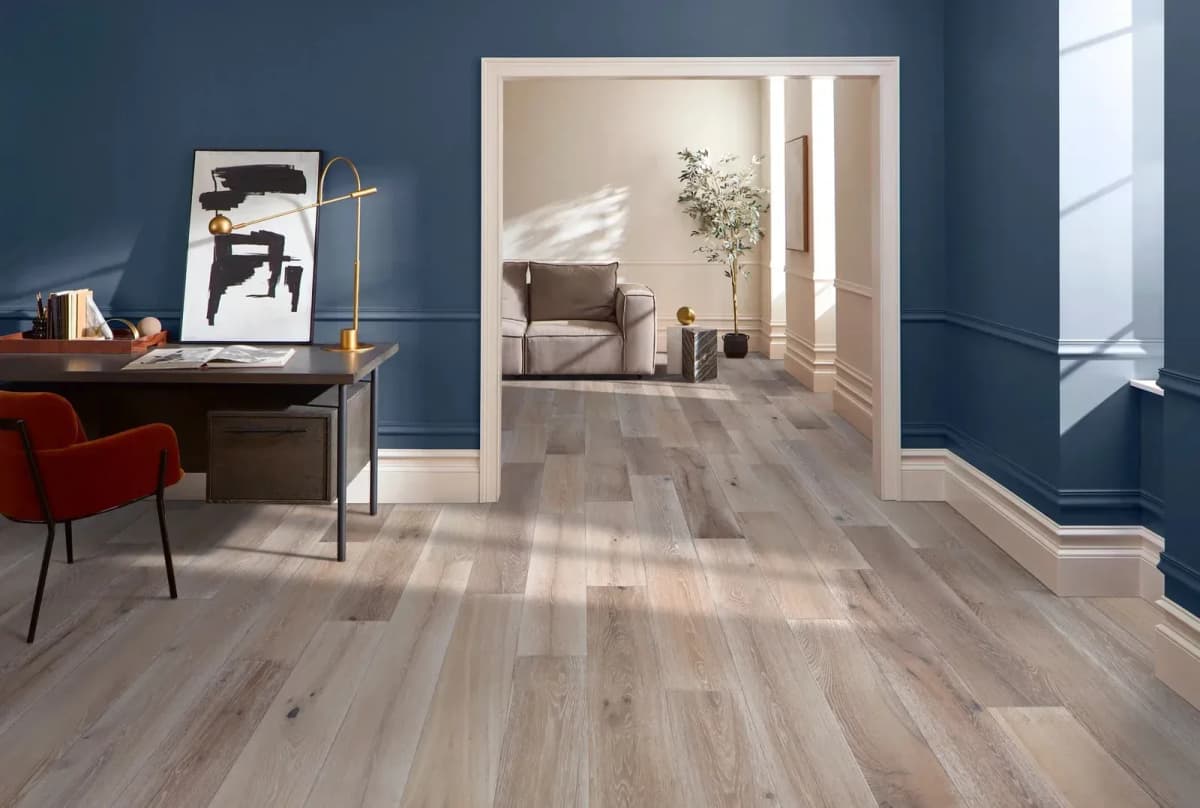
How to Match New Hardwood to an Existing Floor (Even If It's Discontinued)
10 min read
Shaw Hardwood Buying Guide: Repel, The Gallery and Expressions (2026)
9 min read
What Is the Best Flooring for Stairs? Hardwood, LVP and the Stair Nose (2026)
13 min read
Best Hardwood for High-Traffic Homes: Janka, Wear Layer, and What Lasts
9 min read
Keep browsing