
Engineered Hardwood Wear Layer Explained: What 1.2mm, 3mm and 6mm Mean for Your Floor
Floor names link to their product pages in a new tab.
Two engineered hardwood floors sit a couple of dollars a square foot apart. Same brand. Similar plank width. Same warm-toned finish. They look almost identical.
One has a 1.2mm wear layer. The other has a 4mm wear layer.
When the factory finish on the first floor finally goes, it needs to be replaced. The second has the wood above its core to be sanded, refinished and made to look new again — textured, so it comes back smooth. The price difference? About $2 per square foot at purchase.
Wear layer is the single most important spec on an engineered hardwood floor, and the one most buyers ignore. This post fixes that.
Quick answer: A wear layer is the real wood veneer on top of an engineered hardwood plank — the surface that determines whether the floor can be sanded and refinished as it ages. Thicknesses run from 1.2mm (most common, not refinishable) to 6mm (premium, with the most wood to refinish). The National Wood Flooring Association draws the line at 3/32 inch (2.5mm): below it, a floor should not be sanded.Source 1 Thicker wear layers cost more upfront, and they're what let a floor be renewed instead of replaced.
What is a wear layer in engineered hardwood?
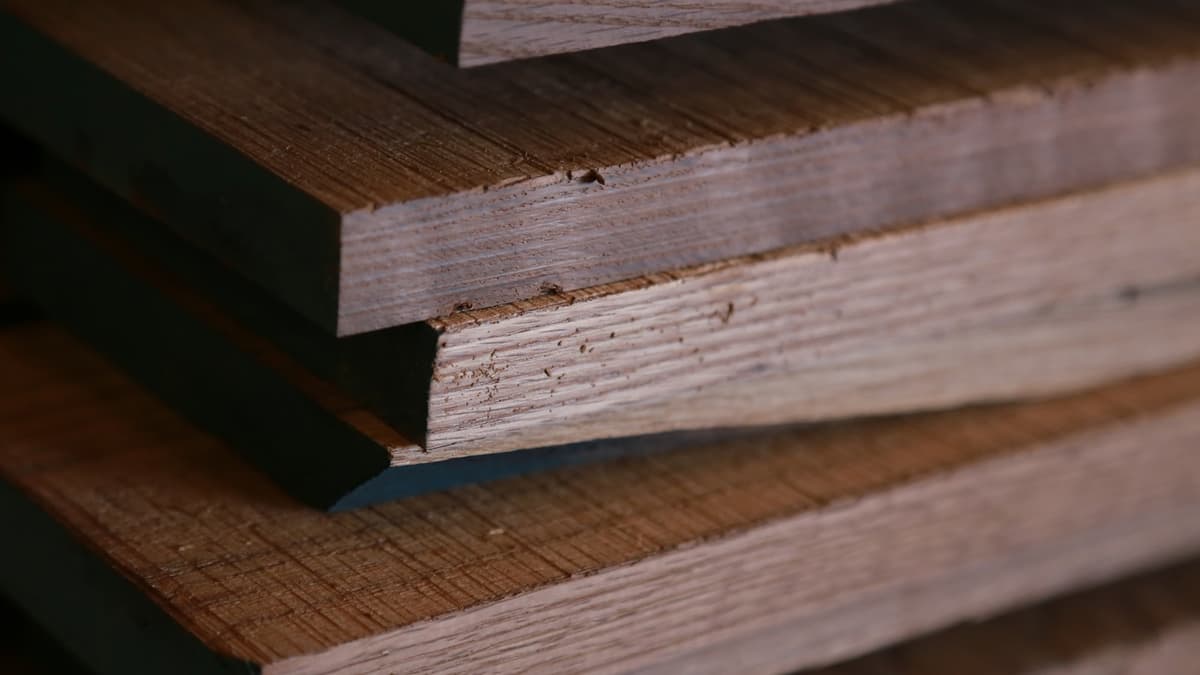
Engineered hardwood is built in layers. The top layer — what you walk on, what dents, what eventually shows wear — is real wood. That's the wear layer. Below it sits a stable core of plywood, multi-ply construction, or HDF that gives the plank its dimensional stability.
The wear layer is the entire reason engineered hardwood looks like real wood. It is real wood. The species you pick (oak, hickory, walnut, maple) is the species of the wear layer. The grain pattern, the finish, the wire-brushing or hand-scraping — all of it lives in that top layer.
It's also the only part of the floor you'll ever interact with. The plywood core is invisible. It does its job and you forget it exists. The wear layer is everything you see, touch and judge for as long as you own the floor.
The Numbers That Matter
Industry-standard wear layer thicknesses range from less than 1mm (paper-thin) to 6mm. Each tier has real consequences for refinishing and total cost of ownership.
Two figures from the National Wood Flooring Association anchor every row below. Its sand-and-finish guidelines say that if a floor has less than 3/32 inch (2.5mm) of wear layer, it should not be sanded.Source 1 Its refinishable program for engineered flooring sets 2.5mm as the minimum for a factory-finished floor to count as refinishable, measured at the lowest point on a wire-brushed or hand-scraped surface.Source 2 Its guidelines add that a textured floor is hard to sand, often can't be, and loses its texture when it is.Source 1 What NWFA doesn't publish is a number of refinishes for each thickness. It says that number depends on how much wear layer is left, how flat the floor is, and the skill and equipment of the person sanding it, and it refers you to the floor's manufacturer.Source 1
| Wear Layer | Can It Be Sanded? | Typical Use | Price Range (MAP) |
|---|---|---|---|
| 1.2mm | No — under NWFA's 2.5mm line | Standard residential; Shaw Repel | $5.19–$9.09/sq ft |
| 2mm | No — still under the 2.5mm line | Mid-tier residential; Anderson Tuftex Coast to Coast | $7.79–$11.29/sq ft |
| 3mm | Yes on a smooth floor; on a textured one, measure the lowest point first | Premium residential; AT Brasilia (smooth), AT Transcendence (wire-brushed) | $9.29–$13.59/sq ft |
| 4mm–4.5mm | Yes, with more wood to work with; sanding removes any texture | Shaw Expressions, AT Artisan Oak, AT Provincial Parquet | $11.39–$21.99/sq ft |
| 6mm | Yes, with the most wood of any style we carry; sanding removes its wire-brushed texture | AT Grand Estate | $15.09/sq ft |
Each range is the full span of the manufacturer's advertised price (MAP) per square foot across every style we carry at that face-veneer thickness, read from the catalog on 2026-09-16 — not just the styles named beside it. The 4mm–4.5mm band is wide because Provincial Parquet's pre-assembled herringbone modules sit at $21.99 while everything else in that band runs $11.39 to $14.29. Two thicknesses get no row of their own: Bernina Hickory at 1.8mm ($10.79) and Valencia Walnut at 2.5mm ($11.69). Prices move; the product page is the live figure.
Less than 1mm (sometimes called "veneer" or "paper-thin")
Floors with wear layers under 1mm cannot be sanded. The veneer is too thin to survive even a light sanding pass without exposing the plywood core below. When wear becomes visible, your only options are screen-and-recoat (refresh the finish without removing wood) or replacement.
You'll find sub-1mm wear layers on entry-tier engineered hardwood — $3-5 per square foot at big-box retailers. Skip them. The lower price up front isn't worth the replacement cost down the road.
We don't sell sub-1mm wear-layer hardwood at FloorFreight.
1.2mm — Most Engineered Hardwood
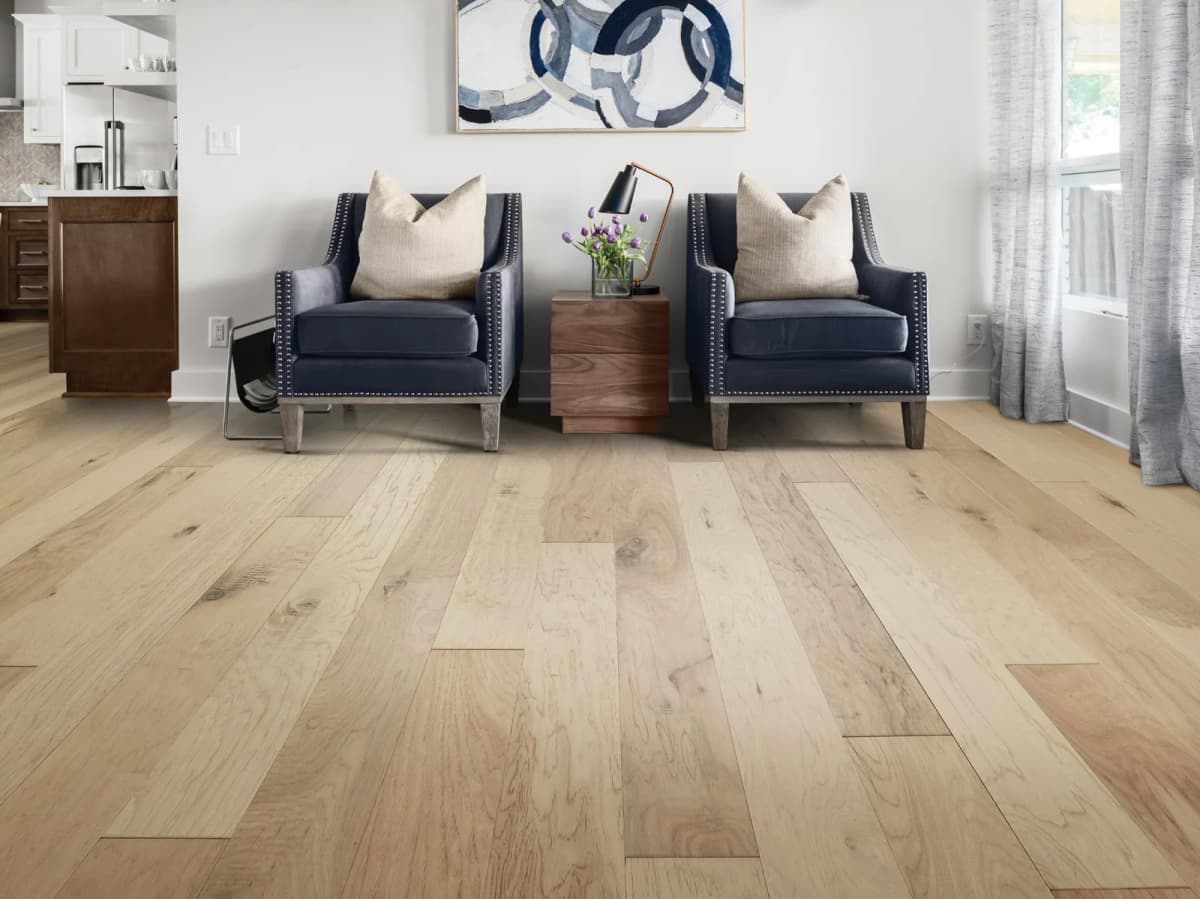
This is where the bulk of the engineered hardwood market lives, including all of Shaw's Repel collection and Shaw's standard hardwood lines. At 1.2mm, the wear layer is structural — strong enough for daily life, finished with a tough surface coating, but not refinishable.
What you get: a real hardwood surface with a tough factory finish, and no sanding depth underneath it.
What you can do when worn: Screen-and-recoat to refresh the finish. No sanding: 1.2mm is under NWFA's 2.5mm line.
When it makes sense: Households that expect to move or remodel before the floor needs more than a recoat. Investment properties. Spaces where water resistance matters more than refinishability — Shaw's Repel collection trades wear layer thickness for water-resistant treatment. Tight budgets where you need real engineered hardwood at the bottom of the price range.
The 1.2mm trap to avoid: Buying 1.2mm and expecting to refinish it later. The wear layer can't take it. Pick this floor knowing it is a replace-when-worn product, not a sand-it-back one.
For our complete walk-through of Shaw's 1.2mm options and the one Shaw style that breaks this rule, see our Shaw hardwood buying guide.
2mm — Still Too Thin to Sand
A 2mm wear layer is thicker than 1.2mm, but it's still under the 3/32 inch (2.5mm) line below which NWFA says a floor should not be sanded.Source 1 Plan on it the way you'd plan on a 1.2mm floor: a screen-and-recoat when the finish dulls, not a sand-and-refinish.
Where it fits: Buyers who want an Anderson Tuftex look without paying for its thicker styles. Four Anderson Tuftex styles are 2mm: Confection and Natural Timbers Smooth in the Entry tier, Coast to Coast and Ravenwood in the Mid tier. Choose them for the look and the plank, not for sanding later.
Watch out for: A contractor who offers to sand a 2mm floor. Ask for a screen-and-recoat instead, from someone who explicitly understands engineered hardwood, not someone who specializes in solid wood.
3mm — The Sweet Spot for Many
A smooth 3mm wear layer clears NWFA's 2.5mm minimum, so this is where engineered hardwood becomes refinishable.Source 2 A textured one needs a closer look: NWFA measures a wire-brushed, scraped or distressed floor at the lowest point of its texture,Source 2 and sanding it flat takes the texture off.Source 1
Refinishing potential: A smooth 3mm floor can be sanded and refinished. On a textured 3mm floor, have a flooring professional measure the wear layer at its lowest point before you plan on it. How many times depends on how much wear layer each job leaves and on the contractor's skill; NWFA doesn't put a number on it.
Where it fits: Anderson Tuftex's four 3mm styles. Brasilia is smooth. Chateau Oak, Provincial Herringbone and Transcendence are wire-brushed, so what matters for sanding them is the wood left at the lowest point of the brushing. Across the AT lineup, 3mm is the median — you're paying premium engineered hardwood prices ($9.29–$13.59/sq ft) for a veneer thicker than NWFA's minimum.
The honest take: For most buyers planning to stay in their home long-term, 3mm hits the right balance of upfront cost and long-term value. If you refinish at all while you own the home, a smooth 3mm floor gives you the wood to do it (on a wire-brushed one, get the lowest point measured first), and the floor will outlast the kitchen renovations you're planning around it.
4mm — More Wood Above the Core, and a Texture to Check
At 4mm, there's more wood above the core than at 3mm, and so more room for future sand-and-refinish jobs. This is the tier where a worn floor is a job for a sander rather than a skip.
Refinishing potential: More headroom than 3mm, and still no fixed count. One thing to know before you plan on it: every 4mm style we carry is textured — Shaw Expressions and the Anderson Tuftex 4mm styles are wire-brushed, Artisan Oak is distressed — and NWFA's guidelines say a textured floor is difficult to sand, often can't be, and comes back smooth when it is.Source 1 The smooth option up here is the 4.5mm Revival Walnut. On any of the textured ones, have a flooring professional assess the floor first.
Examples in our catalog: Shaw Expressions ($11.39/sq ft), Anderson Tuftex Artisan Oak ($11.69/sq ft), European Ash, Provincial Plank, Provincial Parquet, Metallics II, Revival Walnut (4.5mm).
Why this tier matters: At 4mm, refinishing is something a future owner of your home will appreciate. If you sell, the floor is an asset, not a liability. If you stay, the floor outlives the kitchen you're installing it next to.
The price math: Within a brand, the step up to 4mm is smaller than the tier language suggests. Shaw's one 4mm style, Expressions at $11.39/sq ft, is about $2.30 above Shaw's priciest 1.2mm floor ($9.09) and roughly double its cheapest ($5.19). Anderson Tuftex's 4mm styles start at $11.69 against $7.89 for its 1.2mm pair. The difference buys a floor with the wood above the core to be sanded when it wears, where the 1.2mm floor gets replaced.
6mm — The Thickest We Carry
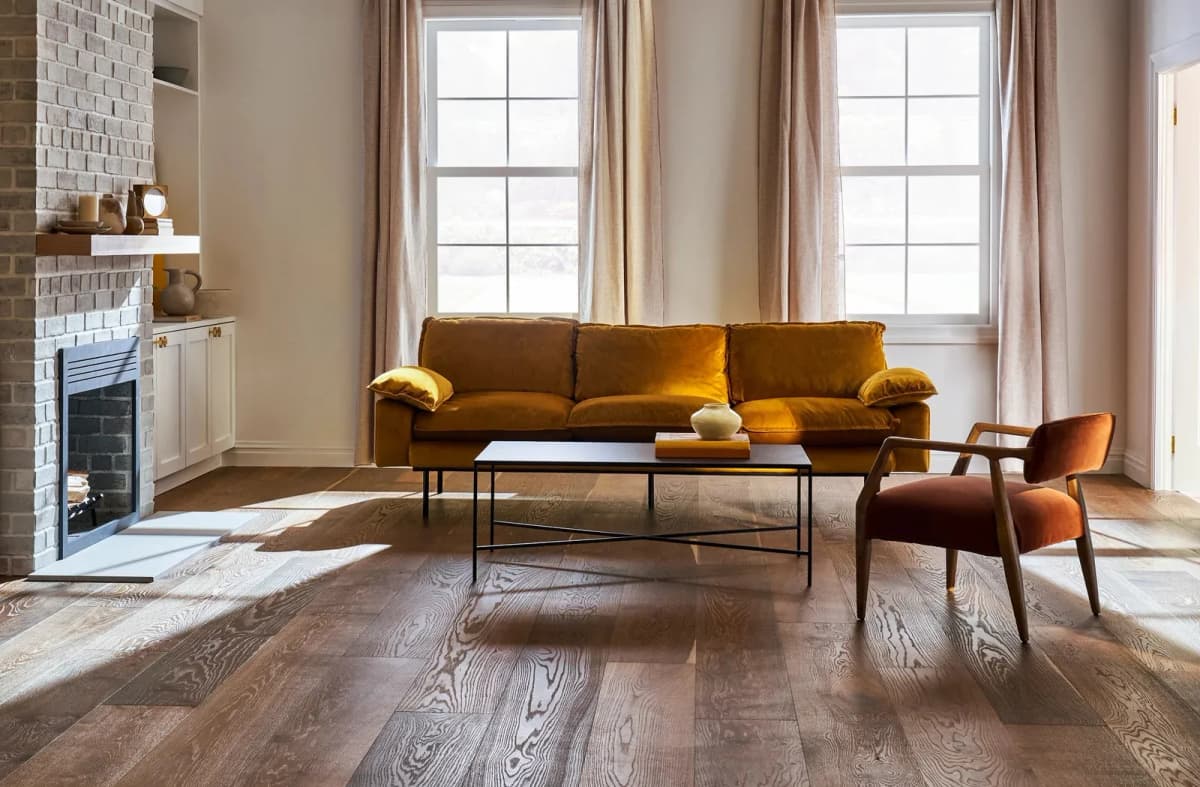
Six millimeters of wear layer is unusual in engineered hardwood. It exists in a handful of premium products, and the only one in our active catalog is Anderson Tuftex Grand Estate ($15.09/sq ft).
Refinishing potential: The most wood for future sand-and-refinish jobs of any style we sell. As with every thickness, how many times depends on the floor and the contractor, not on a chart. Grand Estate is wire-brushed, so the same caveat applies at 6mm as at 3mm: NWFA's guidelines say a textured floor is difficult to sand, often can't be, and loses its texture when it is,Source 1 so the floor that comes back is a smooth one. Have a flooring professional assess it before you plan on a sanding.
Why it costs what it costs: The wear layer is sourced, milled, and stabilized differently than thinner veneers. Production volume is lower. The species selection (Grand Estate is white oak only) is restricted to woods that can be cut to that thickness without warping. You're paying for the most sanding depth in the catalog.
Where 6mm makes sense: Forever-home installations. Historic restorations, where a floor that can be sanded back matters more than the upfront price. High-traffic commercial spaces (within Grand Estate's 5-year commercial warranty range). Projects where the floor is the centerpiece of the design and refinishing flexibility is valued.
For our complete walk-through of Grand Estate and the rest of the AT lineup, see our Anderson Tuftex hardwood buyer's guide.
How Refinishing Actually Works (And When It Doesn't)
A few practical notes that almost no online guide explains clearly.
A sanding should take off very little wood. NWFA's guidance is that the sanding operation should remove less than 1/32 inch.Source 2 Don't turn that into a refinish count by dividing it into your wear layer, though. NWFA says the number of times a floor can be sanded depends on how much wear layer is left, how flat the floor is, and the skill and equipment of the person sanding it, and it refers you to the manufacturer.Source 1 A contractor can measure what's left before each job.
Screen-and-recoat is not refinishing. This is a common confusion. NWFA defines a refinish as sanding a previously finished floor to bare wood and applying new stain or finish.Source 1 A screen-and-recoat is the lighter job NWFA describes as lightly sanding the floor and applying a fresh new coat,Source 3 without going down to bare wood. It refreshes the look without using up wear layer. You can screen-and-recoat a 1.2mm floor. You cannot sand a 1.2mm floor at all. Check the manufacturer's care guide before either job: Shaw's residential hardwood warranty says refinishing and recoating are not part of the limited warranty.Source 4
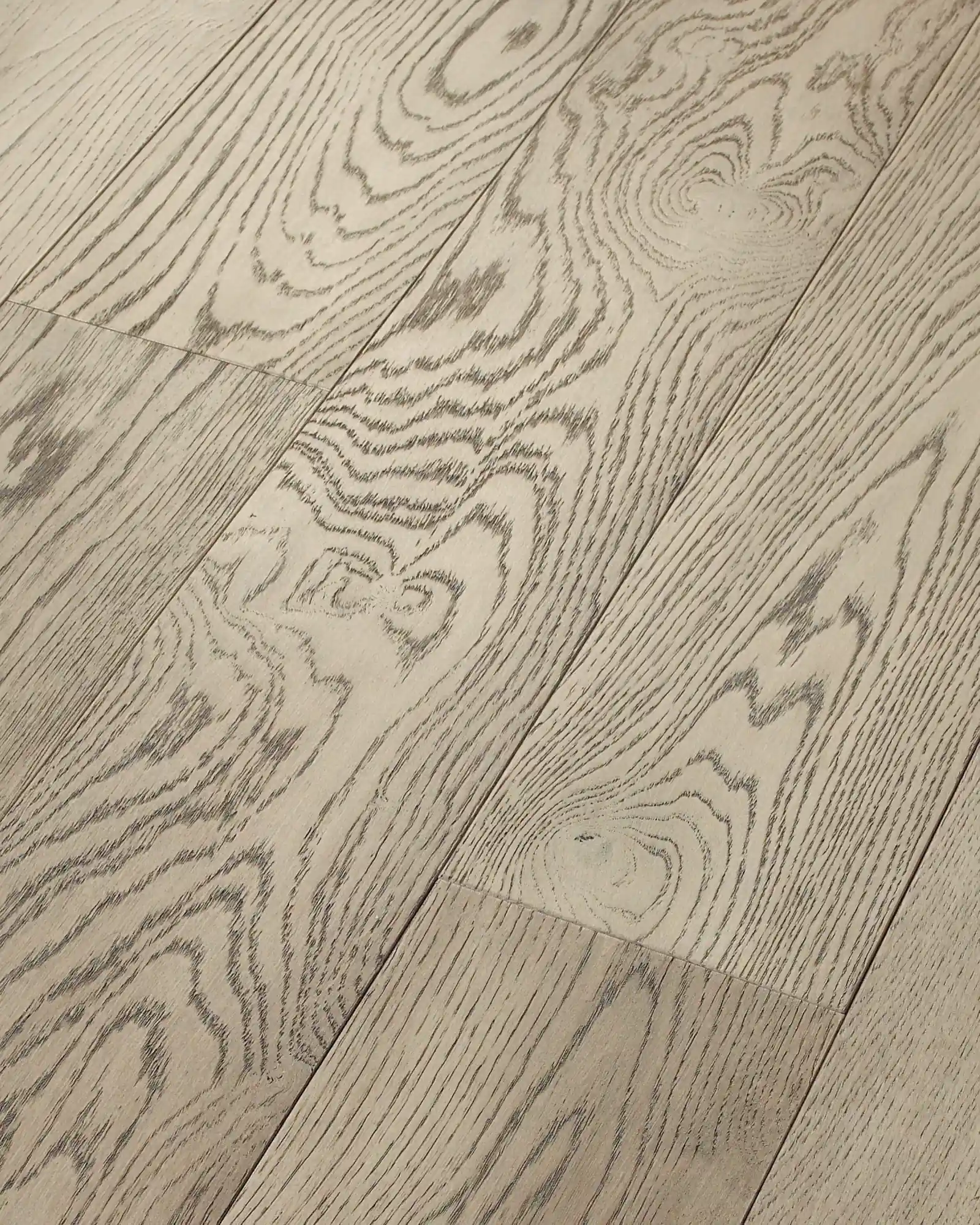
Hand-scraped or wire-brushed finishes can't be sanded without losing the texture. This is a real consideration for AT styles like Grand Estate, Chateau Oak and Transcendence (all wire-brushed) or any hand-scraped product. After sanding, the floor returns to a smooth surface — the original textured look is gone.Source 1 If you specifically chose a textured finish, plan to screen-and-recoat instead of sand.
Refinishing is an investment. Professional refinishing of an engineered hardwood floor runs $4-7 per square foot in most markets. For 1,000 square feet, that's $4,000-7,000. The cost is real but typically less than half the cost of replacing the floor.
Not every contractor can refinish engineered hardwood properly. The thinner wear layer is unforgiving. Many contractors with solid-hardwood experience treat engineered floors the same way and sand through them. Hire someone who specifically advertises engineered hardwood refinishing.
Wear Layer in Context: When Other Specs Matter More
Wear layer matters more than any other single spec. But it isn't the only spec, and the right floor for you might not be the floor with the thickest wear layer.
Water resistance can outweigh wear layer. For families with kids, pets, and active kitchens, Shaw's Repel collection (1.2mm wear layer with water-resistant treatment) often beats a 4mm floor without water resistance. In a house with a dog and a toddler, the spill is the likelier threat to the floor than the slow wear a thick veneer protects against. Repel handles spills routinely.
Plank width affects perceived quality. A 1.2mm wear layer in a 6.38" plank feels different from a 4mm wear layer in a 5" plank. Both are real engineered hardwood. The wider plank reads as more premium, even when the wear layer is thinner.
Species hardness matters at the surface. Janka ratings for solid wood species apply (loosely) to the wear layer of engineered hardwood. A 1.2mm hickory wear layer (1,820 lbf side hardness) dents less easily than a 4mm walnut wear layer (1,010 lbf) in the short termSource 5, even though the 4mm walnut survives more sandings over the long term.
Finish quality affects daily appearance. UV aluminum oxide finish (18 of 21 Anderson Tuftex styles, plus Shaw's Gallery and Shaw Engineered Hardwoods styles) is harder than UV oil finish (Anderson Tuftex Artisan Oak, Chateau Oak and Grand Estate). Aluminum oxide hides scratches better; oil finish develops a richer patina over time but shows wear sooner. Both are fine — pick by which aging pattern you prefer.
For room-specific recommendations that weigh wear layer against these other factors, see our best engineered hardwood for kitchens guide.
Final Word
Wear layer thickness is the single spec that separates a floor you replace from a floor you can refinish. Most buyers don't ask about it. Most retailers don't proactively explain it.
When you're shopping engineered hardwood, three numbers tell the whole story:
- 1.2mm = good floor, recoat it rather than sand it, replace it when the veneer goes.
- 3mm = thick enough to sand and refinish on a smooth floor; measure a textured one at its lowest point first.
- 4mm or more = real long-term investment, with more wood for future refinishes — and, apart from the smooth 4.5mm Revival Walnut, a textured surface that sanding takes off.
Match the wear layer to whether you ever want this floor sanded. If you're building a forever home, don't buy a 1.2mm floor. If you're flipping a house, don't buy a 6mm floor. The right floor is the one with the wear layer that matches your timeline.
Order a $5 sample before you commit. The wear layer thickness isn't visible to the eye, so the spec sheet matters more than the showroom finish.
In this article
The floors from this guide

Anderson Tuftex
Grand Estate
Thorndon Hall
Samples are $5 each, credited back at checkout when you sign in.

Shaw Hardwood
Expressions
Poetry
Samples are $5 each, credited back at checkout when you sign in.

Anderson Tuftex
Artisan Oak
Canvas
Samples are $5 each, credited back at checkout when you sign in.
Common questions
Frequently Asked Questions
What is the wear layer on engineered hardwood?
The wear layer is the real hardwood veneer bonded to the top of an engineered plank's plywood core. It's the only part of the floor you ever interact with — the species, grain, finish, and any wire-brushing or hand-scraping all live in that top layer. Industry-standard thicknesses run from under 1mm (paper-thin, found in budget big-box products) to 6mm. The wear layer is entirely what determines whether the floor can be sanded and refinished when it eventually shows wear.
How thick should the wear layer be on engineered hardwood?
It depends on whether you want the option to sand and refinish it. The National Wood Flooring Association's guidelines say a floor with less than 3/32 inch (2.5mm) of wear layer should not be sanded, and 2.5mm is NWFA's minimum for a factory-finished floor to count as refinishable. A 1.2mm wear layer — the most common spec, covering every Shaw Repel style — cannot be sanded, and a 2mm wear layer is still under that line. At 3mm and up a smooth floor can be sanded and refinished, and a thicker wear layer leaves more wood to work with; the thickest we carry is 6mm, found only in Anderson Tuftex Grand Estate at $15.09/sq ft. On a wire-brushed, scraped or distressed floor, NWFA measures the 2.5mm at the lowest point of the texture, and sanding removes the texture, so have a flooring professional measure a textured floor first. NWFA gives no fixed number of refinishes for any thickness: it depends on how much wear layer is left, how flat the floor is, and the skill and equipment of the person sanding it.
Can you refinish a 2mm engineered hardwood floor?
Not by sanding it. The National Wood Flooring Association's guidelines say a floor with less than 3/32 inch (2.5mm) of wear layer should not be sanded, and 2mm is under that line. What you can do when the finish dulls is a screen-and-recoat: a light abrasion of the existing finish and a fresh coat on top, without sanding down to bare wood. Hire a contractor who specifically advertises engineered hardwood work rather than someone whose experience is primarily with solid-wood floors.
Does wear layer thickness affect the warranty on engineered hardwood?
Not in the way many guides suggest. Shaw's Hardwood Limited Residential Warranty sets no number of refinishes and no minimum wear layer, and it says refinishing and recoating are not part of the limited warranty. So the warranty won't tell you how many times a floor can be sanded. The face veneer thickness on the product page, NWFA's 3/32 inch (2.5mm) line for sanding, and a flooring professional's measurement of the wood that's left will. A screen-and-recoat (refreshing the finish without sanding to bare wood) is the option on a wear layer too thin to sand; check the manufacturer's care guide before any recoat.
Referenced in this guide
Sources
Wood Flooring Sand and Finish Guidelines (2016), pp. 19, 25 and 82
National Wood Flooring Association · Accessed 2026-09-15
https://www.oldewoodltd.com/uploads/nwfa-sand-finish-wood-floors-2016.pdfNWFA Launches Engineered Wood Flooring Refinishable Program (Hardwood Floors magazine, Aug/Sept 2022)
National Wood Flooring Association · Accessed 2026-09-15
https://nwfa.org/wp-content/uploads/2022/09/HFM_AugSept22_final_refinishable_small.pdfRefinishing Your Floors
National Wood Flooring Association (woodfloors.org) · Accessed 2026-09-15
https://woodfloors.org/refinishing-your-floors/Hardwood Limited Residential Warranty (CQ-HS-WA002)
Shaw Industries · Accessed 2026-09-15
https://qmsview.shawinc.com/Shaw-Residential/Shaw-Installation-Warranties/HARDWOOD/Hardwood/CQ-HS-WA002_Shaw_Hardwood_Limited_Residential_WarrWood Handbook: Wood as an Engineering Material — Chapter 5, Mechanical Properties of Wood (Table 5-3b, side hardness)
USDA Forest Service, Forest Products Laboratory (FPL-GTR-282) · Accessed 2026-08-03
https://www.fpl.fs.usda.gov/documnts/fplgtr/fplgtr282/chapter_05_fpl_gtr282.pdf
Related Posts
Keep Reading
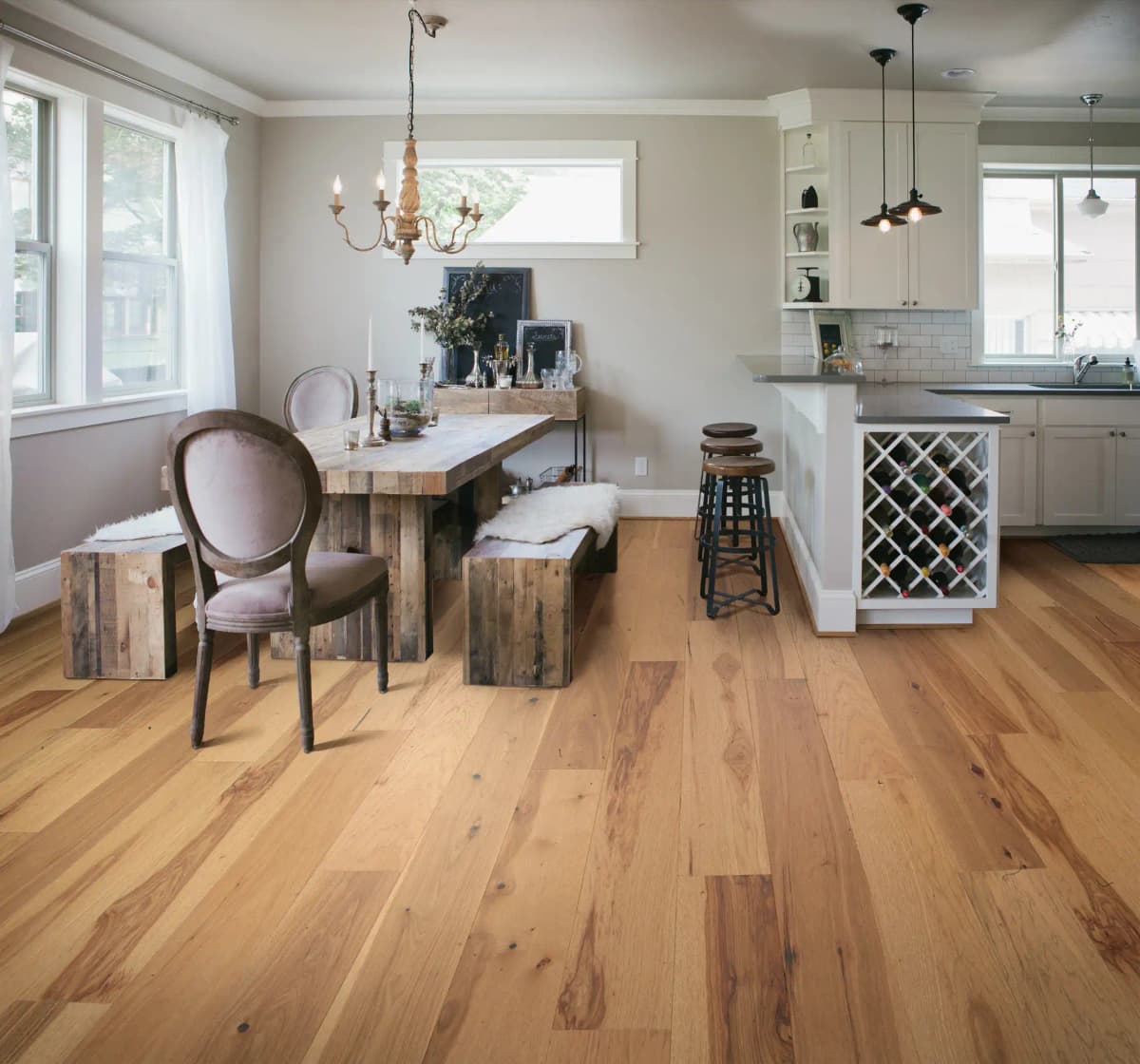
Shaw Hardwood Buying Guide: Repel, The Gallery and Expressions (2026)
9 min read
What Is the Best Flooring for Stairs? Hardwood, LVP and the Stair Nose (2026)
13 min read
Herringbone Flooring Guide: What Makes the Pattern Premium (2026)
8 min read
Best Hardwood for High-Traffic Homes: Janka, Wear Layer, and What Lasts
9 min read
Keep browsing