
Best Hardwood for High-Traffic Homes: Janka, Wear Layer, and What Lasts
Floor names link to their product pages in a new tab.
A busy household punishes hardwood. Pets sliding across the floor. Kids dropping toys. Adults walking in shoes from the garage. Furniture scraped across rooms. Cast iron pans dropped in kitchens. Gym bags slung off shoulders into entryways.
Most hardwood doesn't survive this well. The wear shows up as scratches, dents, finish wear along the traffic patterns, and a floor that looks tired long before you were ready to replace it.
Some hardwood does survive. The difference comes down to three specs and one strategy. By the end of this post, you'll know which products in our catalog are built for active homes — and which ones to skip.
Three Specs That Predict How Hardwood Handles Traffic
When you're shopping hardwood for a high-traffic home, three numbers matter more than anything else.
Species hardness (Janka rating). Janka measures how much force it takes to dent the wood. Higher number, less denting. Hickory and pecan top the U.S. domestic hardwood list at 1820. Hard maple is 1450. White oak is 1360. Red oak is 1290 (the industry benchmark). Walnut is 1010 — softer, dents easily, beautiful but risky for active homes.
Wear layer thickness. This is the real wood veneer on top of the engineered plywood core. Thicker means longer life and more refinishing potential. 1.2mm is the most common spec; 4mm and above is premium tier. We covered this in detail in our engineered hardwood wear layer explainer.
Finish quality. UV aluminum oxide is the hardest finish in common use — it's on 18 of the 21 Anderson Tuftex styles and six of the 28 Shaw hardwood styles we carry, and it shrugs off most everyday scratches. UV oil finishes (used on Anderson Tuftex Artisan Oak, Chateau Oak and Grand Estate) develop character over time but show wear sooner. Shaw's most common hardwood finish, Repel (20 of those 28 Shaw styles), is a water-resistant finish built for spills.
In a busy home, the right floor optimizes for all three. Hickory species + 4mm wear layer + aluminum oxide finish is essentially indestructible. Walnut species + 1.2mm wear layer + oil finish is the combination that shows a busy hallway first — a soft species under a thin veneer and a finish that scuffs.
The Janka Hierarchy: Pick a Hard Species
For high-traffic homes, species hardness is the first filter.
Hickory and Pecan: 1820 Janka — The Top Tier
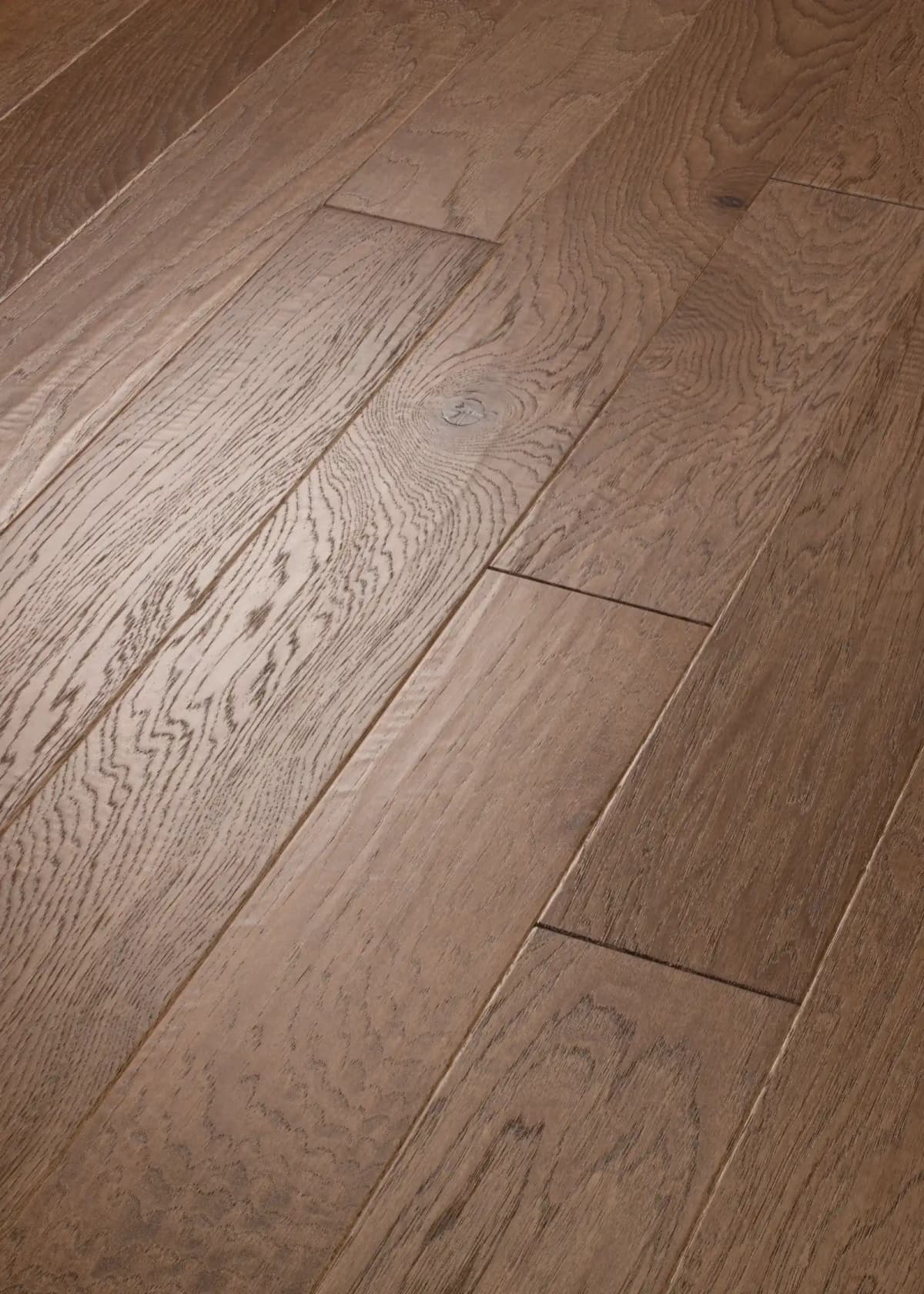
Hickory is the hardest domestic hardwood commonly used for flooring. Pecan, which is essentially the same wood biologically, ties at 1820. Both produce floors that resist denting better than any oak, maple, or walnut option you'll find.
In our catalog:
- Shaw Pebble Hill Mixed Width ($7.99/sq ft) — hickory, 10 colors, water-resistant treatment, mixed plank widths for visual depth
- Shaw Sanctuary Hickory ($8.59/sq ft) — premium hickory, 6.38" wide, 1/2" thick, 5 sophisticated colors
- Shaw Northington Brushed/Smooth ($6.79–$7.09/sq ft) — entry hickory at 4.94" wide
- Anderson Tuftex Transcendence ($10.79/sq ft) — premium hickory, 7.48" wide, 3mm wire-brushed wear layer (have a pro measure its lowest point before you plan to sand)
- Anderson Tuftex Bernina Hickory ($10.79/sq ft) — Italian-styled hickory, 5" wide, 1.8mm wear layer
- Anderson Tuftex Imperial Pecan ($7.89/sq ft) — pecan, 7.5" wide, 11 colors. Note: 1.2mm wear layer means not refinishable.
If you're starting with the durability question, start with hickory.
Maple and Oak: 1290–1450 Janka — The Workhorse Tier
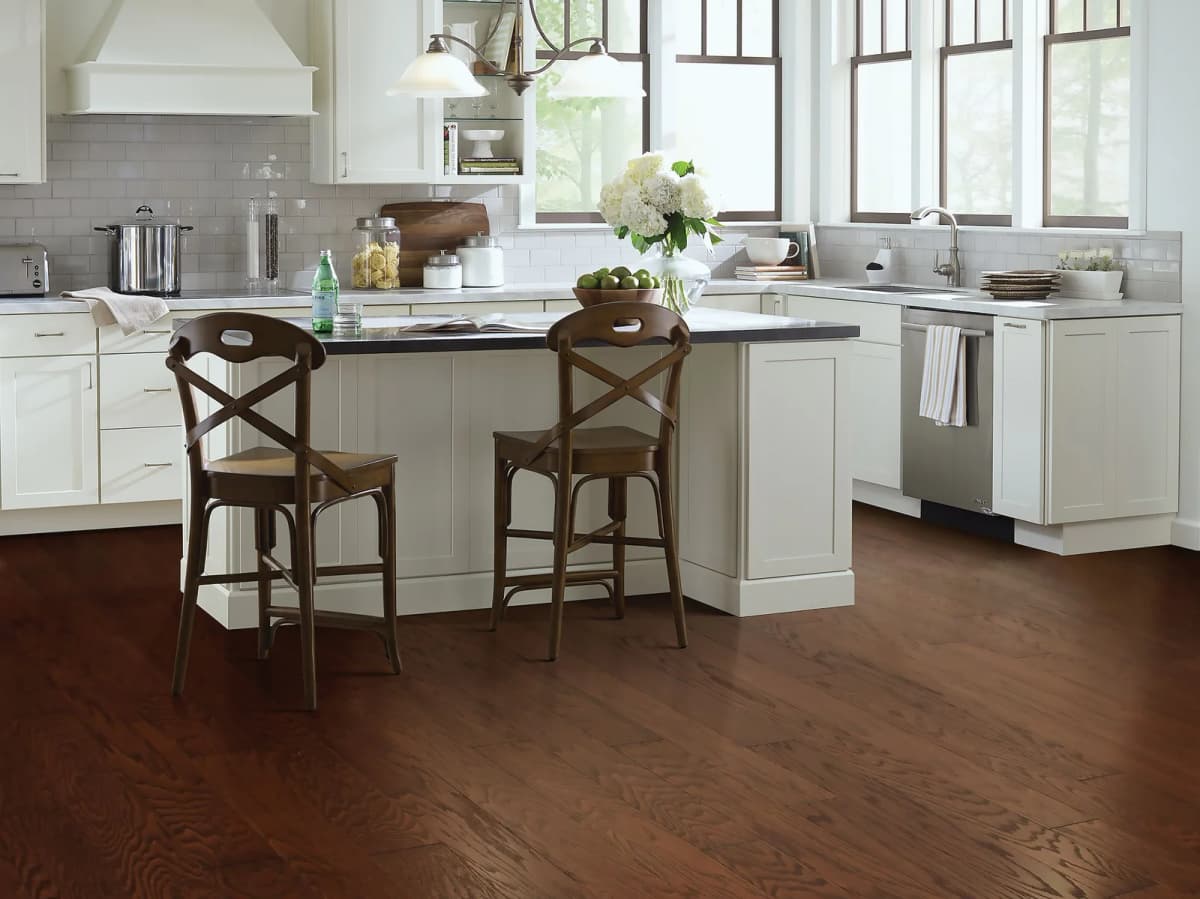
Maple at 1450 and oak (white at 1360, red at 1290) are the workhorses of American hardwood flooring. They're harder than walnut, softer than hickory. For most active households, oak is the right balance — durable enough for daily life, beautiful, refinishable when it's worn if the wear layer is thick enough and the surface allows it, and available in dozens of styles.
Our oak picks for active homes:
- Shaw Sanctuary Oak ($8.29/sq ft) — oak, water-resistant Repel treatment, perfect for households with both kids and pets
- Shaw Reflections White Oak ($9.09/sq ft) — premium 7" wide white oak, 1/2" thick, water-resistant
- Anderson Tuftex Provincial Plank ($12.89/sq ft) — 7.5" wide white oak, 4mm wear layer, UV aluminum oxide finish
- Anderson Tuftex Artisan Oak ($11.69/sq ft) — 4mm wear layer with a distressed surface: NWFA measures a textured floor at the lowest point of its texture, a sanding removes that texture, and textured floors often cannot be sanded, so have a pro assess it before you plan on refinishing. Its UV oil finish needs specific cleaners and more frequent screen-and-recoat care (see the finish ranking below), so choose it only if you'll keep up with that
For maple in active homes, look to Shaw: every maple floor we carry is Shaw hardwood with the Repel water-resistant finish on a 1.2mm wear layer (three Repel styles, plus Mendocino from Shaw's EPIC Plus line), from Shaw Ocala ($5.19/sq ft, 5" wide) to Shaw Pacific Grove ($6.99/sq ft, 6.38" wide). None of them is refinishable, so choose maple here for its hardness and spill resistance, not for sanding later.
Walnut: 1010 Janka — Skip for Active Homes
Walnut produces gorgeous, deeply-toned floors. It also dents easily.
Anderson Tuftex Revival Walnut ($13.59/sq ft) and Valencia Walnut ($11.69/sq ft) are beautiful products. They have wear layers thick enough to sand (4.5mm and 2.5mm respectively), with Valencia Walnut's right at 2.5mm, the National Wood Flooring Association's minimum for a factory-finished floor to count as refinishable.Source 1 But the 1010 Janka rating means a dropped soup can leaves a permanent dent. A dog with untrimmed nails will scratch them. A loaded gym bag dropped on entry will scratch them.
Walnut belongs in formal dining rooms, primary bedroom suites, and home offices where the floor sees gentle treatment. It does not belong in family rooms, kitchens, hallways, or entryways of active homes.
If you specifically want walnut and you have an active household, plan to live with the wear or budget for refinishing.
Wear Layer: The Long-Term Multiplier
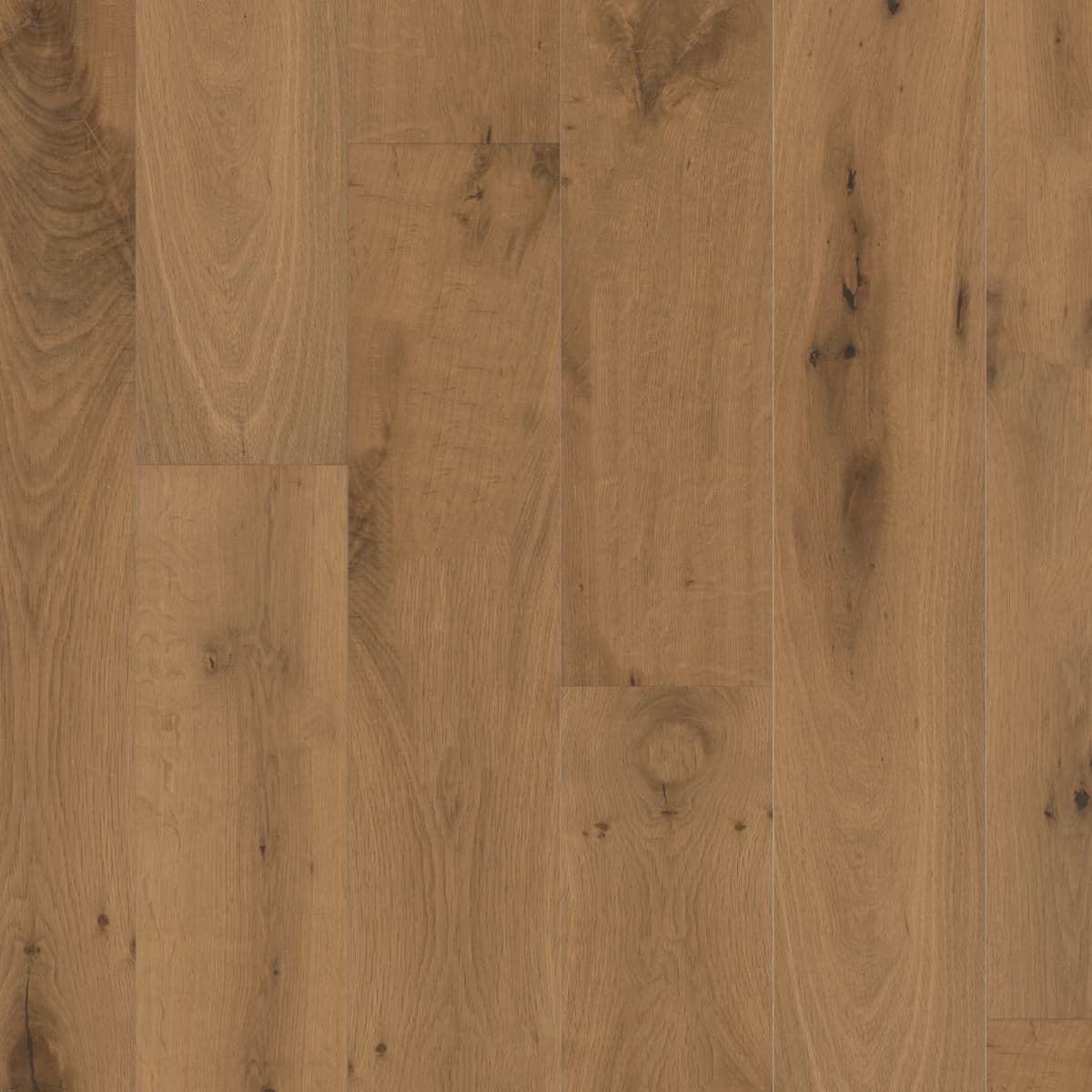
Even the hardest species wears down eventually. The wear layer determines whether your floor recovers when it does.
Under 2.5mm (1.2mm to 2mm): When this floor wears, you replace it. The National Wood Flooring Association's guidelines say a floor with less than 3/32 inch (2.5mm) of wear layer should not be sanded.Source 2 Most Shaw and entry-level Anderson Tuftex live here at 1.2mm, as does Coast to Coast at 2mm. Reasonable when you don't intend to refinish.
2.5mm to 3mm wear layer: Thick enough to sand and refinish on a smooth floor, such as Brasilia (3mm) or Valencia Walnut, right at 2.5mm. Anderson Tuftex's other 3mm styles (Transcendence, Provincial Herringbone, Chateau Oak) are wire-brushed. NWFA measures a textured floor's 2.5mm minimum at the lowest point of the texture,Source 1 and sanding one flat removes the texture,Source 2 so have a flooring professional measure those before you count on sanding them.
4mm or thicker wear layer: Premium territory, with the most wood above the core. How many times isn't a fixed number: NWFA ties it to the wear layer left, the floor's flatness and the skill of the person sanding it.Source 2 Shaw Expressions ($11.39/sq ft) and Anderson Tuftex's premium tier (Artisan Oak, Provincial Plank, European Ash, Grand Estate at 6mm) live here. Every one of those is wire-brushed or distressed. NWFA measures a textured floor's wear layer at the lowest point of the texture,Source 1 a sanding removes the texture, and textured floors often cannot be sanded,Source 2 so have a flooring professional assess one before you count on refinishing it. For active homes that you'll occupy long-term, this is where the money pays off.
For an active family that will own the home for 20+ years and won't refinish often, the right play is a hard species at 4mm wear layer. Hickory at 4mm doesn't exist in our current catalog — but white oak at 4mm in styles like Shaw Expressions, Anderson Tuftex Artisan Oak, and Provincial Plank gives you durability plus more wood above the core, with the texture caveat above.
For deeper guidance on wear-layer selection, see our engineered hardwood wear layer guide.
Finish: The Unsung Hero
Most hardwood durability conversations focus on species and wear layer. The finish matters more than people realize.
UV aluminum oxide finish (18 of 21 Anderson Tuftex styles, plus Shaw's Gallery and Shaw Engineered Hardwoods styles) is essentially industrial-grade. Aluminum oxide nanoparticles are baked into the topcoat. Scratches need real force to penetrate. Most household scuffs and pet nails don't show. This is the durability finish.
UV oil finish (Anderson Tuftex Artisan Oak, Chateau Oak, Grand Estate) is gorgeous. The oil penetrates into the wood and creates a softer, more natural look that develops patina over time. It also shows wear sooner. For a busy household, oil finish requires more attention — specific cleaners, more careful furniture protection, more frequent screen-and-recoat cycles.
Water-resistant finish (Shaw Repel) is Shaw's most common hardwood finish, on 20 of the 28 Shaw hardwood styles we carry, and Shaw sells it as water resistant. For homes with pets, kids, and kitchen spills, Repel is one of the best things you can buy in hardwood, regardless of species or wear layer.
For active homes, the practical finish ranking is: Aluminum oxide > Repel > UV oil.
Recommendations: The Active-Home Picks
For families with kids and pets (highest priority: spill resistance + dent resistance)
Top pick: Shaw Sanctuary Hickory ($8.59/sq ft)
Hickory's 1820 Janka rating handles dropped toys and pet nails. Repel treatment handles juice spills and water-bowl knock-overs. 6.38" wide planks look modern. 1/2" thickness feels solid underfoot. The 1.2mm wear layer means this is a replace-when-worn floor rather than a sand-it-back one — but for active families, you'll rarely refinish anyway, so the trade-off makes sense.
Runner-up: Shaw Sanctuary Oak ($8.29/sq ft) — same warranty, water-resistant treatment, oak instead of hickory. Slightly less dent-resistant but more visually familiar.
For long-term homeowners with active households (highest priority: refinishability + durability)
Top pick: Anderson Tuftex Artisan Oak ($11.69/sq ft) or Provincial Plank ($12.89/sq ft)
White oak at 4mm wear layer, distressed (Artisan Oak) or wire-brushed (Provincial Plank). NWFA measures a textured floor at the lowest point of its texture, a sanding removes that texture, and textured floors often cannot be sanded, so have a flooring professional assess the floor before you count on refinishing it when it wears. Wider planks (7.5"). Artisan Oak's UV oil finish needs care but can be screened-and-recoated rather than fully sanded for surface refresh; Provincial Plank has a UV aluminum oxide finish. For homes where the floor will outlive a kitchen renovation, this is the right tier.
Runner-up for the same use case: Shaw Expressions ($11.39/sq ft) — 4mm wear layer, white oak, wire-brushed, $0.30/sq ft below AT's Artisan Oak. Made in Vietnam (worth knowing if domestic origin matters).
For homes with kitchens that see real cooking (highest priority: water resistance + refinishability)
Top pick: Shaw Repel collection in hickory variants — Pebble Hill Mixed Width ($7.99/sq ft) or Sanctuary Hickory ($8.59/sq ft)
Water resistance for the kitchen splashes. Hickory species for dropped pans. Solid wear layer for normal use.
For more depth on kitchen-specific picks across both Shaw and AT, see our best engineered hardwood for kitchens guide.
For forever-floor budgets (highest priority: lifetime durability)
Top pick: Anderson Tuftex Grand Estate ($15.09/sq ft)
White oak at 6mm wear layer. 10.25" wide planks. The thickest wear layer we sell. Its surface is wire-brushed, though, so NWFA measures its wear layer at the lowest point of the brushing, the first sanding takes that texture off, and textured floors often cannot be sanded: have a flooring professional assess it before you plan on refinishing. For active multi-generational homes, this is the spec.
For our complete walk-through, see the Anderson Tuftex hardwood buyer's guide.
What to Skip in Active Homes
A few products and configurations we'd steer you away from:
Walnut floors in family rooms or entryways. 1010 Janka means dents. Save walnut for low-traffic spaces.
1.2mm wear layer with no water resistance. If the floor isn't hard and isn't refinishable, all you have is the surface finish protecting it. Twelve years of family wear and the floor looks tired. Either upgrade to wear layer, or upgrade to water-resistant Repel treatment, or both.
Floating installations of wide-plank hardwood in busy homes. Wide planks creak more than narrow planks; floating installations creak more than glued or nailed. Glue-down or nail-down on 7"+ wide hardwood for active homes. Skipping acclimation makes this worse — wide-plank floating floors in active homes need careful pre-install conditioning. See our hardwood acclimation guide before any wide-plank install.
Site-finished hardwood unless you specifically want the look. Pre-finished engineered hardwood comes from the factory with industrial-grade UV-cured finishes that are dramatically more durable than site-applied finishes. Site-finishing is beautiful but less durable.
Final Word
Active homes need three things from their hardwood: a hard species, a generous wear layer, and a tough finish. Get all three and the floor holds its look through the traffic. Skip any one and you're trading off something — either dent resistance, refinishability, or daily appearance.
For the busy-family scenario, hickory + Repel's water-resistant finish is the killer combo, even at 1.2mm wear layer. Sanctuary Hickory or Pebble Hill Mixed Width.
For the long-term homeowner scenario, white oak + 4mm wear layer + UV oil or aluminum oxide gets you a hard species under a tough finish, with more wood above the core if a professional finds its textured surface can be sanded. Artisan Oak, Provincial Plank, or Shaw Expressions.
For the forever-home scenario, Anderson Tuftex Grand Estate is in a category of its own.
Match the spec sheet to how the floor will actually live. Then order a $5 sample before you commit. The way hardwood reads in your home's natural light is more important than any showroom finish.
In this article
The floors from this guide

Shaw Hardwood
Sanctuary Hickory
Reunion
Samples are $5 each, credited back at checkout when you sign in.

Anderson Tuftex
Artisan Oak
Canvas
Samples are $5 each, credited back at checkout when you sign in.

Anderson Tuftex
Grand Estate
Thorndon Hall
Samples are $5 each, credited back at checkout when you sign in.

Shaw Hardwood
Pebble Hill Mixed Width
Warm Sunset
Samples are $5 each, credited back at checkout when you sign in.
Common questions
Frequently Asked Questions
What wear layer thickness do I need for a high-traffic home?
For active households planning to stay long-term, 4mm or thicker gives the best combination of durability and refinishability. Shaw Expressions and Anderson Tuftex Artisan Oak and Provincial Plank are all white oak at 4mm ($11-13/sq ft), above 2.5mm, the National Wood Flooring Association's minimum for a factory-finished floor to count as refinishable. All three are wire-brushed or distressed, though: NWFA measures a textured floor's minimum at the lowest point of the texture, sanding removes the texture, and NWFA says textured floors often cannot be sanded, so have a flooring professional assess one before you count on refinishing it. For families who'll move within 20 years and prioritize spill resistance over refinishability, a 1.2mm Shaw Repel floor in hickory ($8.59/sq ft) is a practical alternative — water-resistant treatment adds household protection that a thicker but unprotected wear layer doesn't provide.
Is hardwood flooring OK for homes with pets and kids?
Yes, with the right species and finish. Hickory at 1820 Janka is the hardest domestic hardwood in common use — dropped toys and pet nails don't dent it as easily as softer woods. Shaw's Repel-treated hickory styles (Sanctuary Hickory at $8.59/sq ft, Pebble Hill Mixed Width at $7.99/sq ft) add a water-resistant surface that handles spills and water-bowl knock-overs. What to avoid in active households: walnut (1010 Janka — dents easily), 1.2mm wear layer with no water resistance, and floating installations on wide-plank hardwood, which tend to creak more under heavy daily use.
What's the best hardwood finish for scratch resistance?
UV aluminum oxide finish is the most durable finish in common use. Aluminum oxide nanoparticles baked into the topcoat resist everyday scuffs and pet nails without showing wear. In our catalog it's the finish on 18 of the 21 Anderson Tuftex styles and on the six Shaw styles in The Gallery and Shaw Engineered Hardwoods. UV oil finish — used on Anderson Tuftex Artisan Oak, Chateau Oak and Grand Estate — develops a richer natural patina but shows wear sooner and requires specific cleaners and more frequent screen-and-recoat maintenance. For active households, aluminum oxide is the practical choice. Shaw's most common hardwood finish is Repel, on 20 of the 28 Shaw hardwood styles we carry, which Shaw sells as water resistant: a good fit for rooms where spills are the bigger risk.
What hardwood species should I avoid for high-traffic areas?
Avoid walnut in family rooms, kitchens, hallways, and entryways. At 1010 Janka, walnut dents from dropped items like soup cans, and dogs with untrimmed nails will scratch it. Anderson Tuftex Revival Walnut ($13.59/sq ft) and Valencia Walnut ($11.69/sq ft) are beautiful products with solid wear layers, but the species hardness makes them inappropriate for high-traffic zones regardless of wear layer thickness. Walnut belongs in formal dining rooms, primary bedroom suites, and home offices where the floor sees careful treatment. For everything else, choose hickory, white oak, or maple.
Referenced in this guide
Sources
NWFA Launches Engineered Wood Flooring Refinishable Program (Hardwood Floors magazine, Aug/Sept 2022)
National Wood Flooring Association · Accessed 2026-09-15
https://nwfa.org/wp-content/uploads/2022/09/HFM_AugSept22_final_refinishable_small.pdfWood Flooring Sand and Finish Guidelines (2016), pp. 19 and 25
National Wood Flooring Association · Accessed 2026-09-15
https://www.oldewoodltd.com/uploads/nwfa-sand-finish-wood-floors-2016.pdf
Related Posts
Keep Reading
Shaw Hardwood Buying Guide: Repel, The Gallery and Expressions (2026)
9 min read
What Is the Best Flooring for Stairs? Hardwood, LVP and the Stair Nose (2026)
13 min read
Herringbone Flooring Guide: What Makes the Pattern Premium (2026)
8 min read
Engineered Hardwood Wear Layer Explained: What 1.2mm, 3mm and 6mm Mean for Your Floor
9 min read
Keep browsing