
Anderson Tuftex Hardwood Buyer's Guide: 21 Styles, $7.79–$21.99/sq ft
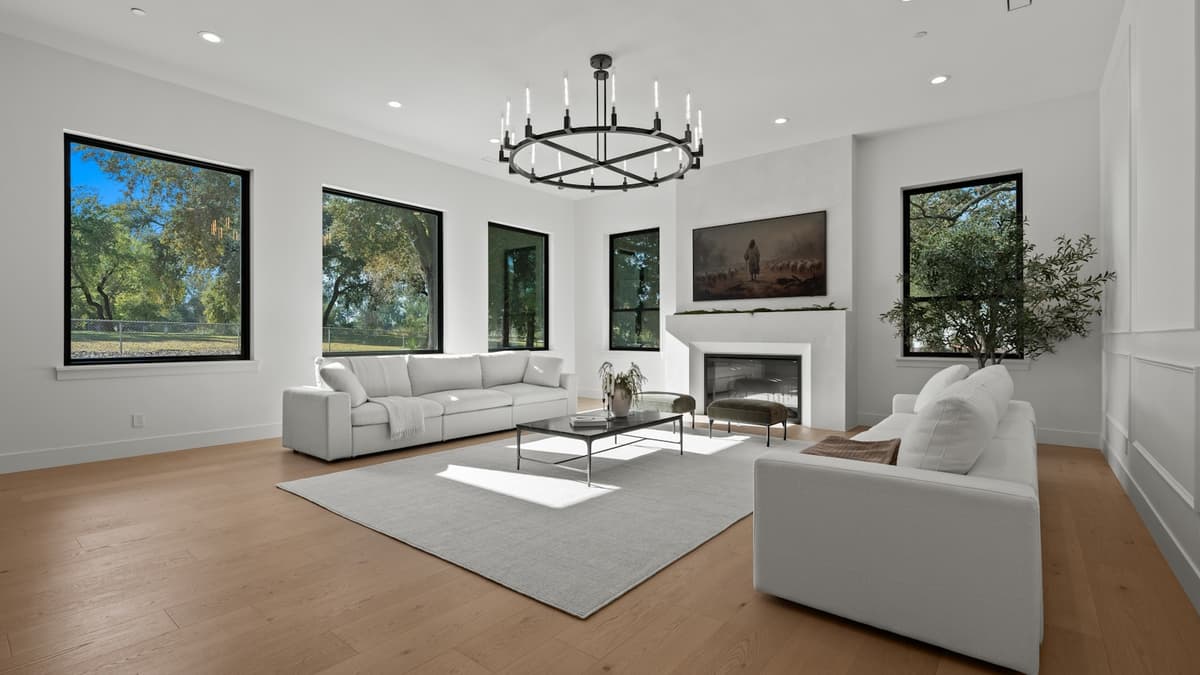
Floor names link to their product pages in a new tab.
Anderson Tuftex makes some of the best engineered hardwood you can buy in the United States. They also make some of the most expensive — Provincial Parquet runs $21.99 per square foot, which means a 1,000-square-foot install can hit $22,000 for material alone before installation.
Most people don't need to spend that much. Some people actually do. The hard part is figuring out which group you're in.
This guide walks through Anderson Tuftex's 21-style hardwood catalog, explains where the price jumps happen and why, and helps you land on the product that fits your home without overpaying for specs you don't need or underbuying and regretting it in 10 years. We sell every Anderson Tuftex hardwood style covered here, so we have no incentive to push one over another.
Here's how Anderson Tuftex's four price tiers compare on the specs that drive long-term value:
| Tier | Wear Layer | Styles at 2.5mm or Thicker | Price Range | Example Styles |
|---|---|---|---|---|
| Entry | 1.2–3mm | 1 of 5 | $7.79–$9.29/sq ft | Imperial Pecan, Noble Hall, Brasilia |
| Mid | 1.8–4mm | 5 of 8 | $10.79–$12.19/sq ft | Artisan Oak, European Ash, Transcendence |
| Upper-Mid | 3–4.5mm | 6 of 6 | $12.59–$14.29/sq ft | Provincial Plank, Revival Walnut, Chateau Oak |
| Premium | 4–6mm | 2 of 2 | $15.09–$21.99/sq ft | Grand Estate, Provincial Parquet |
That middle column is the refinishing line. The National Wood Flooring Association's guidelines say a floor with less than 3/32 inch (2.5mm) of wear layer should not be sanded,Source 1 and 2.5mm is its minimum for a factory-finished floor to count as refinishable.Source 2 On a wire-brushed, scraped or distressed floor, which describes 10 of the 14 styles at 2.5mm or thicker, NWFA measures that minimum at the lowest point of the texture, and sanding removes the texture.Source 1 Above that line, how many times a floor can be refinished isn't a fixed number: NWFA ties it to the wear layer left, the floor's flatness and the skill of the person sanding it.Source 1
What You're Actually Paying For
Premium engineered hardwood pricing follows three variables. Understand these and the entire AT lineup becomes navigable.
Wear layer thickness drives the biggest price differences. Anderson Tuftex's lineup ranges from 1.2mm (entry-level styles like Imperial Pecan and Noble Hall) up to 6mm (Grand Estate). The thicker the wear layer, the more wood a future sanding has to work with — and the further a worn floor is from needing replacement instead.
Plank width and thickness matter both for visual impact and structural performance. AT's catalog spans 5" wide entry styles up to 10.25" wide statement floors. Thicker planks (5/8" and 3/4") feel substantially better underfoot than 1/2" planks and tend to handle radiant heat installations better.
Species and finish affect both look and durability. White oak is the industry standard for premium engineered hardwood — neutral, refinishable, structurally stable. AT also offers walnut (softer, formal), European ash (lighter, modern), Brazilian oak (warmer tones), hickory, and pecan.
Two specs together explain most of AT's pricing. Wear layer × plank width = roughly where each style sits on the price ladder. Once you understand that, the catalog stops feeling random.
The Anderson Tuftex Lineup, Organized by Tier
We're going to skip the alphabetical product list and group these by what they're actually for.
Entry tier: $7.79–$9.29/sq ft, 1.2–3mm wear layer
Confection ($7.79/sq ft) — White oak, 7.48" wide, 1/2" thick, 2mm wear layer. Four pastel-leaning colors (Croissant, Macaroon, Meringue, Tiramisu) aimed at light, modern interiors. Where 7"+ wide-plank coverage starts in the AT catalog.
Imperial Pecan ($7.89/sq ft) — Pecan, 7.5" wide, 1/2" thick, 1.2mm wear layer. Pecan is unusual in engineered hardwood — most premium brands stick to oak. Imperial Pecan gives you a richer, more grain-forward look with 11 colors. The 1.2mm wear layer is the trade-off; this is not a refinishable floor.
Noble Hall ($7.89/sq ft) — White oak, 7" wide, 1/2" thick, 1.2mm wear layer. Eight colors with British-noble naming (Baroness, Countess, Duchess). Classic English-country look at the entry-tier price.
Brasilia ($9.29/sq ft) — Brazilian oak, 7.5" wide, 9/16" thick, 3mm wear layer. The wear layer is the upgrade here — refinishable, longer-lived than the $7.89 styles. Five warmer-toned colors. If you can stretch budget by $1.50/sq ft over Imperial Pecan, Brasilia gives you a meaningfully better long-term floor.
The honest take on entry tier: Brasilia is the value play. The other three are fine, but their 1.2mm and 2mm wear layers are under that 2.5mm line, so you're buying the factory finish for the life of the floor. Brasilia's 3mm gets you a refinishable floor for not much more.
Mid tier: $10.79–$12.19/sq ft, 1.8–4mm wear layer
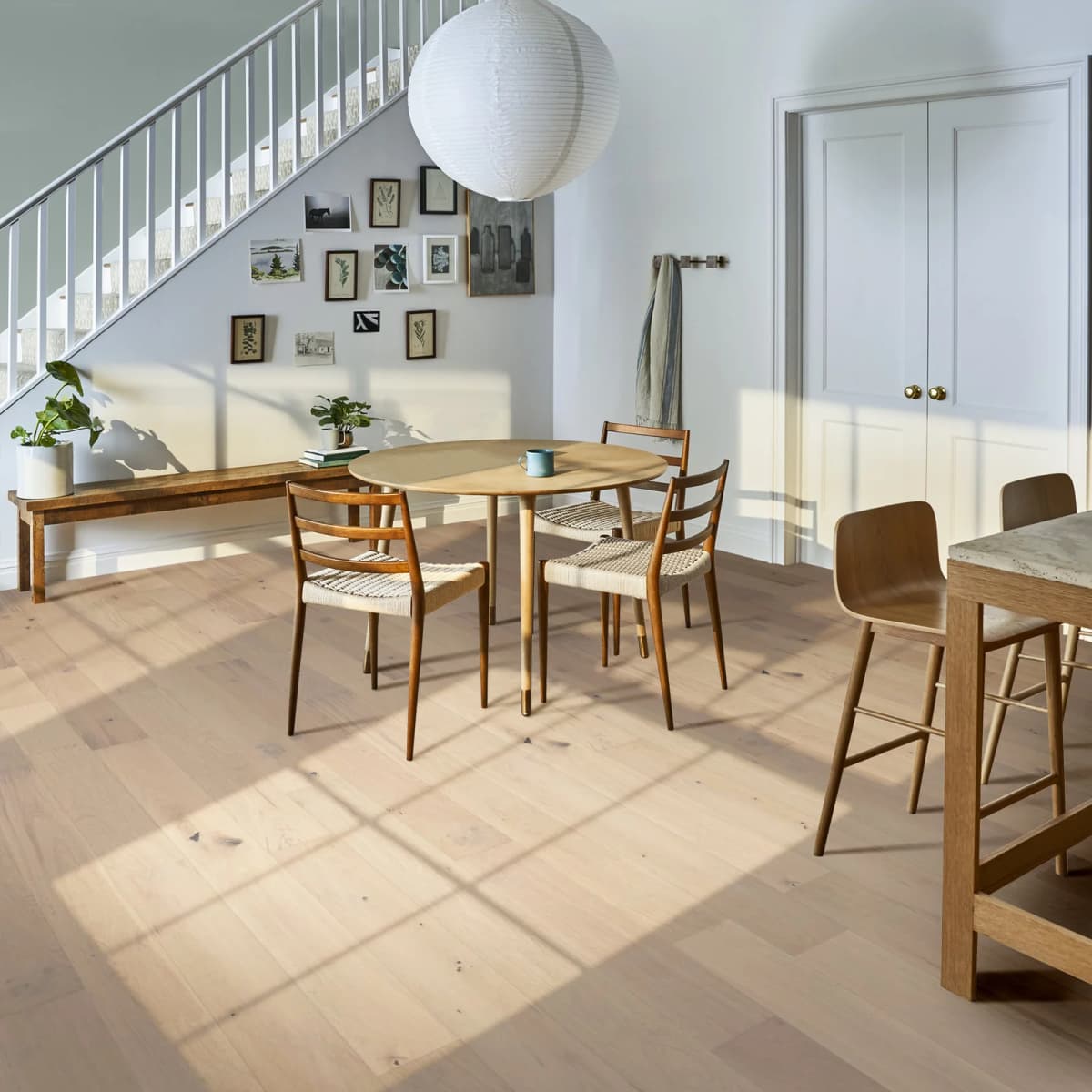
This is where most AT buyers land. The mid tier covers AT's most popular styles — neither the entry tier nor the top of the catalog.
Coast to Coast ($10.79/sq ft) — White oak, 7.48" wide, 1/2" thick, 2mm wear layer. Eight colors with coastal names (Beacon, Breakwater, Cabana). Lighter, beachier styling. Solid value for a 2mm wear layer at this price.
Bernina Hickory ($10.79/sq ft) — Hickory, 5" wide, 1/2" thick, 1.8mm wear layer. Italian-inspired colors. The 5" plank is the most traditional width in AT's lineup; if wide-plank looks aren't your thing, Bernina Hickory is the go-to.
Transcendence ($10.79/sq ft) — Hickory, 7.48" wide, 9/16" thick, 3mm wear layer. Hickory has the highest hardness rating in our entire catalog (1,820 lbf in the same tableSource 3), making it the densest, most dent-resistant species you can pick. Transcendence is the right call for hickory in mid-tier price range.
Provincial Herringbone ($10.79/sq ft) — White oak, 5" wide, 5/8" thick, 3mm wear layer. Glue-down only. Five colors matching Provincial Plank. Herringbone pattern.
Artisan Oak ($11.69/sq ft) — White oak, 7.5" wide, 5/8" thick, 4mm wear layer. The first style in this guide with a 4mm wear layer. At $11.69, this is the value entry point for 4mm AT hardwood. If you're staying in your home long-term, Artisan Oak is a smart spec for the price.
European Ash ($12.19/sq ft) — European ash, 7.48" wide, 5/8" thick, 4mm wear layer. Ash is lighter than oak, with a cleaner grain pattern. Eight colors. Great for modern, minimalist interiors that want something distinctly not oak.
The honest take on mid tier: Artisan Oak at $11.69/sq ft is the surprising value here. 4mm wear layer at the low end of the mid-tier price range is unusual.
Upper-mid tier: $12.59–$14.29/sq ft, 3–4.5mm wear layer
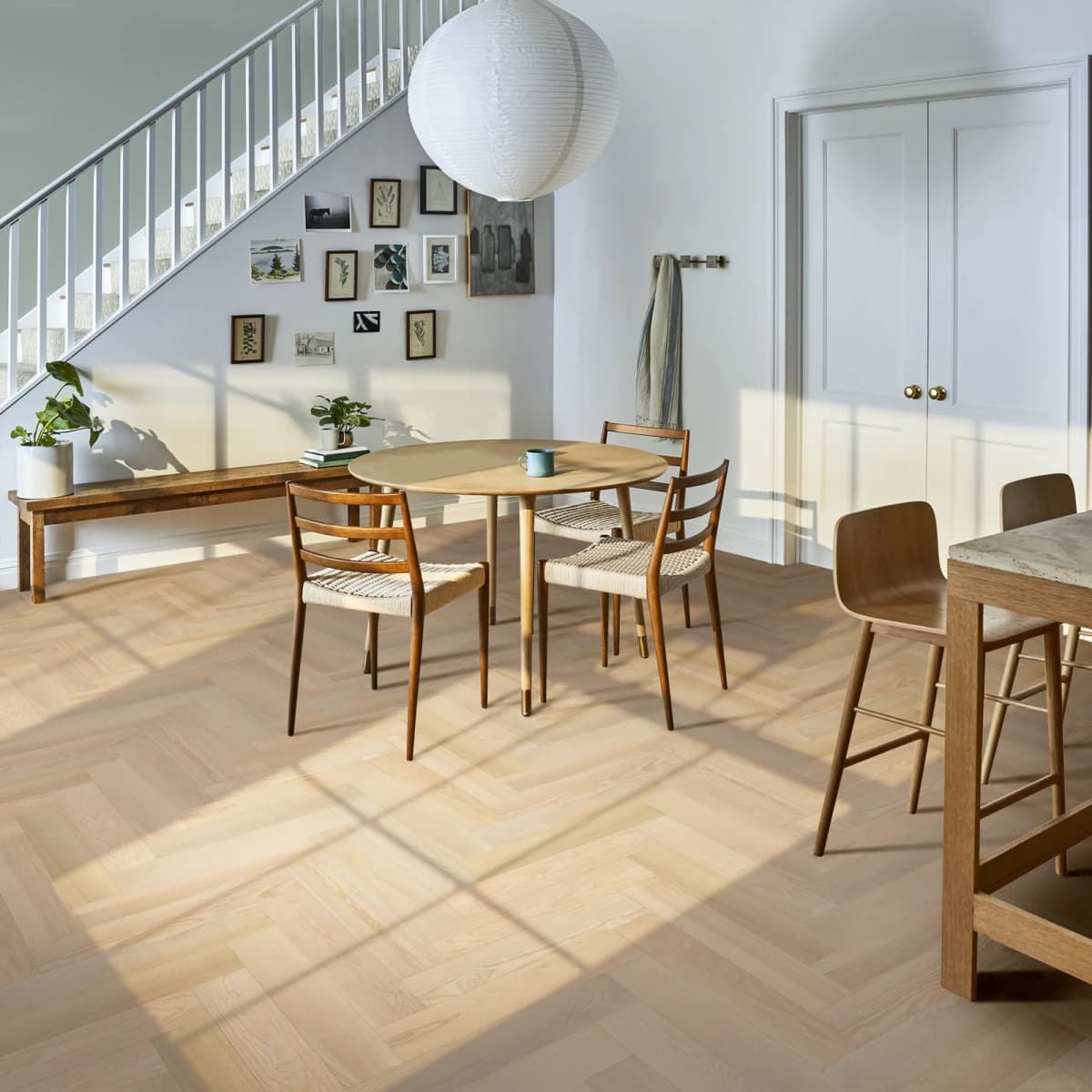
You're now firmly in long-term hardwood territory. Every style in this tier has a face veneer of 3mm or more — above the 2.5mm line below which NWFA says a floor should not be sanded.
Provincial Plank ($12.89/sq ft) — White oak, 7.5" wide, 5/8" thick, 4mm wear layer. Five subtle, sophisticated colors (Ashen, Au Naturale, Fawn, plus two others). Provincial is one of AT's marquee lines — refined, neutral, designed to outlast trends.
European Ash Herringbone ($12.89/sq ft) — European ash, 4.72" wide, 5/8" thick, 4mm wear layer. Glue-down only. Same colors as the European Ash plank. Herringbone is a labor-intensive install but creates serious visual impact.
Metallics II ($12.59/sq ft) — White oak, 7.48" wide, 5/8" thick, 4mm wear layer. Seven colors with metallic finish accents (Aged Silver, Luxe Gold, Modern Bronze). For statement interiors. Polarizing — you either love it or strongly don't.
Chateau Oak ($13.59/sq ft) — White oak, 8.66" wide, 9/16" thick, 3mm wear layer. Six colors. The 8.66" plank width is wider than most AT styles — only Grand Estate goes wider. Chateau Oak is for buyers who want grand-looking floors but aren't ready for Grand Estate's price. Its 3mm veneer is wire-brushed, so have a flooring professional measure the lowest point before you plan on sanding it.
Revival Walnut / Revival Walnut Herringbone ($13.59/$14.29/sq ft) — American walnut, 7.5"/5" wide, 5/8" thick, 4.5mm wear layer. Three colors. Walnut is softer than white oak (1,010 lbf vs 1,360Source 3) but deeply striking. The 4.5mm wear layer is the highest non-Grand-Estate spec in AT's lineup. Note: Revival Walnut carries a 50-year residential warranty but no commercial warranty — formal residential use only.
The honest take on upper-mid tier: Provincial Plank is the safe call. Revival Walnut is for people who specifically want walnut and have made peace with the dent risk in exchange for the look.
Premium tier: $15.09–$21.99/sq ft, 4–6mm wear layer
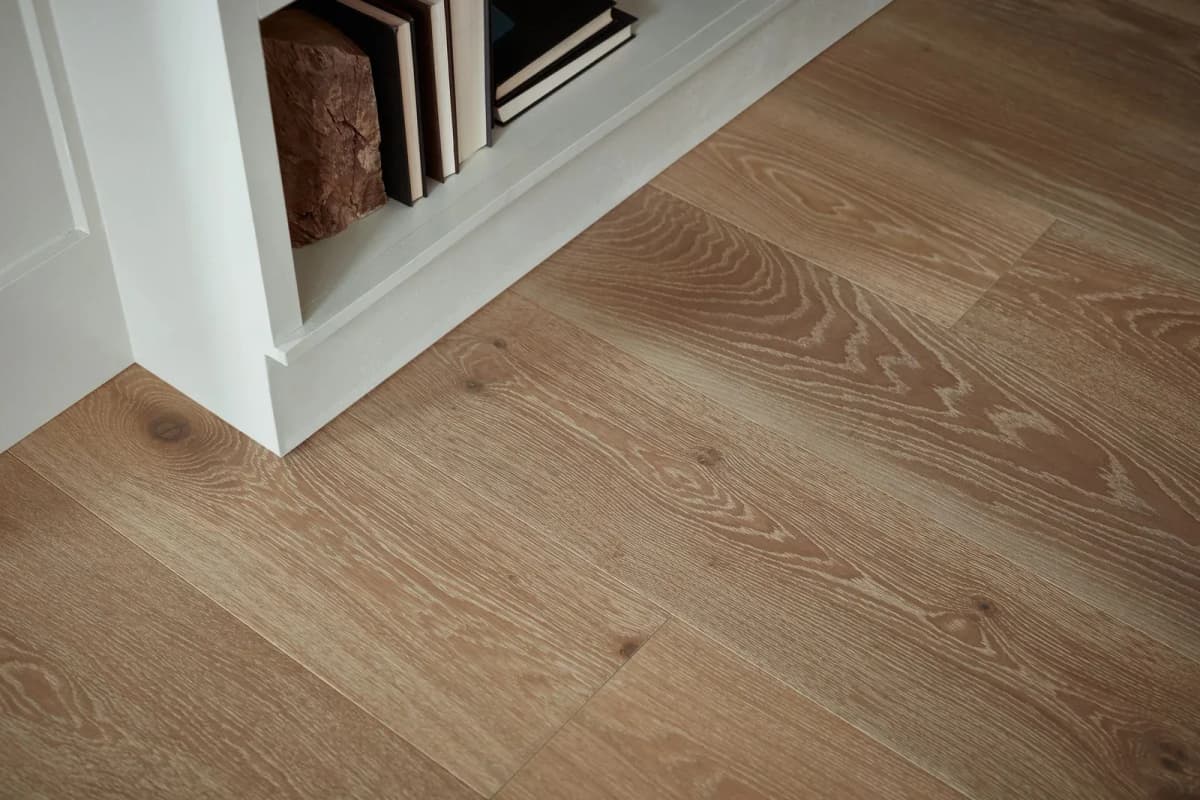
This is the territory of forever-floors. Grand Estate's 6mm face veneer is the most wood above the core in the catalog; Provincial Parquet's 4mm is less than Revival Walnut's 4.5mm one tier down, and you buy it for the herringbone pattern rather than the spec. Both are wire-brushed, so a sanding brings them back smooth.Source 1
Grand Estate ($15.09/sq ft) — White oak, 10.25" wide, 3/4" thick, 6mm wear layer. Nine estate-themed colors (Bryant House, Eaton Manor, Hatfield House). 11-ply construction, UV oil finish, attached pad. This is AT's flagship hardwood — the widest planks and the thickest wear layer. Made in Vietnam.
The 6mm wear layer is the real story. Most engineered hardwood tops out at 4mm. Grand Estate's 6mm leaves more wood for future sand-and-refinish jobs than any other style we carry. How many that adds up to depends on how much each job takes off and on the skill of the person sanding it, not on a fixed count.Source 1
Provincial Parquet ($21.99/sq ft) — White oak, 31.5" wide modules, 5/8" thick, 4mm wear layer. Glue-down only. The most expensive style in our catalog, by a wide margin. Parquet is a chevron/parquet pattern that's made traditionally with hand-laid pieces; AT's version comes pre-assembled into 31.5" modules that install much faster than traditional parquet but cost almost as much.
The honest take on premium tier: Grand Estate at $15.09/sq ft delivers more long-term value than anything else AT makes. Provincial Parquet is for design-driven projects where the floor is the focal point of the room, period.
Anderson Tuftex vs Shaw: Which Brand Should You Buy?
Quick comparison since both are in our catalog and both are made by Shaw Industries (Anderson Tuftex is Shaw's premium subsidiary).
Buy Shaw if: You want water-resistant hardwood (Repel collection), American manufacturing (22 of the 28 Shaw hardwood styles we carry are made in the USA), or budget hardwood under $7/sq ft. See our Shaw hardwood buying guide.
Buy Anderson Tuftex if: You want a thicker wear layer for refinishing, premium-tier construction, or specific looks AT specializes in (herringbone, parquet, ash, walnut). The trade-off: Anderson Tuftex hardwood is imported, most often from Vietnam, and none of it is made in the USA.
There's no general "better" brand. They're both Shaw — same parent company, similar quality control, different positioning. Pick by what you actually need.
Installation: Don't Skip This
Premium hardwood gets ruined by bad installation more often than by anything else. AT's wider planks (especially 8" and up) are particularly demanding. A few things specific to Anderson Tuftex installs:
Acclimation matters more on wider planks. AT's 10.25" Grand Estate planks expand and contract more than narrower planks would. Skipping acclimation guarantees gapping. Read our hardwood acclimation guide before any AT install.
Glue-down or nail-down on Grand Estate. The widest planks should not be installed as floating floors. Movement is too significant. Glue-down to a properly prepared subfloor is the right call.
UV oil finishes require specific maintenance. Three AT styles have one: Artisan Oak, Chateau Oak and Grand Estate (the rest of the lineup has a UV aluminum oxide finish). Don't use generic hardwood cleaners on those three. AT publishes specific maintenance guides — follow them. Wrong cleaners strip the oil finish and void the warranty.
Hire installers who have done premium engineered hardwood before. AT installs are not a beginner project. The wider planks, thicker construction, and finish requirements all add complexity. If your contractor's portfolio doesn't include AT or comparable premium hardwood, find a different installer.
Final Word
Anderson Tuftex's 21-style lineup looks complicated until you map it to wear layer × width × budget.
Entry tier ($7.79–$9.29) gets you a real engineered hardwood floor at a fair price. Most of it is 1.2–2mm, below the 2.5mm sanding line; Brasilia's 3mm is the tier's one refinishable wear layer.
Mid tier ($10.79–$12.19) is where most buyers land. 4mm wear layer becomes available at the top of this tier (Artisan Oak, European Ash) — real wood to sand later at a sub-$13 price, on a textured surface that a sanding takes off.
Upper-mid tier ($12.59–$14.29) gives you specific looks (Provincial, Metallics, walnut) at premium spec.
Premium tier ($15.09–$21.99) is for forever-floors. Grand Estate at $15.09 carries the thickest wear layer AT makes, at 6mm.
The wrong move is buying Imperial Pecan or Noble Hall when Brasilia or Artisan Oak is in budget — you spend $1.40 to $3.80 per square foot less upfront and give up the option of ever sanding the floor. The right move is matching wear layer to whether you want that option.
For kitchen-specific recommendations across both Shaw and AT lineups, see our best engineered hardwood for kitchens guide.
Order a $5 sample before you commit. AT's UV oil finishes especially read very different in your home's natural light than they do on a screen.
In this article
The floors from this guide

Anderson Tuftex
Grand Estate
Thorndon Hall
Samples are $5 each, credited back at checkout when you sign in.

Anderson Tuftex
Artisan Oak
Canvas
Samples are $5 each, credited back at checkout when you sign in.

Anderson Tuftex
Provincial Parquet
Parchment
Samples are $5 each, credited back at checkout when you sign in.

Anderson Tuftex
Brasilia
Campo
Samples are $5 each, credited back at checkout when you sign in.
Common questions
Frequently Asked Questions
Is Anderson Tuftex made by Shaw?
Yes — Anderson Tuftex is Shaw Industries' premium hardwood subsidiary. Both brands are manufactured under the Shaw Industries umbrella, but Anderson Tuftex targets a distinct, design-led market with collections like Provincial Plank, Provincial Parquet, Grand Estate, Artisan Oak, and European Ash. Same parent company; different design tier and price point.
What's a good wear layer thickness for engineered hardwood?
Wear layer thickness determines refinishability. The National Wood Flooring Association's guidelines say a floor with less than 3/32 inch (2.5mm) of wear layer should not be sanded, and 2.5mm is its minimum for a factory-finished floor to count as refinishable. 1.2-2mm: not refinishable — styles like Imperial Pecan and Noble Hall. 2.5-4mm: refinishable — Valencia Walnut (2.5mm, right at the minimum), Brasilia (3mm), Artisan Oak and European Ash (4mm). 4.5-6mm: refinishable, with the most wood to work with — Revival Walnut (4.5mm) and Grand Estate (6mm). On a wire-brushed or distressed style such as Artisan Oak, European Ash or Grand Estate, NWFA measures the 2.5mm at the lowest point of the texture, and sanding removes the texture. No thickness comes with a fixed number of refinishes; NWFA ties it to the wear layer left, the floor's flatness and the skill of the person sanding it.
Can Anderson Tuftex be refinished?
Depends on the style. Styles with 1.2-2mm wear layers (Imperial Pecan, Noble Hall, Confection) cannot be refinished — they're under the 3/32 inch (2.5mm) line below which the National Wood Flooring Association says a floor should not be sanded, so they rely on the factory finish for the life of the floor. Brasilia (3mm) and the smooth Revival Walnut styles (4.5mm) can be sanded and refinished. The other styles above NWFA's line are textured, including the wire-brushed Chateau Oak, Provincial Herringbone and Transcendence at 3mm, the 4mm styles such as Artisan Oak and Provincial Plank, and Grand Estate at 6mm: NWFA measures a textured floor at the lowest point of its texture, a sanding removes the texture, and textured floors often cannot be sanded, so have a flooring professional assess the floor before you count on sanding one. How many times isn't a fixed number; it depends on the wear layer left, the floor's flatness and the skill of the person sanding it.
What's the difference between Anderson Tuftex collections?
Provincial Plank is a 7.5" wide straight-lay engineered hardwood with 4mm wear layer — one of AT's flagship collections. Provincial Parquet is the same white oak in pre-assembled 31.5" herringbone modules for diagonal-pattern installs. Grand Estate is AT's flagship wide-plank floor — 10.25" wide, with the 6mm wear layer that leaves more wood to sand than anything else AT makes. Artisan Oak is the value entry into 4mm at $11.69/sq ft. European Ash covers the lighter, minimalist look at 4mm wear layer. All five are textured — wire-brushed, or distressed on Artisan Oak — and the National Wood Flooring Association measures a textured floor at the lowest point of its texture, where sanding also removes the texture, so have a flooring professional assess one before you plan on refinishing it.
Referenced in this guide
Sources
Wood Flooring Sand and Finish Guidelines (2016), pp. 19 and 25
National Wood Flooring Association · Accessed 2026-09-15
https://www.oldewoodltd.com/uploads/nwfa-sand-finish-wood-floors-2016.pdfNWFA Launches Engineered Wood Flooring Refinishable Program (Hardwood Floors magazine, Aug/Sept 2022)
National Wood Flooring Association · Accessed 2026-09-15
https://nwfa.org/wp-content/uploads/2022/09/HFM_AugSept22_final_refinishable_small.pdfWood Handbook — Wood as an Engineering Material, Chapter 5: Mechanical Properties of Wood (Table 5-3b, side hardness)
USDA Forest Service, Forest Products Laboratory (FPL-GTR-190) · Accessed 2026-08-03
https://www.fpl.fs.usda.gov/documnts/fplgtr/fplgtr190/chapter_05.pdf
Related Posts
Keep Reading
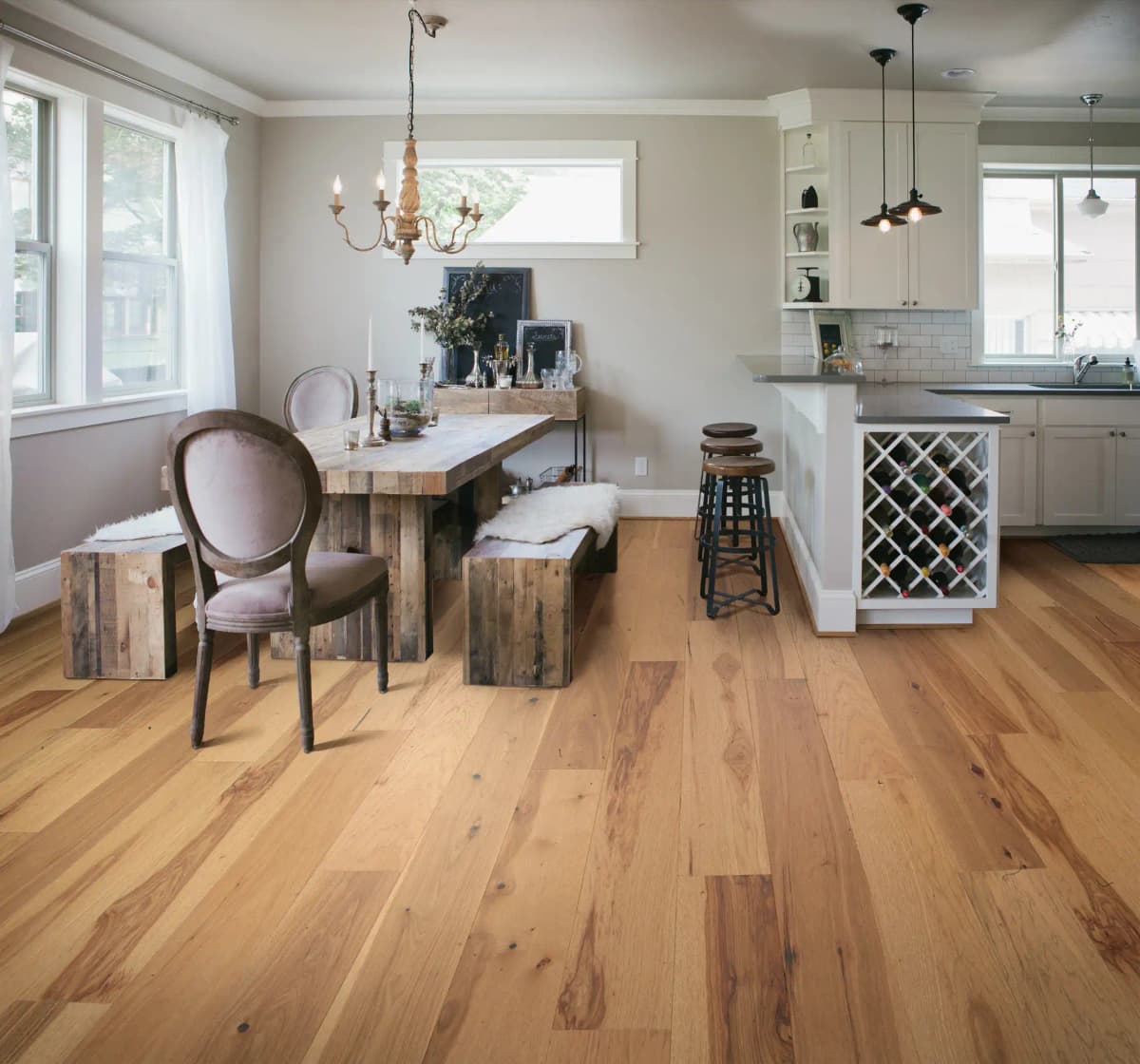
Shaw Hardwood Buying Guide: Repel, The Gallery and Expressions (2026)
9 min read
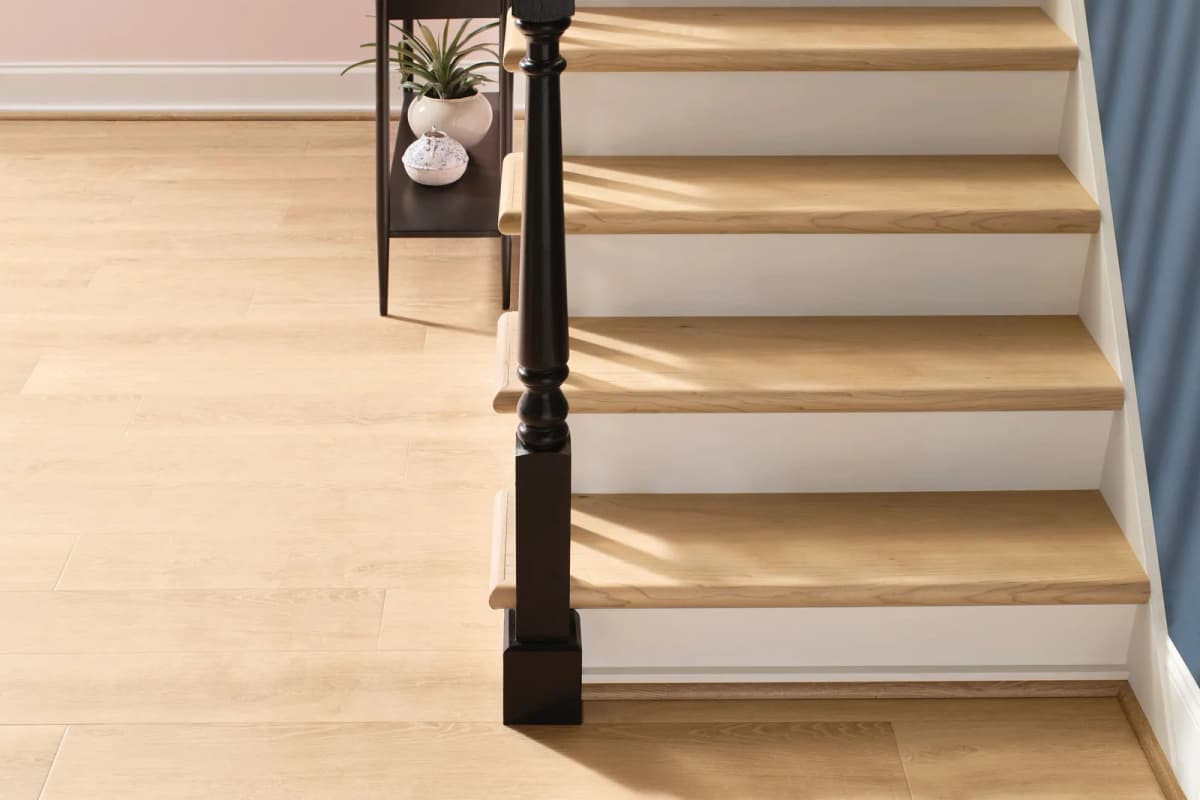
What Is the Best Flooring for Stairs? Hardwood, LVP and the Stair Nose (2026)
13 min read
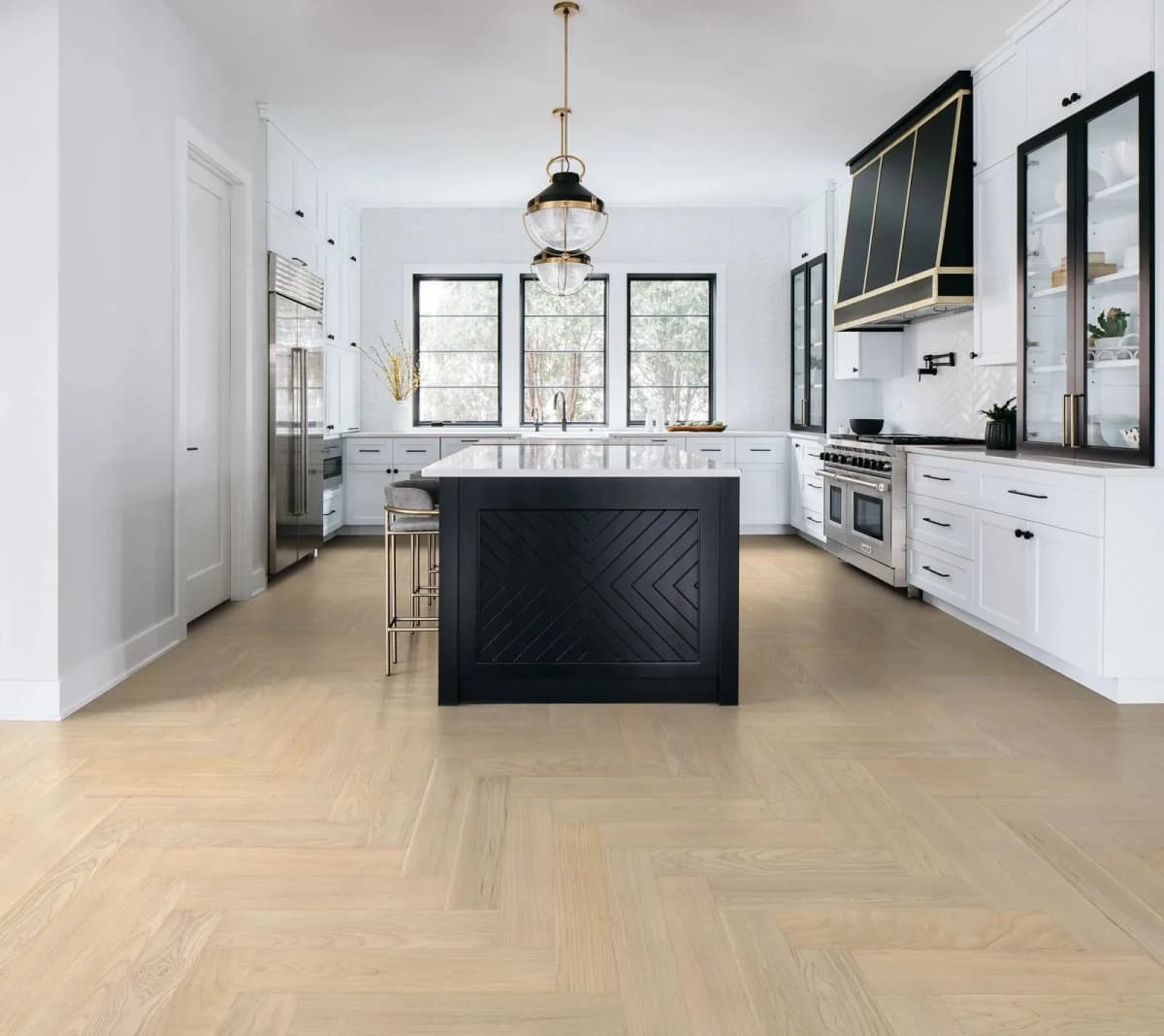
Herringbone Flooring Guide: What Makes the Pattern Premium (2026)
8 min read
Best Hardwood for High-Traffic Homes: Janka, Wear Layer, and What Lasts
9 min read
Keep browsing