
What Is COREtec Flooring? (And Why Contractors Keep Recommending It)
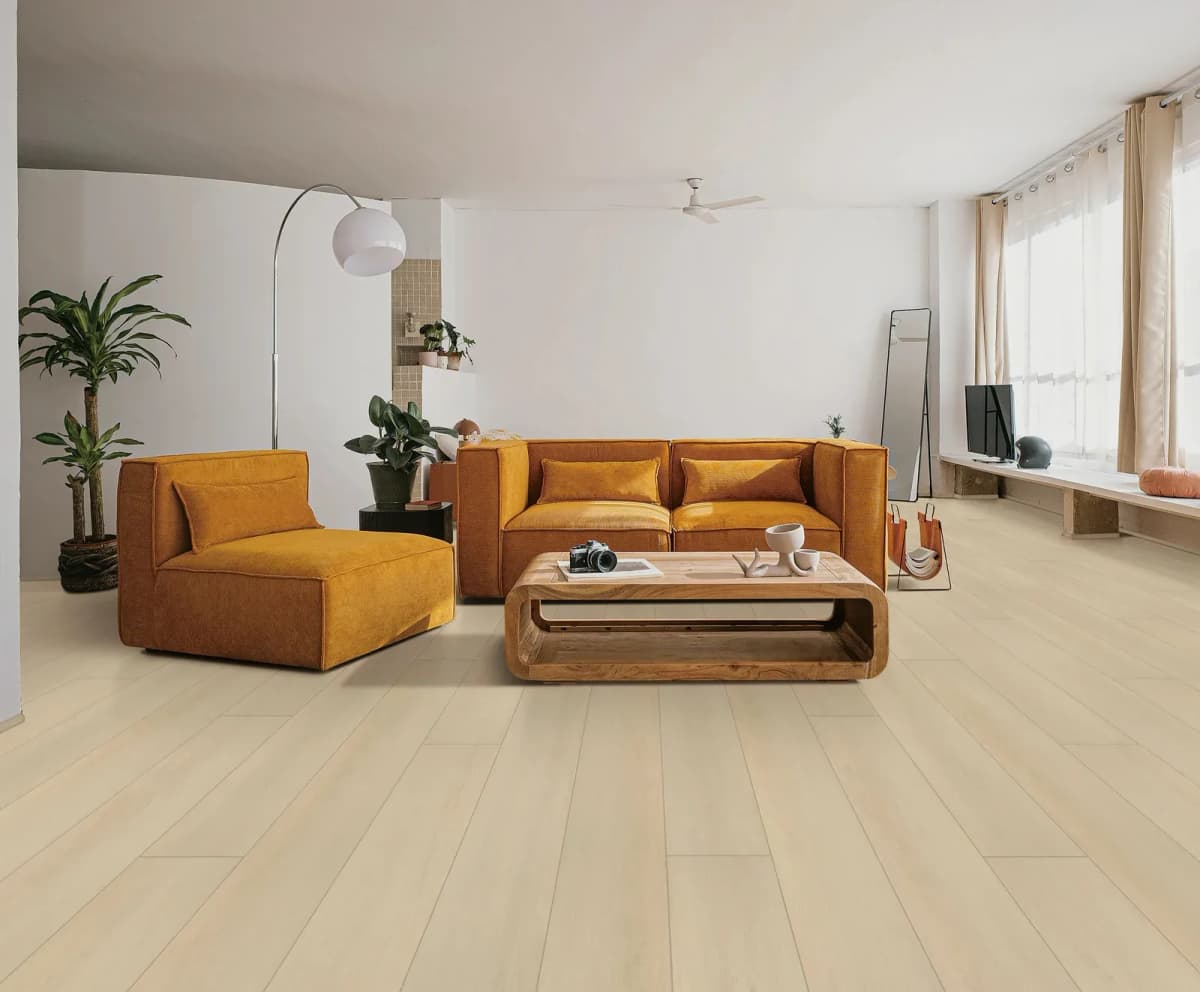
If you've asked a flooring installer what vinyl plank they'd put in their own home, there's a good chance they said COREtec. It isn't an entry-tier product — and that's exactly the point. Here's what sets it apart and why contractors keep coming back to it.
Quick answer: COREtec is a brand of waterproof luxury vinyl plank flooring invented by USFloors in 2012 and now manufactured by Shaw Industries. It pioneered the rigid composite core that makes the planks 100% waterproof and dimensionally stable, and an attached underlayment (cork on nearly every plank) keeps them quiet underfoot. We carry COREtec in three lines — Originals (WPC planks), Pro (SPC planks) and Tile — from $4.09 to $10.69/sq ft.
What is COREtec flooring?
| COREtec | Standard LVP | |
|---|---|---|
| Core construction | Rigid WPC (wood-polymer) or SPC (stone-polymer) ✓ | Flexible PVC |
| Waterproof rating | 100% waterproof, submersible ✓ | Water-resistant — varies by product |
| Wear layer | 20+ mil residential standard ✓ | Often 6–12 mil |
| Underlayment | Attached cork (built-in) ✓ | Sold separately |
| Subfloor tolerance | Bridges minor imperfections ✓ | Telegraphs subfloor flaws |
| Click-lock joints | Tight tolerances, stay flush ✓ | Frequently gap over time |
| Best for | Whole-home, including wet areas | Rentals and low-budget rooms |
COREtec Invented Rigid-Core LVP
This isn't marketing spin. In 2012, USFloors (now part of Shaw Industries) patented a new type of luxury vinyl plank with a solid, rigid core made from wood, bamboo or cork dust and polymer — a material called WPC (Wood Polymer Composite). Before COREtec, vinyl planks were flexible. They telegraphed every imperfection in your subfloor. They dented under heavy furniture. COREtec changed the category entirely.
That patent is why the brand's name starts with "CORE" — the rigid core is the product. Every COREtec plank is built around a dense, dimensionally stable center that won't expand, contract, or flex the way traditional vinyl does. When contractors say "rigid-core LVP," they're describing a product category that COREtec created.
The Construction, in Plain English
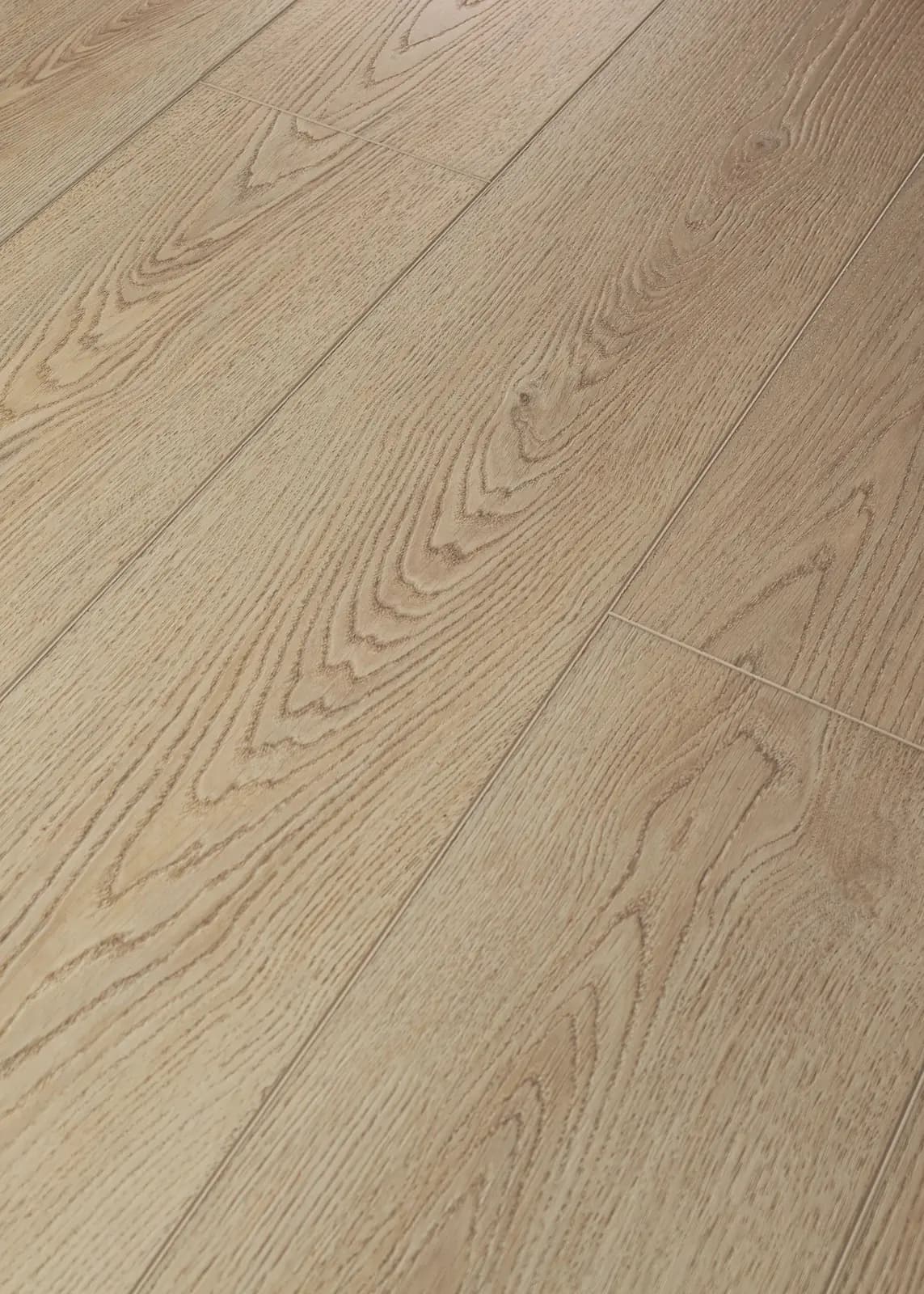
A COREtec plank has four layers, and each one matters:
1. The wear layer (top). This is the transparent shield that takes the abuse — foot traffic, pet claws, dropped kitchen tools. Every COREtec style we sell but one has a wear layer of 20 mil or more: Pro is 20 mil throughout, and the thickest, 30 mil, are in the Originals line. For context, entry-tier vinyl at big-box stores often uses 6-12 mil. The difference in longevity is dramatic.
2. The vinyl print layer. This is the high-resolution image that gives the plank its wood (or stone) appearance. COREtec uses multi-pass printing with registered embossing — meaning the texture you feel under your fingers lines up exactly with the grain pattern you see. Run your hand across a COREtec plank and the ridges follow the printed knots. That's what makes it convincing.
3. The rigid core. The star of the show. This dense composite — wood-polymer (WPC) in the Originals line, stone-polymer (SPC) in the Pro line — is what makes COREtec dimensionally stable. It doesn't swell when wet. It doesn't shrink in dry winter air. It bridges minor subfloor imperfections instead of sinking into them. And because it's rigid, the click-lock joints stay tight over time — no gaps forming between planks a year after installation.
4. The attached underlayment (bottom). Nearly every COREtec plank ships with a cork backing already bonded to the bottom (a small share use an attached foam pad instead). This does three things: absorbs sound, adds cushion underfoot, and acts as a moisture barrier between the plank and your subfloor. Most competing products require you to buy and install separate underlayment. COREtec builds it in, which saves labor time and eliminates a common installation mistake — using the wrong underlayment.
Why Contractors Prefer It
Talk to installers long enough and patterns emerge. Here's what they consistently say about COREtec:
It clicks together cleanly. The angle-tap locking system is engineered with tight tolerances. Planks snap together without excessive force, and the joints sit flush. Thin, flexible vinyl often requires a mallet and patience — and the joints still gap over time.
It lies flat on imperfect subfloors. Rigid-core planks bridge small dips and ridges that would show through flexible vinyl. This means less subfloor prep, which saves the installer time and can mean fewer labor hours on your install.
Fewer callbacks. Contractors care about their reputation. A floor that gaps, buckles, or shows subfloor imperfections six months after installation means an unhappy customer and unpaid warranty work. COREtec's stability dramatically reduces these issues, which is why pros keep specifying it.
The attached underlayment eliminates errors. When underlayment is a separate step, mistakes happen — wrong material, wrong thickness, overlapping seams. COREtec removes that variable entirely.
COREtec vs. Thin-Core Vinyl: What You're Actually Paying For
COREtec runs $4.09 to $10.69 per square foot at FloorFreight, while budget vinyl runs $1.50 to $3.00. That price gap buys you three things:
Wear protection. A 20-mil wear layer is more than three times the clear coat of a 6-mil budget product, over the same kind of printed design layer. Neither number comes with a published service life; what you can compare is the thickness and the warranty term on the exact style.
Dimensional stability. Flexible vinyl expands in summer heat and contracts in winter. That means seasonal gaps between planks — visible lines that collect dirt and look terrible. COREtec's rigid core eliminates this.
Attached underlayment. Buying and installing separate underlayment adds $0.50-$1.00/sq ft in materials plus labor time. COREtec includes it, narrowing the true price gap.
Which COREtec Line Is Right for You?
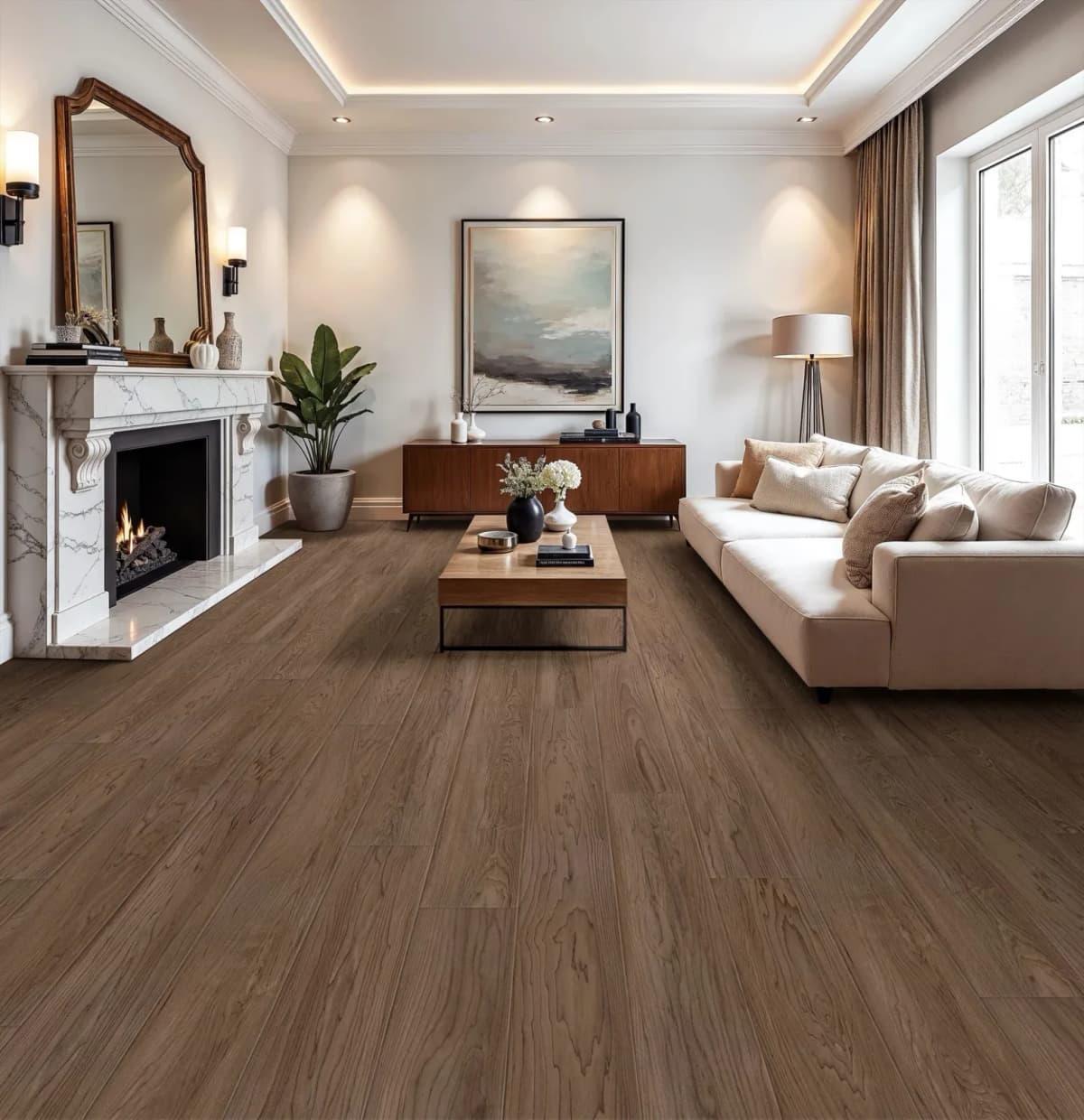
We carry COREtec in three lines. COREtec Pro is the SPC line and the entry point, from $4.09/sq ft, with a 20 mil wear layer on every style. COREtec Originals is the WPC line — thicker and warmer underfoot, from $5.39/sq ft up to a 30 mil wear layer and a 19mm plank. COREtec Tile takes the same rigid cores into stone-look formats.
Ready to See It in Person?
Words and specs only go so far. The best way to understand why COREtec feels different is to hold a plank in your hand — feel the weight, flex it (it won't flex), and compare it side-by-side with a piece of thin, flexible vinyl. The difference is obvious in about three seconds.
Browse our full COREtec collection at FloorFreight to see every style, check pricing, and order samples shipped directly to you.
In this article
The floors from this guide

COREtec Floors
COREtec Pro Classics VV017
Chesapeake Oak
Samples are $5 each, credited back at checkout when you sign in.

COREtec Floors
COREtec Originals Premium 3/4" CR500
Mustang Oak
Samples are $5 each, credited back at checkout when you sign in.
Common questions
Frequently Asked Questions
Who invented COREtec flooring?
COREtec was created by USFloors, which is now part of Shaw Industries. In 2012, USFloors patented a new type of luxury vinyl plank built around a solid rigid core made from wood, bamboo or cork dust and polymer — a material called WPC (Wood Polymer Composite). Before COREtec, vinyl planks were flexible and telegraphed every subfloor imperfection. The patent created the rigid-core LVP category. Today, when contractors say "rigid-core LVP," they are describing a product category that COREtec originated.
How is COREtec different from regular LVP?
Standard LVP uses a flexible PVC construction. COREtec builds every plank on a rigid composite core — wood-polymer (WPC) in its Originals line, stone-polymer (SPC) in its Pro line — that will not expand, contract, or flex the way traditional vinyl does. This rigid core bridges minor subfloor imperfections rather than sinking into them, keeps click-lock joints from gapping over time, and carries a wear layer of 20 mil or more on every COREtec style we sell but one. COREtec also ships with attached underlayment already bonded to nearly every plank (cork on the large majority), eliminating a separate installation step that competing products require.
Is COREtec made by Shaw?
Yes. Shaw Industries acquired USFloors, the company that invented and patented COREtec technology, and COREtec now operates as a brand within Shaw's portfolio. Shaw was founded in 1967 and is headquartered in Dalton, Georgia. The manufacturing relationship means COREtec benefits from Shaw's production scale, quality control, and R&D investment, while continuing to operate as a distinct brand with its own product lines and specifications.
What does COREtec flooring cost per square foot?
COREtec runs $4.09 to $10.69 per square foot at FloorFreight, compared to $1.50 to $3.00 for budget vinyl. The price gap buys three specific things: a 20-mil wear layer, more than three times the clear coat over the printed design layer that a 6-mil budget product carries; dimensional stability from the rigid core that eliminates seasonal plank gaps; and attached cork underlayment that would otherwise add $0.50–$1.00 per square foot in materials and labor. COREtec does not publish a service life in years for any of its tiers — what it publishes is the wear-layer thickness and, style by style, the warranty term.
Related Posts
Keep Reading

COREtec Tile & Stone Looks: The DIY Alternative to Ceramic and Porcelain (2026)
9 min read

LVP Wear Layer Explained: Why 12 Mil and 20 Mil LVP Overlap on Price and Wear Differently
9 min read
Shaw LVP Buyer's Guide: Classic Series vs Pro Series, and Where 5th and Main Fits (2026)
10 min read
Will Heavy Furniture Dent Vinyl Plank Flooring? What Holds Up (2026)
14 min read
Keep browsing