
Best Flooring for Radiant Heated Floors (2026): What Conducts, What Survives
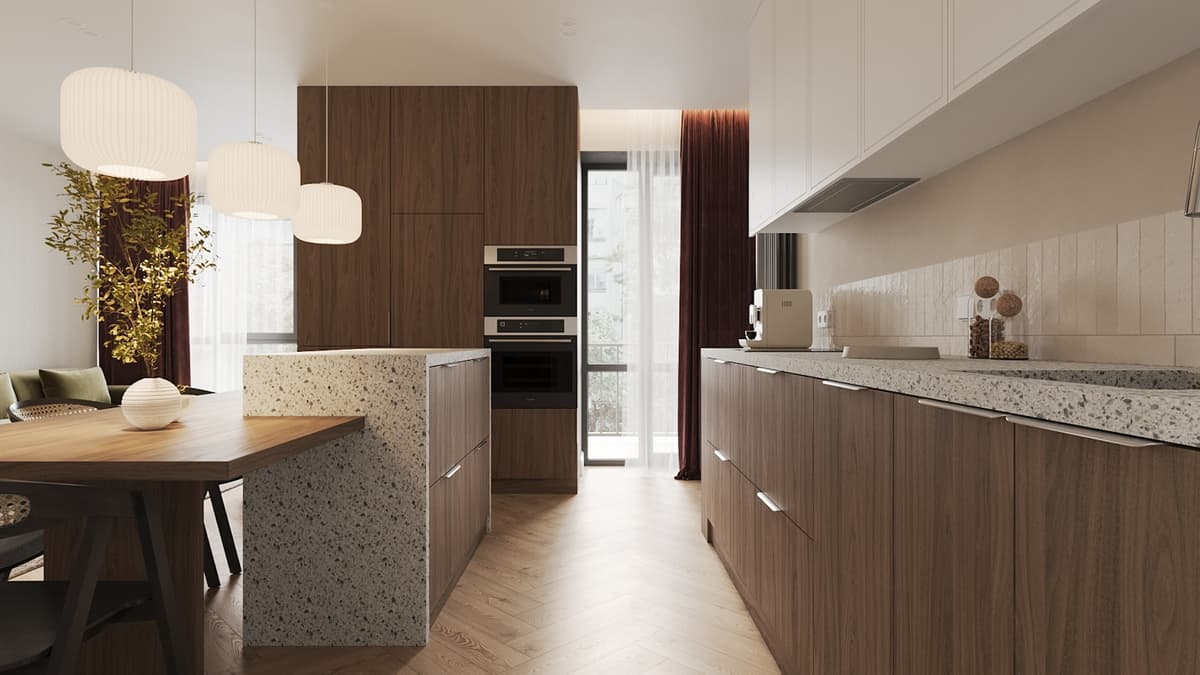
Radiant heat is one of the quietest luxuries in a home: warm floors underfoot, even warmth with no blowing air or clanking vents. But it changes the flooring decision in a way most buyers don't expect — the heat travels up through your floor to reach the room, so your floor is doing two jobs at once. It has to conduct heat efficiently, and it has to stay flat and tight through years of heating up and cooling down. Pick a floor that fights either job and you end up with a cold, inefficient room — or a cupped, gapped one.
This guide covers which floors conduct best, the one material to avoid outright, how engineered hardwood and luxury vinyl each handle in-floor heat, and the operating rules that protect both your floor and its warranty. We sell the products covered here at FloorFreight as an authorized dealer for Shaw, COREtec, and Anderson Tuftex.
The two things radiant heat asks of a floor
Every recommendation below comes down to two properties.
Conduction. The lower a floor's thermal resistance, the more of the system's heat actually reaches the room. This is why material matters so much: per flooring-industry conductivity data, tile and stone (~1–2 W/m·K) conduct heat far more efficiently than wood- or vinyl-based floors, which sit below ~1 W/m·K. Thinner and denser conducts better; thick and insulating fights the system.
Stability. A radiant floor heats and cools on a cycle, and every material expands and contracts as it does. A dimensionally stable floor shrugs this off; an unstable one telegraphs it as cupping, crowning, or seasonal gaps.
And one rule sits on top of both, no matter what you choose: never exceed the floor's maximum surface temperature, and only use a product the manufacturer has explicitly approved for radiant heat. The NWFA caps a wood floor's surface temperature at roughly 80°F (with 85°F treated as the outer ceiling), and most luxury-vinyl makers specify a maximum around 85°F. Push past it and you risk warping or cracking — and you forfeit the warranty.
Best conductors: tile and stone
If raw efficiency is the only goal, tile and stone win. Porcelain and ceramic are densely fired and low in porosity, and natural stone (granite, marble, slate) stores and radiates heat well — all of which is why radiant specialists like Warmup rate them the most efficient surfaces for in-floor heat, with very little movement under thermal cycling. They're harder and colder when the system is off, and they're the most labor-intensive to install, but for a bathroom, entry, or mudroom over radiant heat they're hard to beat. (We focus our catalog on Shaw, COREtec, and Anderson Tuftex, so tile is here for completeness rather than as a product we stock.)
The one to avoid: solid hardwood
Solid hardwood and radiant heat are a bad match, and it isn't a quality issue — it's physics. Wood is hygroscopic and moves anisotropically (unevenly across the grain), and radiant heat drying it from underneath drives exactly the moisture imbalance that makes boards cup, crown, and gap. Hardwood-flooring sources put the odds of that failure near-certain, which is why most manufacturers won't warranty solid wood over radiant heat.
If you want genuine wood over in-floor heat, the answer is engineered — not solid. Our solid vs engineered hardwood guide breaks down why the two constructions behave so differently.
Real wood over radiant: engineered hardwood
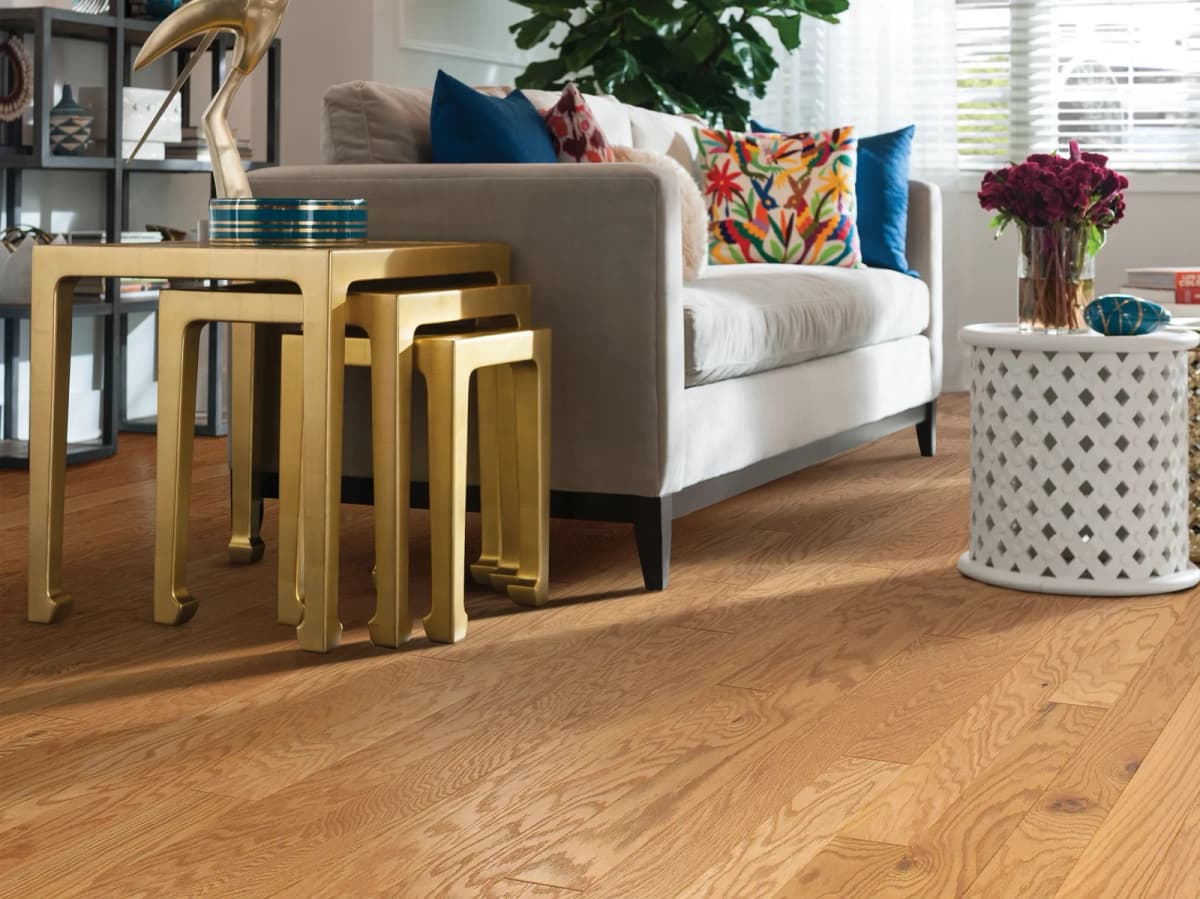
Engineered hardwood is the legitimate way to get a real-wood floor over radiant heat. It's built as a wood veneer over a cross-layered core, and those perpendicular plies fight the seasonal movement that wrecks solid wood — radiant-heat specialist WarmlyYours recommends it for exactly this reason.
It still has rules, though, and they're worth following to the letter:
- Temperature: keep the surface at or below the NWFA's ~80°F guideline (and never above 85°F).
- Board width: the American Hardwood Information Center recommends planks no wider than about 3 inches over radiant heat — wider boards gap more visibly as they move.
- Cut and species: quarter-sawn and rift-sawn boards are more stable than plain-sawn, and naturally stable species (white oak, ash, American cherry, walnut) handle radiant heat better than movement-prone ones (hickory, maple, beech), per Hardwood Floors magazine.
- Climate: the NWFA calls for an interior held around 35–55% relative humidity and 60–80°F, with wood at ~9% moisture content or below, so the boards don't dry out and shrink once the heat is running.
Because jobsite climate — not just the boxes in the room — is what protects a wood floor, our hardwood acclimation guide is worth a read before you install. And if you're torn between engineered wood and vinyl for the space, our LVP vs engineered hardwood guide lays out the trade-offs.
The forgiving path: rigid-core luxury vinyl
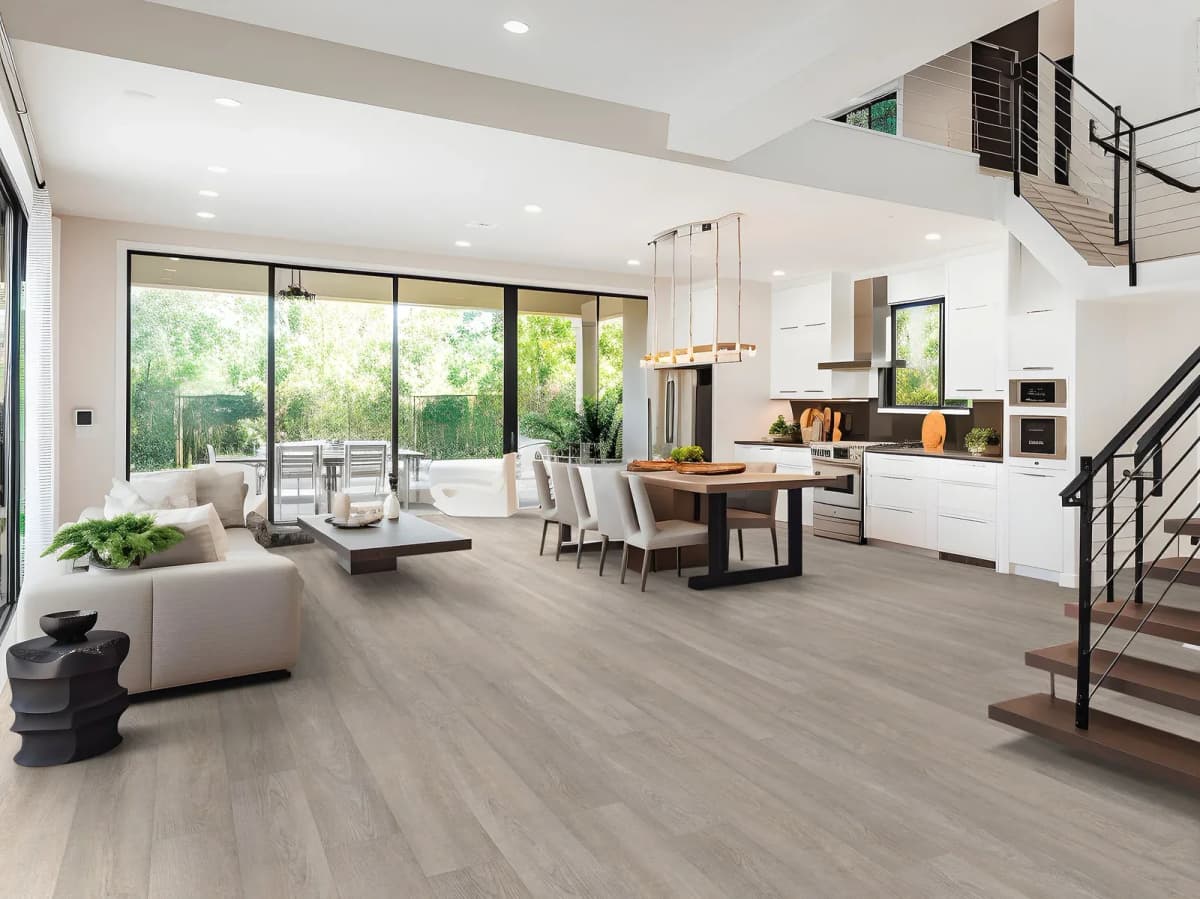
For most homeowners, rigid-core luxury vinyl is the easiest right answer over radiant heat — it's stable, waterproof, and widely radiant-rated. Two details matter when you choose:
SPC beats WPC here. Stone-polymer-composite (SPC) cores are denser and more dimensionally stable than wood-polymer-composite (WPC), so they don't soften or expand at radiant temperatures the way a lighter core can. For in-floor heat, lean SPC.
Confirm it's approved, then install it to spec. Not every plank is rated for radiant heat, but many are — COREtec, for instance, approves lines like COREtec Pro Plus for radiant installation when its specifications are followed. New to the category? Our explainer on what COREtec flooring is covers how the rigid core works. The standard radiant rules for LVP: install it floating so it can move freely, keep proper ¼"–⅜" perimeter expansion gaps, hold the surface under the rated maximum (~85°F for most), and bring the heat up gradually — Shaw and COREtec specify raising it in roughly 5°F increments rather than all at once.
What about carpet and laminate?
Carpet can work, but it's the easiest way to throttle your own system. The combined thermal resistance of the carpet and its pad has to stay low — radiant specialists like Warmup advise keeping the total under roughly 1.5 tog (about R-1) and steering clear of thick felt pads, which act as insulation and trap the heat below the floor.
Laminate is fine only if it's specifically rated for radiant heat, with the same ~80–85°F surface ceiling. Standard laminate isn't built for it — check the label, not the brochure.
The rules that protect your floor (and your warranty)
Even the right floor fails if it's run the wrong way. These are the operating habits that separate a floor that lasts from a warranty claim:
- Cap the temperature — mechanically. Install a floor-temperature-sensing thermostat so the system physically can't exceed the floor's rated maximum. The NWFA's current guidelines call for this; it's the single best protection against overheating damage.
- Ramp up gradually. Bring the heat up in small steps, not all at once — manufacturers typically call for raising it about 5°F at a time (both Shaw and COREtec specify ~5°F increments). The NWFA requires mechanical temperature control but doesn't set a universal ramp rate, so follow your product's number. Either way the failure mode is the same: rapid temperature swings are what cup and gap wood.
- Prep and test the slab. Concrete has to be moisture-tested before anything goes down (calcium-chloride or in-slab RH probe), and the system should run ahead of time to stabilize the slab. The exact sequence differs by product — wood guides typically have you run the system for several days to drive out residual moisture, while many LVP guides have you switch it off for the install window and lower it to ~65°F beforehand — so follow your product's sheet rather than a generic rule.
- Hydronic systems get pressure-tested. If it's a water-based (hydronic) system, have a qualified plumber pressure-test and document it before installation; skipping that step can void coverage.
- Mind rugs and heavy furniture. Large area rugs and heat-trapping furniture create hot spots where the floor runs hotter than its setpoint. Keep rugs thin and low-tog, and avoid rubber- or felt-backed rugs over radiant heat.
- Buy radiant-approved, not radiant-assumed. Only a product the manufacturer labels radiant-compatible carries warranty coverage over in-floor heat — so don't assume. On our product pages, that's the "Radiant Heat OK" highlight; when it's there, the manufacturer has cleared that floor for radiant use.
Planning your radiant floor
Start by matching the floor to your system and confirming it's rated for radiant heat. As a rough guide, hydronic systems pair especially well with tile and engineered wood, while electric mats are more broadly compatible across tile, rated laminate, and rated vinyl.
From there it's project math: measure the room, add a waste factor for cuts and mistakes, and order a little extra so the whole floor comes from one production run — our flooring calculator guide walks through it. Then order a $5 sample before you commit; a warm floor reads differently than a cold showroom plank, and the only way to know is to see it in your own space. When you're ready for an exact number, request a personalized quote and our team will put it together.
Common questions
Frequently Asked Questions
Can I install solid hardwood over radiant heat?
It's strongly discouraged. Solid wood is hygroscopic and moves a lot, and radiant heat drying it from below makes cupping, crowning, and gapping nearly inevitable — so most manufacturers won't warranty solid hardwood over radiant heat. If you want real wood over in-floor heat, engineered hardwood is the approved path: its cross-layered core resists that movement. Some solid products allow it under strict conditions (narrow boards, glue-down, stable species), but always confirm in writing on the product's own spec sheet.
What's the maximum temperature for a floor over radiant heat?
It depends on the material, and you should follow your specific product's sheet rather than a single number. As a benchmark, the National Wood Flooring Association (NWFA) caps a wood floor's surface temperature at about 80°F, with most sources treating 85°F as the absolute ceiling; many luxury vinyl manufacturers (e.g. Shaw, COREtec) likewise specify a maximum around 85°F. The safest setup is a floor-sensing thermostat that physically enforces the limit — overheating both damages the floor and voids the warranty.
Is luxury vinyl or COREtec okay over radiant heat?
Yes, when the product is rated for it. Rigid-core LVP handles in-floor heat well — SPC (stone-core) tends to outperform WPC because the denser core stays dimensionally stable at radiant temperatures. COREtec, for example, approves lines like COREtec Pro Plus for radiant heat when its specifications are followed. Install it floating with proper perimeter expansion gaps, keep the surface under the rated temperature (~85°F for most), and ramp the heat up gradually.
Which flooring conducts radiant heat best?
Tile and stone — porcelain, ceramic, and natural stone have far higher thermal conductivity (roughly 1–2 W/m·K) than wood or vinyl, so they transfer and hold heat most efficiently. Engineered hardwood and rigid-core LVP both work well when rated for radiant heat; thinner, denser boards conduct better than thick ones. What you want to avoid is anything that insulates: thick carpet with a high-R or felt pad blocks the heat from reaching the room.
Does radiant heat void a flooring warranty?
Only if you use the wrong floor or run it too hot. Manufacturers cover a floor over radiant heat only when that specific product is approved for radiant installation and you stay within its temperature and ramp-rate limits. Using a non-approved product, or exceeding the maximum surface temperature, typically voids coverage — so buy a radiant-rated floor and install a floor-temperature sensor to keep it in range.
Related Posts
Keep Reading

LVP Wear Layer Explained: Why 12 Mil and 20 Mil LVP Overlap on Price and Wear Differently
9 min read
Shaw LVP Buyer's Guide: Classic Series vs Pro Series, and Where 5th and Main Fits (2026)
10 min read
Will Heavy Furniture Dent Vinyl Plank Flooring? What Holds Up (2026)
14 min read
What Flooring Can Go Over a Concrete Slab? Floating vs Glue-Down, Moisture Testing, and What to Buy
14 min read
Keep browsing