
Solid vs Engineered Hardwood: Which Should You Actually Buy?
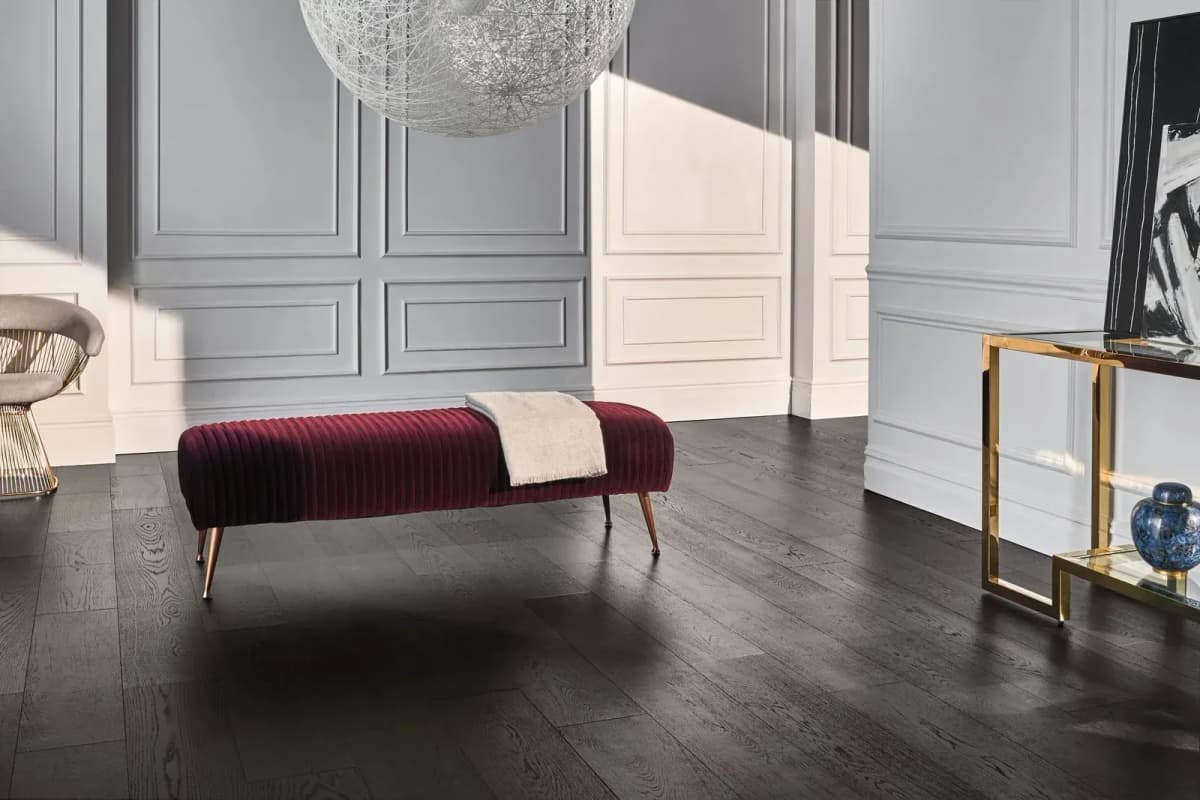
Floor names link to their product pages in a new tab.
Most articles about solid versus engineered hardwood are written to sell you whichever product the author happens to carry. This one isn't.
We sell engineered hardwood at FloorFreight. We don't sell solid. So if your home calls for solid hardwood, we're going to tell you that — and tell you to buy it from a specialty solid-hardwood retailer. The goal here is to help you make the right decision, not the decision that converts on our store.
By the end of this post, you'll know which product fits your situation. Most of the time, it's engineered. Sometimes, it's solid. The difference matters.
Here's the side-by-side breakdown before we dig into the details:
| Solid Hardwood | Engineered Hardwood | |
|---|---|---|
| Construction | Single piece of wood, top to bottom | Real hardwood veneer over multi-ply plywood core |
| Material cost | $5–$15/sq ft | $4–$22/sq ft ✓ |
| Refinishing | Yes, until less than 3/32" of wood is left above the tongue ✓ | Not at 1.2mm; yes on a smooth 4mm wear layer (a textured one needs a pro's assessment) |
| Install methods | Nail-down only | Nail, staple, glue, or floating ✓ |
| Best rooms | Stable above-grade, climate-controlled | Basements, slabs, radiant heat, high humidity |
| Wood above the tongue | 3/4" of solid wood ✓ | 1.2mm to 6mm of face veneer over a plywood core |
| Resale value | Strong perception in some markets | Comparable at premium wear-layer spec |
What's Actually Different About These Two Products
Both solid and engineered hardwood are real wood. Both can be sanded and refinished (within limits). Both come in oak, maple, hickory, walnut, and other species. Both look like hardwood when installed because both are hardwood at the surface.
The structural difference is the construction.
Solid hardwood is a single piece of wood, milled from one solid plank. Top to bottom, it's the same species, the same grain, the same material. Standard thickness is 3/4 inch.
Engineered hardwood has a real hardwood top layer (the wear layer — typically 1.2mm to 6mm thick) bonded to a multi-ply core of plywood, HDF, or cross-laminated wood. The core gives the plank its dimensional stability. The wear layer gives it the look of solid hardwood.
That's the entire difference. Everything else — refinishability, installation options, water tolerance, plank widths, costs — flows from those two construction approaches.
Where Each One Performs Best
Solid hardwood wins at: raw wood volume — 3/4" of it, all one species — and so the most refinishing capacity of any wood floor, plus traditional installations in stable indoor environments.
Engineered hardwood wins at: dimensional stability, installation flexibility, wide-plank construction, moisture-prone spaces.
The choice between them rarely comes down to which is "better" overall. It comes down to which is better for your specific installation.
When You Need Engineered Hardwood (Not Optional)
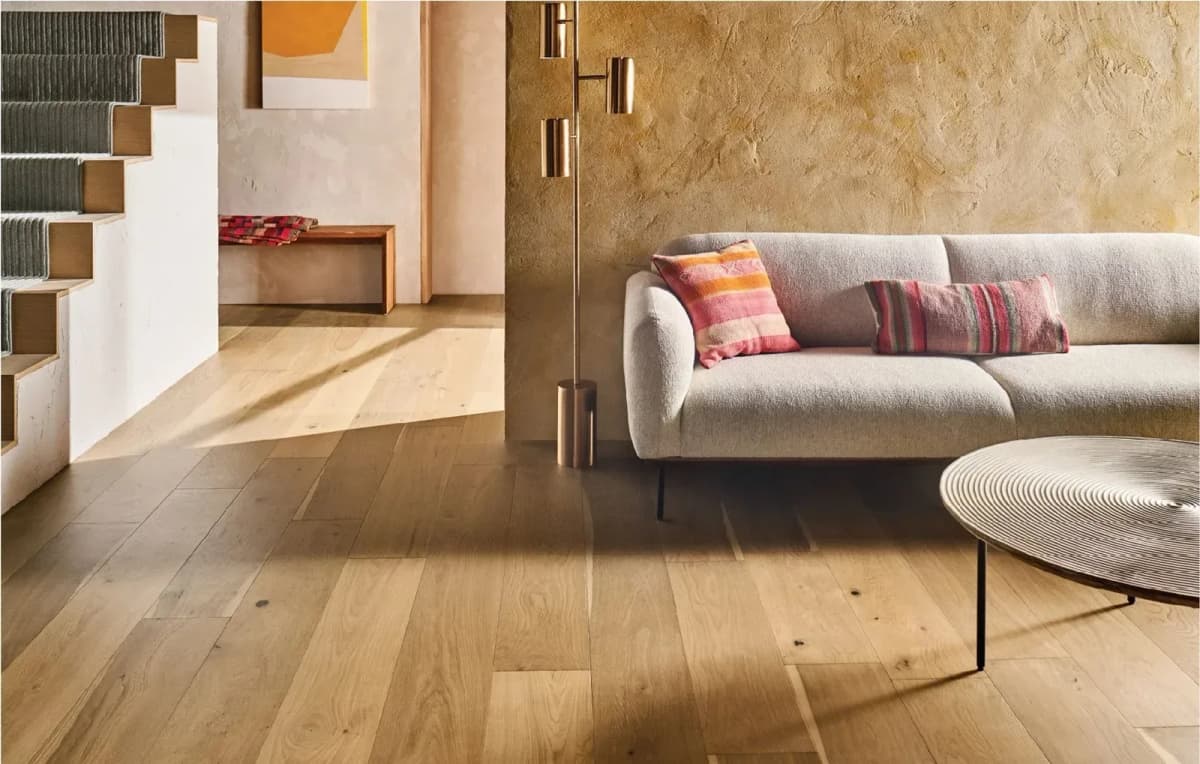
There are situations where engineered hardwood isn't a preference — it's the only safe choice. Solid hardwood will fail in these conditions, often within a year of installation.
Below grade (basements). Solid hardwood expands and contracts with humidity, and basements have humidity levels that solid hardwood can't handle. Cupping, warping, and buckling are nearly guaranteed. Engineered hardwood's cross-ply construction resists this. If you want hardwood in your basement, you want engineered. Period.
Over concrete slab foundations. Common in southern U.S. construction, including most of Florida and the Gulf Coast. Solid hardwood requires a wood subfloor with proper ventilation; concrete slabs don't provide this. Engineered hardwood can be glued, floated, or nailed over concrete with the right vapor barrier.
Over radiant heating. Solid hardwood expands enough during heating cycles to cause permanent damage to most radiant heat installations. Engineered hardwood (specifically rated for radiant heat — Anderson Tuftex Grand Estate is one example) handles the temperature fluctuations because the cross-ply construction counteracts expansion forces.
In high-humidity climates without strong climate control. Coastal homes, homes without consistent year-round HVAC, or any space where humidity swings 30+ percentage points seasonally. Solid hardwood will cup in summer and gap in winter. Engineered handles it.
Wide-plank installations (6" and wider). Solid hardwood becomes structurally unstable at widths above 5". The wider the plank, the more dramatically it expands and contracts. Engineered hardwood routinely produces stable planks at 7-10" widths because the cross-ply core resists the expansion forces. If you want wide-plank visuals, you want engineered.
If your installation hits any of these conditions, the question of solid vs engineered is settled. Engineered is what you need.
When Solid Hardwood Is the Better Choice
Solid hardwood remains the right choice in specific situations. We don't sell it, but we'll tell you straight: these are the conditions where solid wins.
Forever-home installations in stable, climate-controlled spaces. Multi-generational homes, historic restorations, projects where the floor is expected to be sanded again and again rather than replaced. Solid hardwood has the most wood above the tongue and so the most refinishing flexibility.
On a wood subfloor in a stable indoor environment. Above grade, climate-controlled, no radiant heat, no major humidity swings — solid hardwood thrives. The cross-ply core of engineered isn't necessary, and you're paying for a feature you don't need.
When traditional 2-1/4" or 3-1/4" plank widths are the look you want. Strip oak floors in narrow widths are visually iconic in older homes. Engineered hardwood does exist in these widths but it's less common. Solid hardwood is the dominant product in narrow-plank traditional looks.
Site-finished installations where the finish quality is critical. Most solid hardwood ships unfinished and gets sanded and finished after installation. The result is a perfectly seamless floor with no plank-to-plank finish variation. Engineered is almost always pre-finished. If you want the site-finished look, solid is generally the path.
If you're in any of these situations, buy solid hardwood. We don't sell it. Specialty solid-hardwood retailers and traditional hardwood specialists do. Lumber Liquidators (now LL Flooring), local hardwood-only stores, and direct-from-mill sellers are reasonable starting points.
We're telling you this because we'd rather you have the right floor than the floor we happen to carry.
When Either Will Work — and Why Engineered Usually Wins
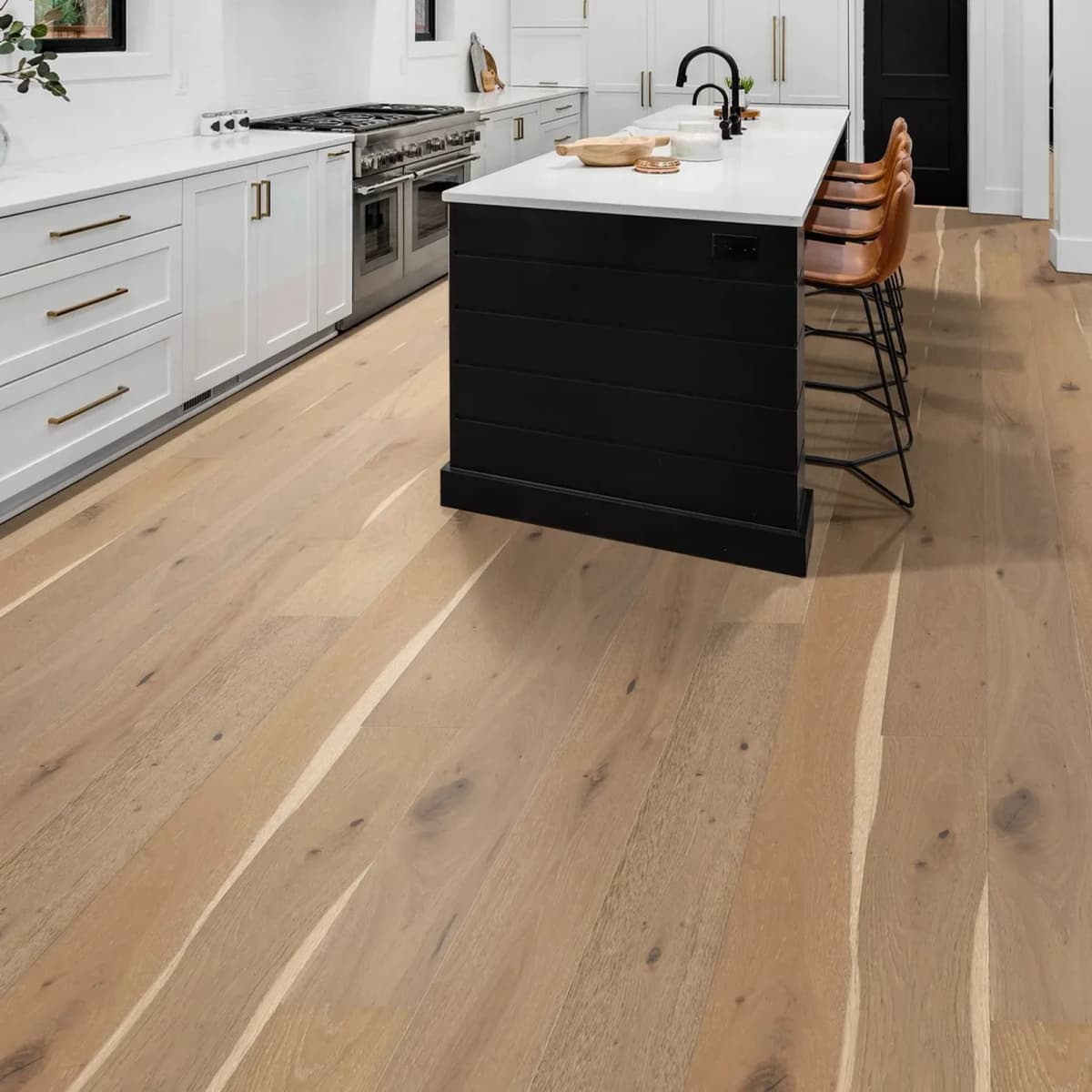
For most installations, both solid and engineered would technically work. Above-grade, climate-controlled spaces in stable indoor environments. Living rooms, bedrooms, dining rooms, hallways. The vast majority of American flooring projects fall into this category.
In these situations, engineered hardwood usually wins on a few practical grounds.
Cost. Engineered hardwood typically runs 15-30% below solid hardwood for comparable species and quality. The difference is real and immediate.
Installation flexibility. Engineered can be nailed, stapled, glued, or floated. Solid is essentially limited to nail-down. Floating installations especially are faster, cleaner, and more DIY-friendly.
Plank size options. Engineered's stability lets you go wider and longer than solid. The visual difference between a 7" wide-plank engineered floor and a 3-1/4" strip solid floor is significant. Most modern interiors lean toward wider planks.
Comparable wood above the core at premium spec. A 4mm face veneer, and the 6mm of Anderson Tuftex Grand Estate, put real sanding depth over the plywood — enough that NWFA counts the floor as refinishable,Source 1 which a 1.2mm veneer is not. Neither NWFA nor the manufacturers put a number of years on any of it.
Easier acclimation and installation in active homes. Engineered handles humidity better during the install window. Solid requires more careful timing and conditioning. We cover this in our hardwood acclimation guide.
In a stable above-grade installation where either works, engineered usually delivers better total value. Lower upfront cost, real sanding depth at premium spec, more visual options, and faster installation.
For our complete walk-through of how to pick wear layer when shopping engineered, see our engineered hardwood wear layer explainer.
The Cost Math, Honestly
Headline cost-per-square-foot doesn't tell the whole story.
Solid hardwood ranges: $5-15/sq ft for material, plus installation. Site-finishing adds another $2-5/sq ft. Total installed cost typically $10-25/sq ft.
Engineered hardwood ranges: $4-22/sq ft for material across our catalog. Most engineered ships pre-finished, so no site-finishing cost. Installation costs the same or slightly less than solid because of the broader install method options. Total installed cost typically $8-30/sq ft.
Long-term refinishing economics:
A 1.2mm engineered floor: cannot be refinished. When the factory finish wears through, it gets replaced. A 4mm engineered floor: can be sanded and refinished if its surface is smooth; a wire-brushed or distressed one is measured at the lowest point of its texture and often can't be sanded, so have a professional assess it. Solid 3/4" hardwood: can be sanded and refinished, with the most refinishing capacity of the three.
None of them comes with a fixed count. The National Wood Flooring Association says a floor with less than 3/32 inch of wear layer should not be sanded, and that how many times a floor can be sanded depends on how much wear layer is left, how flat the floor is, and the skill and equipment of the person sanding it.Source 1
For a homeowner who'll refinish rarely, the long-term refinishing capacity of solid mostly goes unused. For a multi-generational family that will refinish across generations, solid's extra capacity matters.
Math the lifecycle, not just the upfront cost.
Practical Decision Tree
If you've made it this far, here's the simplest decision framework:
Is this floor going below grade, on a slab, or over radiant heat? → Engineered. (Not optional.)
Are you in a high-humidity climate or coastal area? → Engineered. (Strongly preferred.)
Do you want wide planks (6"+) or modern visual styling? → Engineered. (Solid wide-plank is risky.)
Is this a forever home in a stable, climate-controlled environment, and you want the most wood to sand? → Solid hardwood is the textbook choice. We don't sell it; specialty hardwood retailers do.
Anything else (most installations)? → Engineered. Better value, comparable visuals, modern installation flexibility.
For Shaw's engineered hardwood lineup, see our Shaw hardwood buying guide. For Anderson Tuftex's premium engineered options including the 6mm wear-layer Grand Estate, see our Anderson Tuftex buyer's guide.
Final Word
The solid vs engineered hardwood question gets framed as a quality competition. It isn't. They're both real hardwood. They're built for different situations.
Engineered wins on practicality, installation flexibility, plank-width options, and cost — and at the premium tier (4mm-6mm face veneer), it carries real sanding depth over the core.
Solid wins on raw wood volume and refinishing capacity in stable installations.
Most homes in 2026 are better served by engineered. Some homes — multi-generational forever projects, traditional restorations, certain dry-climate installations — are better served by solid.
The best floor is the one that fits your installation. We sell engineered. If your situation calls for solid, we'd rather you buy solid from a specialty retailer than buy engineered from us and regret it.
Order a $5 sample before you commit, regardless of which type you choose. The difference between products at the same price point is more visible in your home than in any showroom.
In this article
The floor from this guide

Anderson Tuftex
Grand Estate
Thorndon Hall
Samples are $5 each, credited back at checkout when you sign in.
Common questions
Frequently Asked Questions
What's the actual difference between solid and engineered hardwood?
Solid hardwood is a single piece of wood milled from one plank — top to bottom, same species, same grain, typically 3/4" thick. Engineered hardwood has a real hardwood top layer (the wear layer, typically 1.2mm to 6mm thick) bonded to a multi-ply plywood or HDF core. Both are real wood at the surface. The core construction is what differs. That difference drives everything else: engineered handles moisture and humidity better, installs over more surfaces, comes in wider planks, and costs 15-30% less. Solid has more raw refinishing capacity in ideal conditions.
Can you put solid hardwood in a basement?
No. Solid hardwood expands and contracts with humidity, and basements have humidity levels solid hardwood can't handle. Cupping, warping, and buckling are nearly guaranteed below grade. Engineered hardwood's cross-ply construction resists this. The same logic applies to concrete slab foundations: solid hardwood requires a wood subfloor with proper ventilation, which concrete doesn't provide. If you want hardwood below grade or on a concrete slab, engineered is the only viable choice — not a preference, a structural requirement.
Is engineered hardwood actually real wood?
Yes. The wear layer — what you walk on, what you see, what gets dented or scratched — is genuine hardwood. The species you pick (oak, hickory, walnut, maple) is the species of that top layer. The grain pattern, the finish, any wire-brushing or hand-scraping all live in real wood. The plywood core below it is not the same wood, but the core is invisible after installation. Engineered hardwood looks like solid hardwood because it is solid hardwood at the surface — the construction underneath just provides better dimensional stability.
Is solid or engineered hardwood more cost-effective long-term?
It depends on the wear layer spec and whether you'll actually refinish. Solid hardwood ($5-15/sq ft material) can be sanded and refinished across a long life. Engineered at 1.2mm ($4-9/sq ft) can't be refinished at all — the National Wood Flooring Association's guidelines say a floor with less than 3/32 inch (2.5mm) of wear layer should not be sanded — so when it wears through, you replace it rather than sand it. Engineered at 4mm ($11-15/sq ft) can be sanded and refinished too if its surface is smooth; a wire-brushed or distressed floor is measured at the lowest point of its texture and often can't be sanded. Neither comes with a fixed count: NWFA ties the number of refinishes to the wear layer left, the floor's flatness and the skill of the person sanding it. For a homeowner who refinishes rarely, solid's extra refinishing capacity mostly goes unused. For a household that expects to sand the floor repeatedly, solid has the most wood to give. Most buyers are better served by engineered; the exceptions are specific, not general.
Referenced in this guide
Sources
Wood Flooring Sand and Finish Guidelines (2016), pp. 19 and 25
National Wood Flooring Association · Accessed 2026-09-15
https://www.oldewoodltd.com/uploads/nwfa-sand-finish-wood-floors-2016.pdf
Related Posts
Keep Reading
Shaw Hardwood Buying Guide: Repel, The Gallery and Expressions (2026)
9 min read
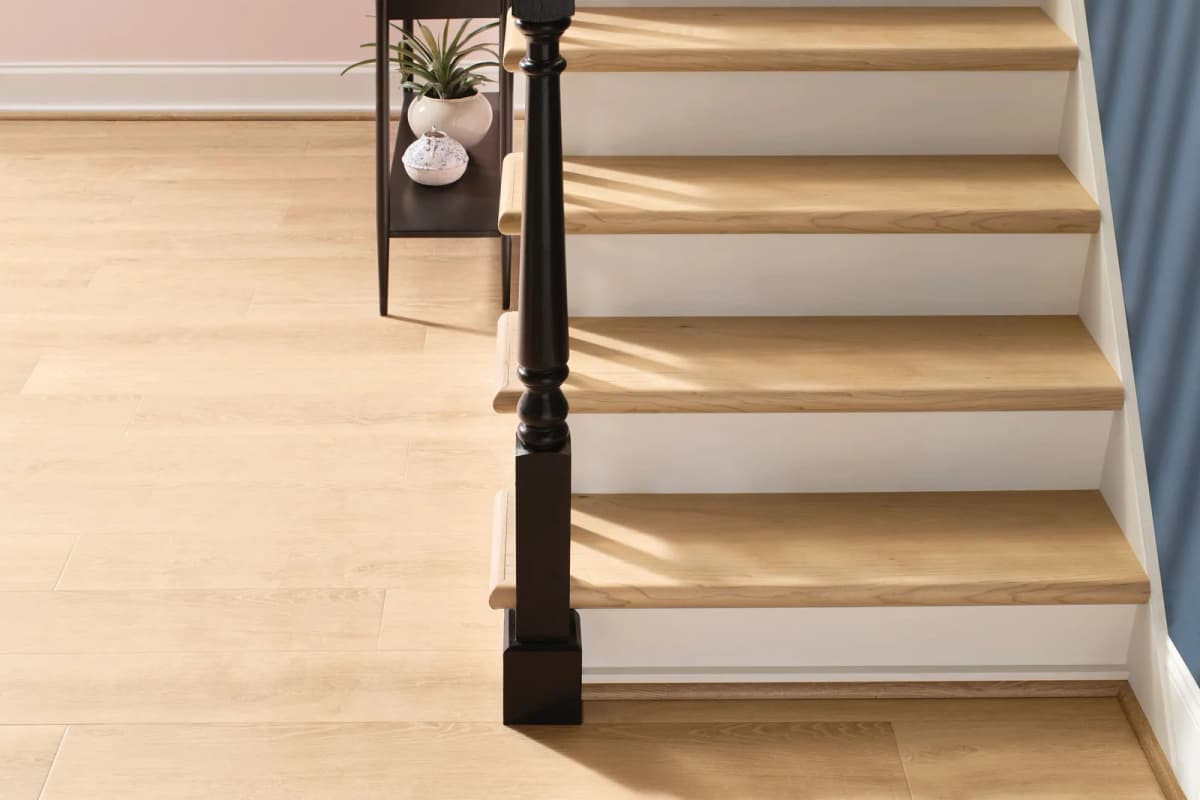
What Is the Best Flooring for Stairs? Hardwood, LVP and the Stair Nose (2026)
13 min read
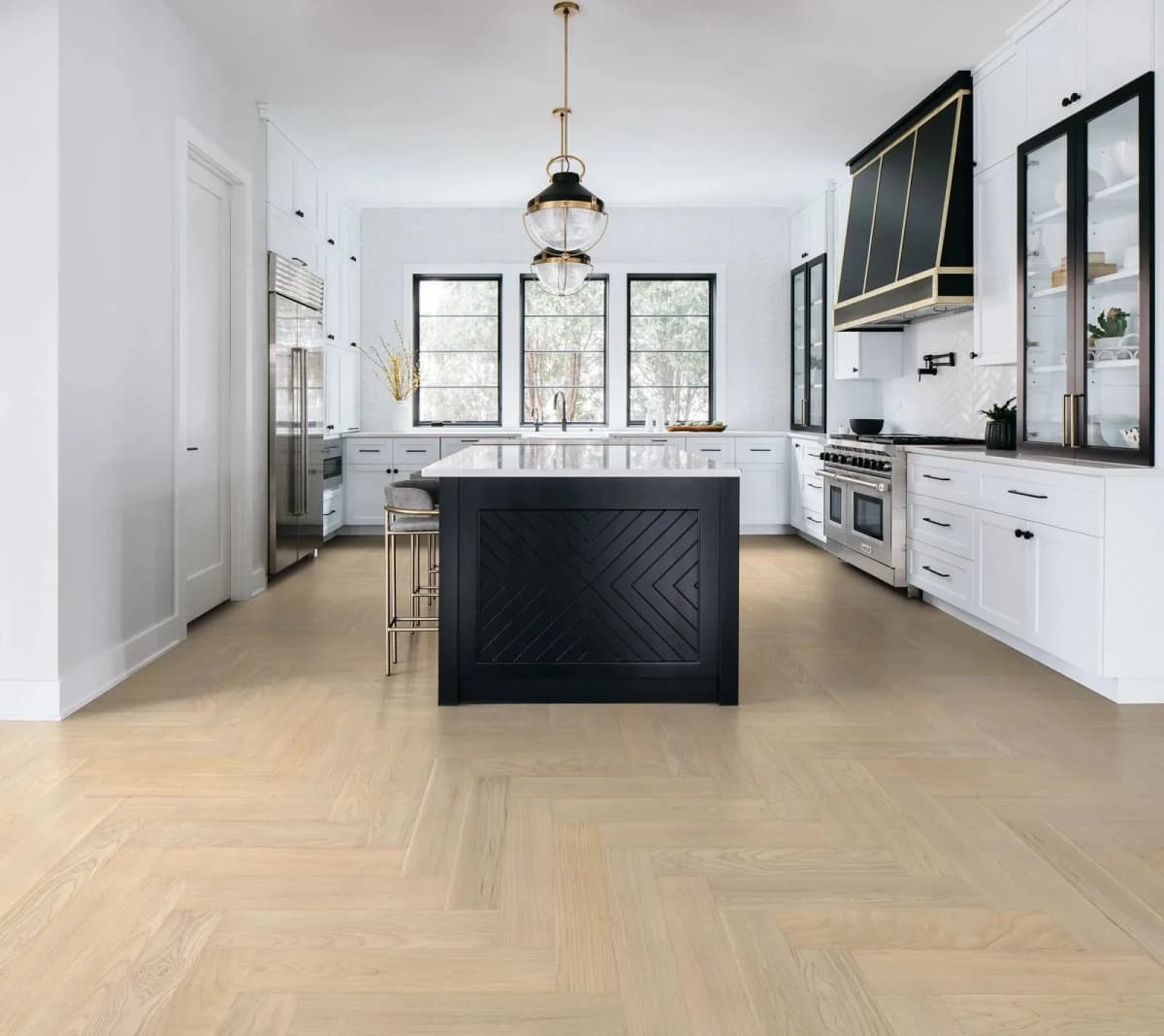
Herringbone Flooring Guide: What Makes the Pattern Premium (2026)
8 min read
Best Hardwood for High-Traffic Homes: Janka, Wear Layer, and What Lasts
9 min read
Keep browsing